© 2025 - Day Studio Inc
© 2025 - Day Studio Inc

Project
-
The Callisto Protocol is a cinematic survival horror experience developed by Striking Distance Studios and published by Krafton. Set within a brutal prison colony on Jupiter’s moon Callisto, the game merges grounded combat, environmental storytelling, and high-fidelity worldbuilding into an intensely immersive sci-fi horror experience.
Introduction
-
The interface for The Callisto Protocol was designed to live within the world — restrained, atmospheric, and always in service of tension. As Senior UI Artist & Tech Artist, I built and implemented gameplay-driven UI systems within Unreal Engine, preserving immersion while maintaining clarity under extreme lighting and high-contrast conditions.
Client
Striking Distance Studios
Roles
Senior UI Artist & Tech Artist
Year
2022
Project
-
The Callisto Protocol is a cinematic survival horror experience developed by Striking Distance Studios and published by Krafton. Set within a brutal prison colony on Jupiter’s moon Callisto, the game merges grounded combat, environmental storytelling, and high-fidelity worldbuilding into an intensely immersive sci-fi horror experience.
Introduction
-
The interface for The Callisto Protocol was designed to live within the world — restrained, atmospheric, and always in service of tension. As Senior UI Artist & Tech Artist, I built and implemented gameplay-driven UI systems within Unreal Engine, preserving immersion while maintaining clarity under extreme lighting and high-contrast conditions.
Client
Striking Distance Studios
Roles
Senior UI Artist & Tech Artist
Year
2022
Front End
-
/01
Navigation & Interaction Surfaces
-
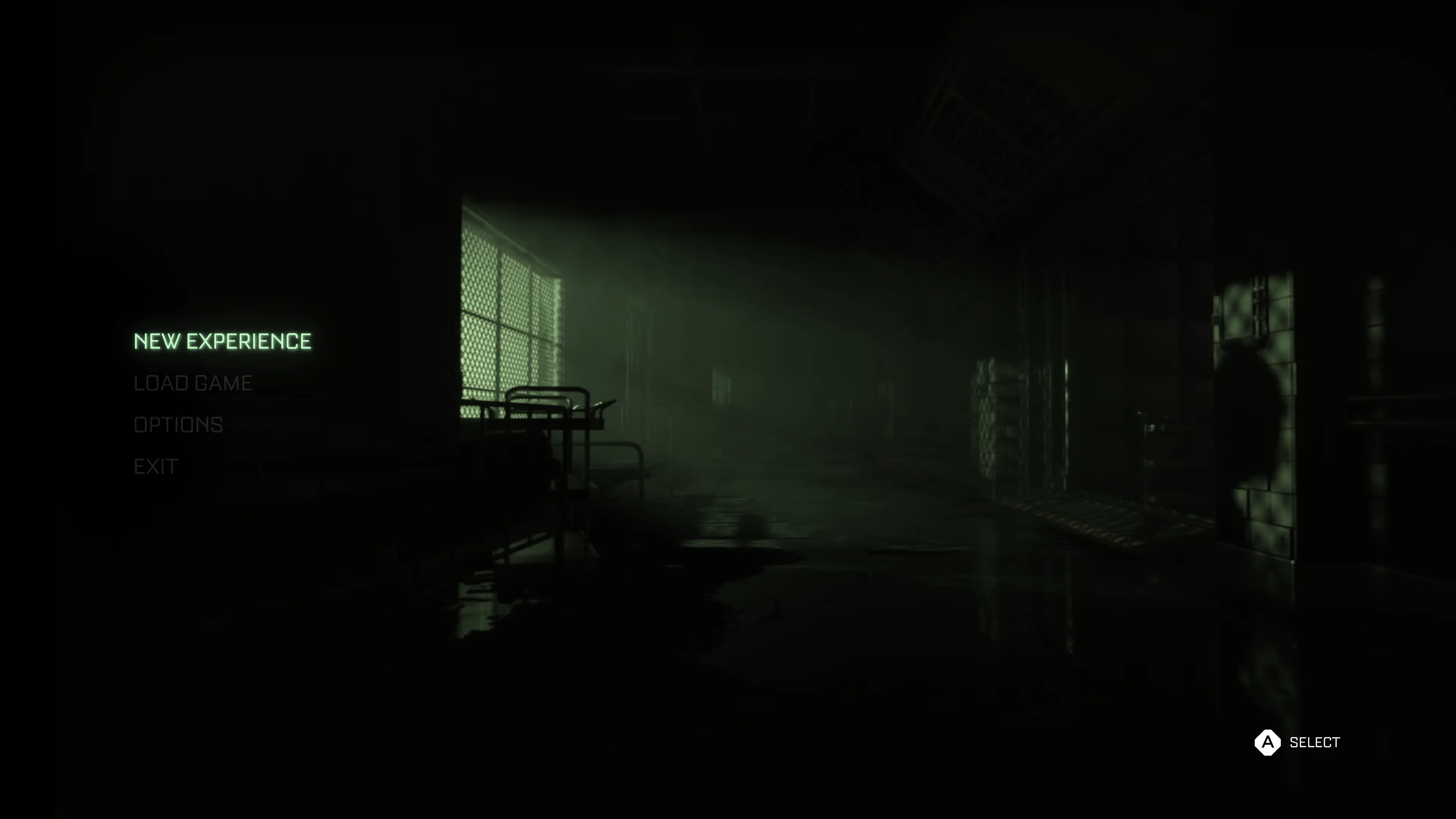
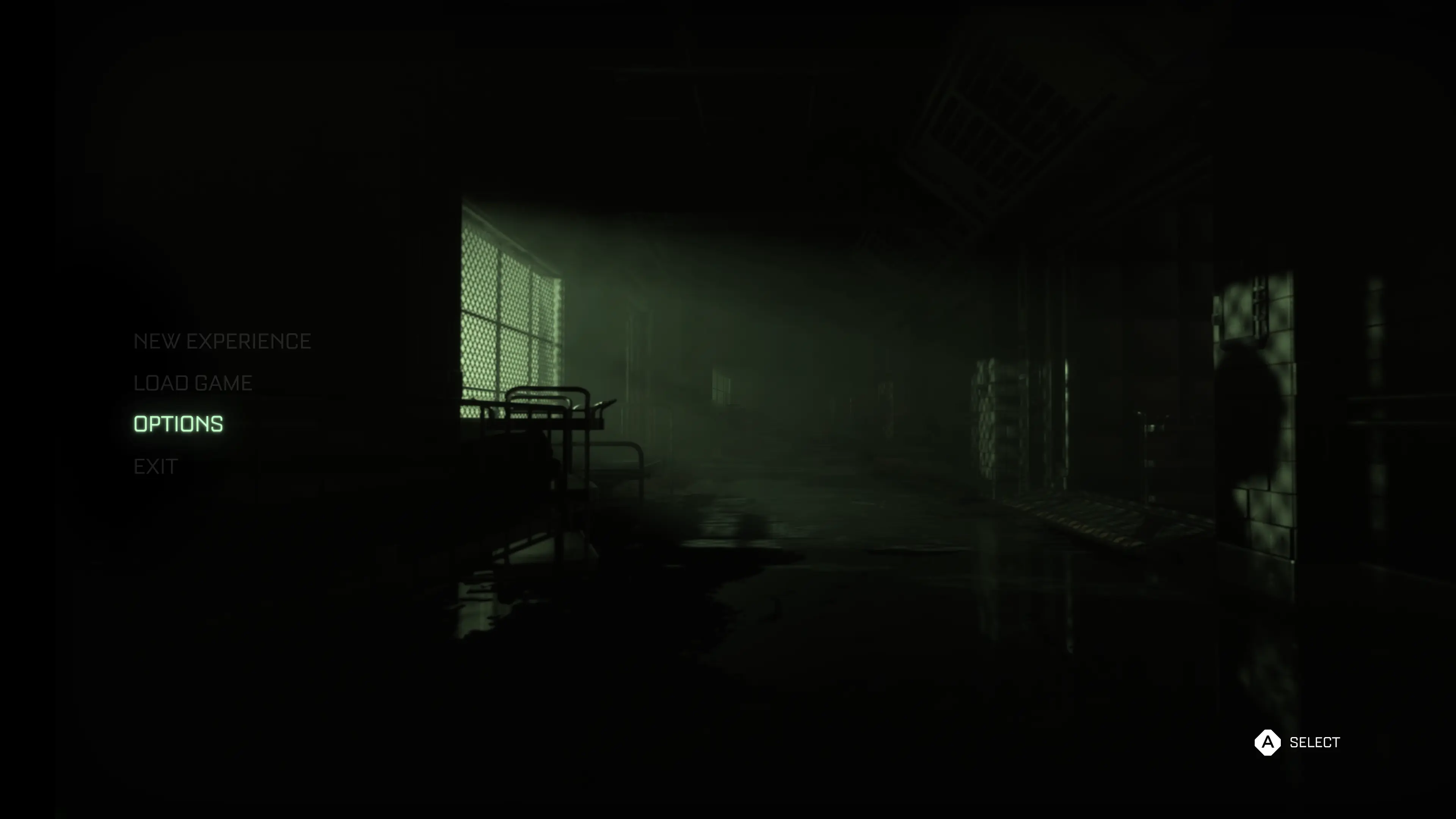
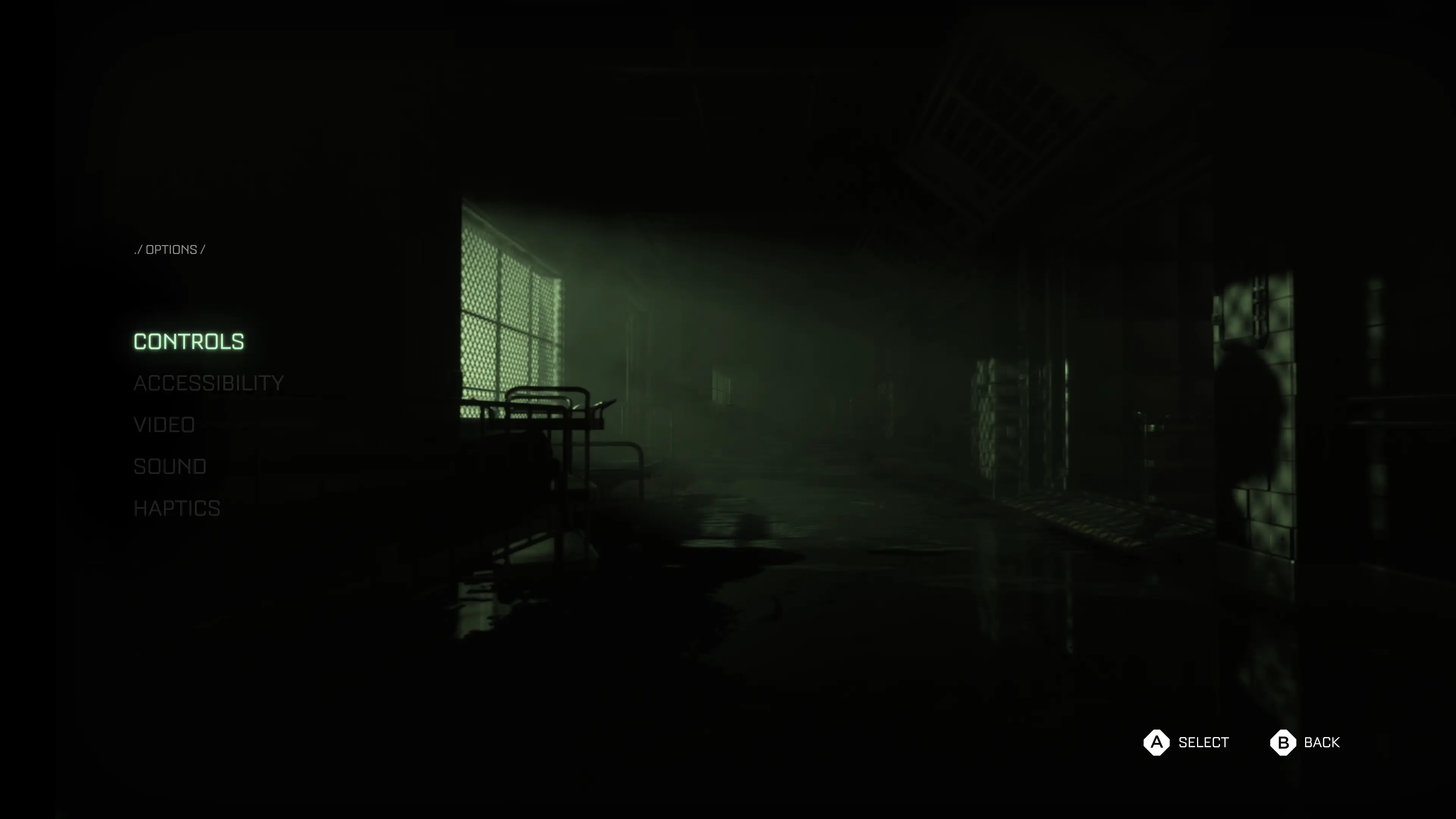
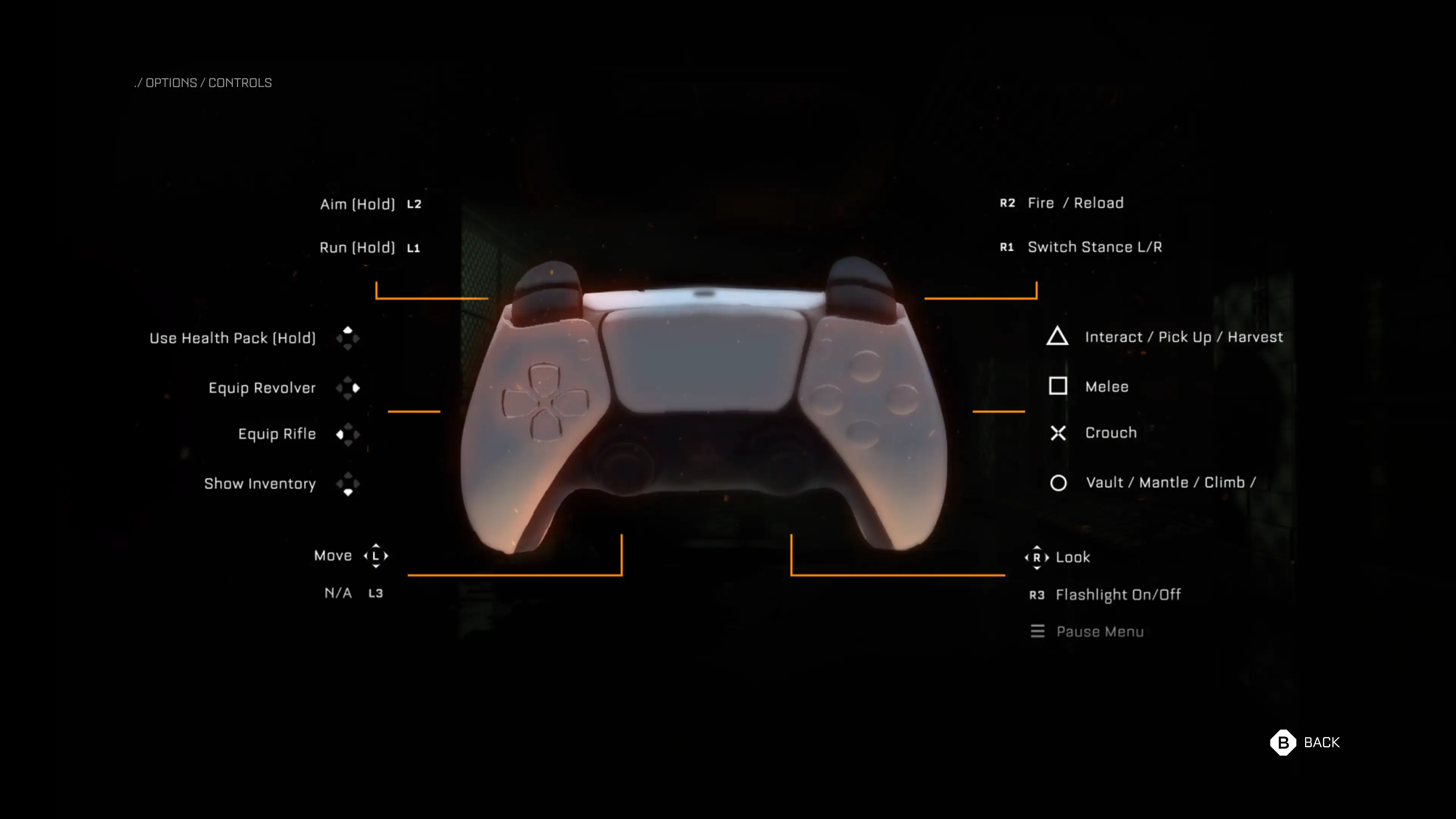
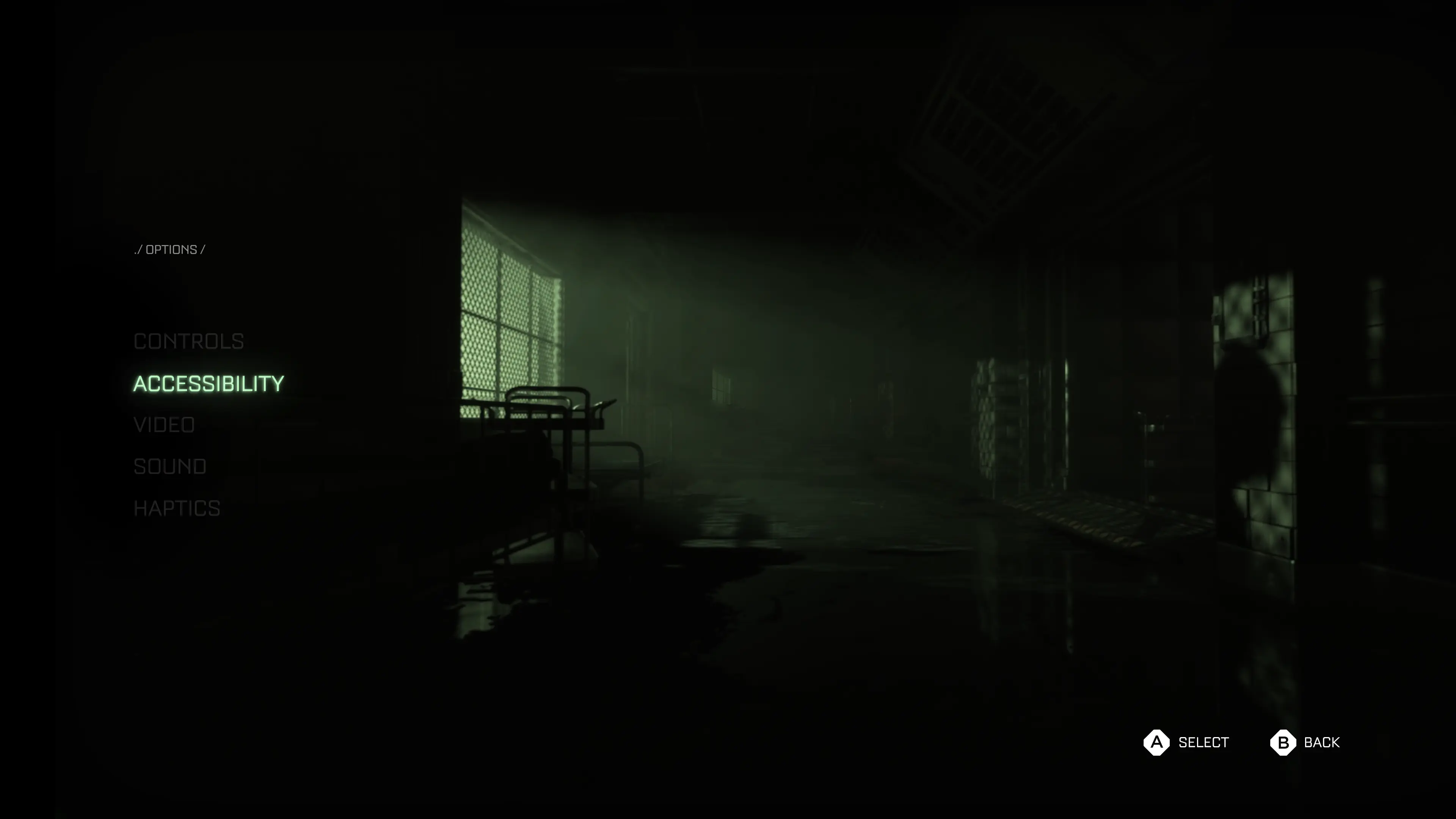
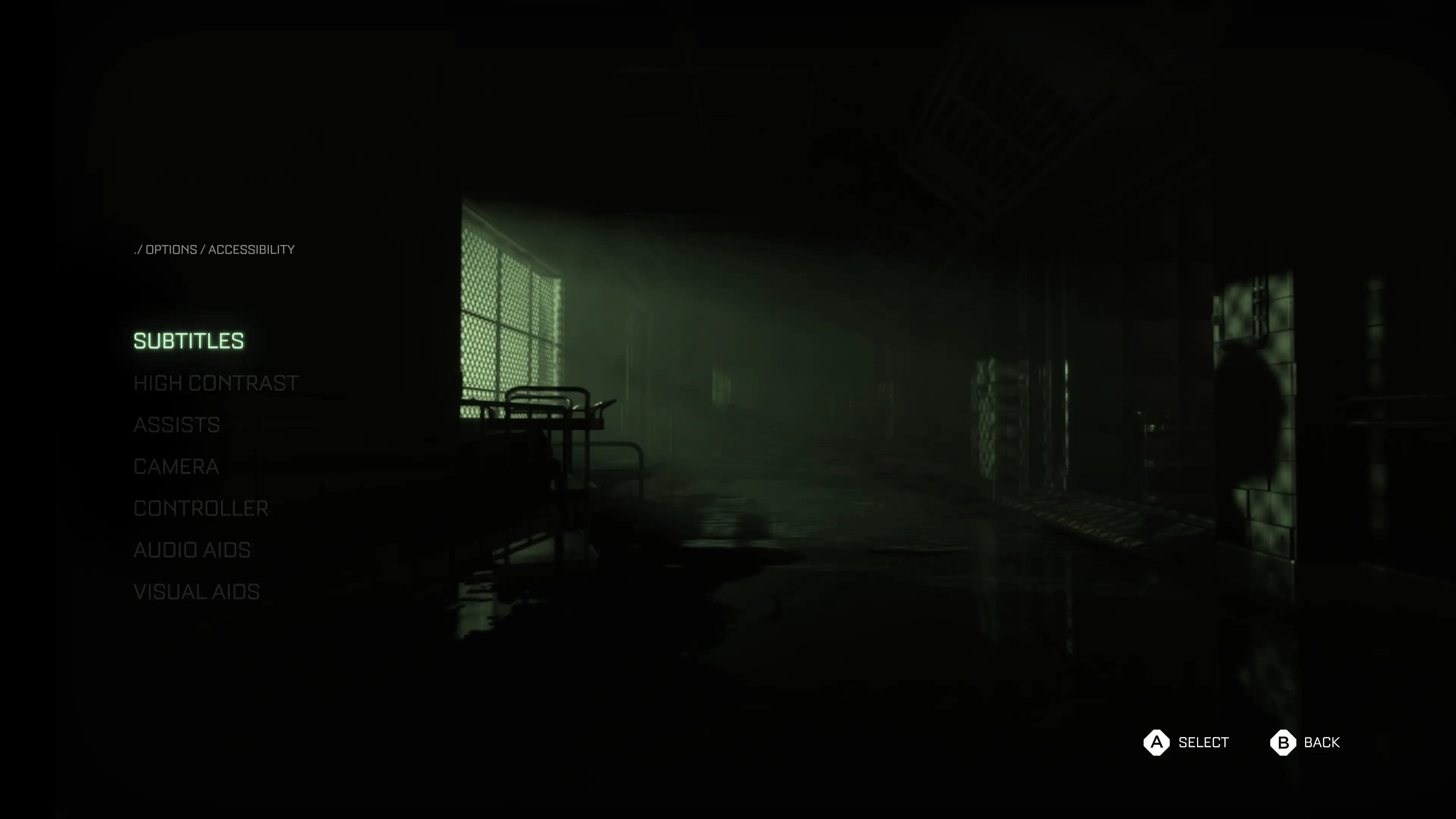
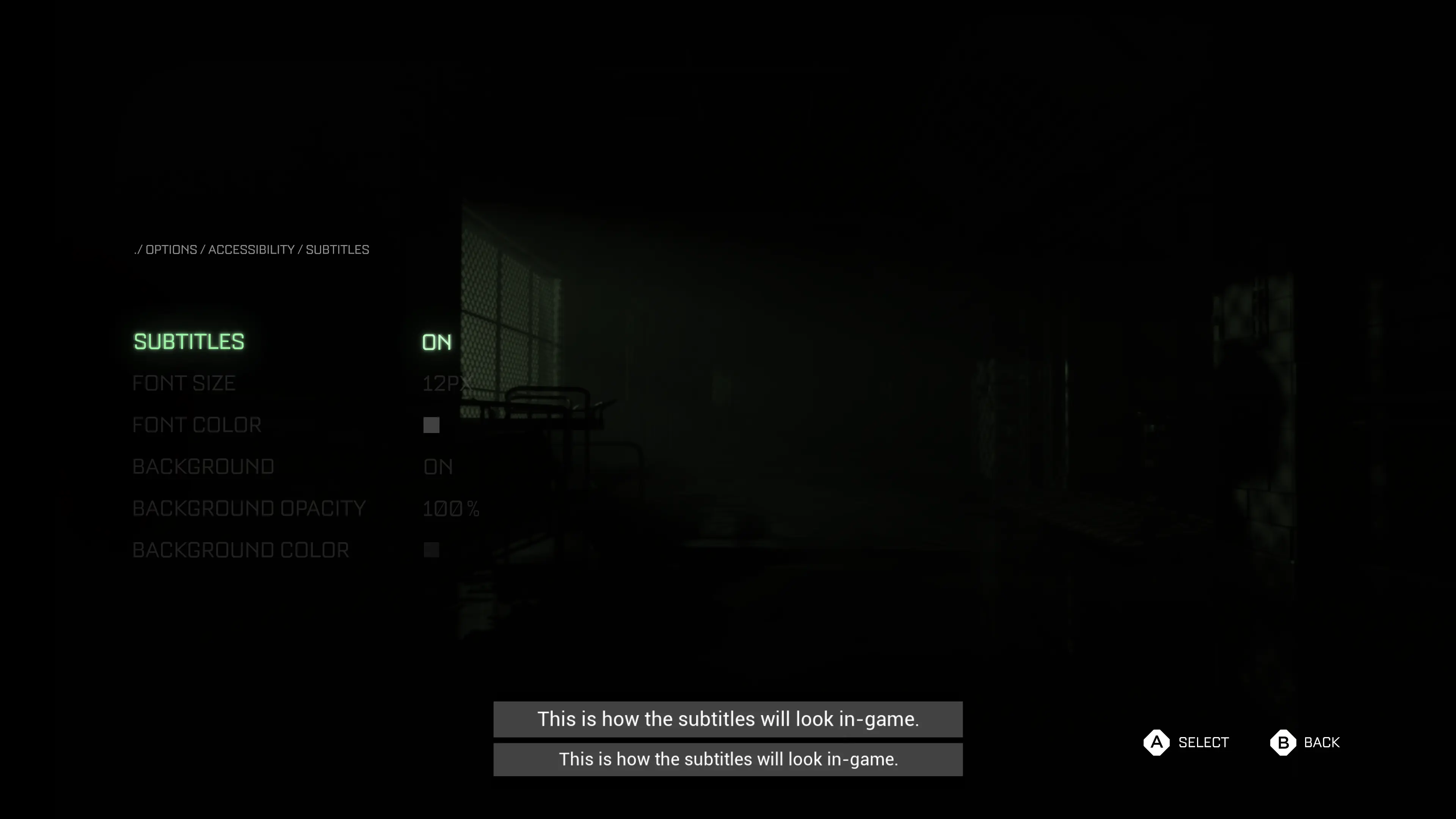
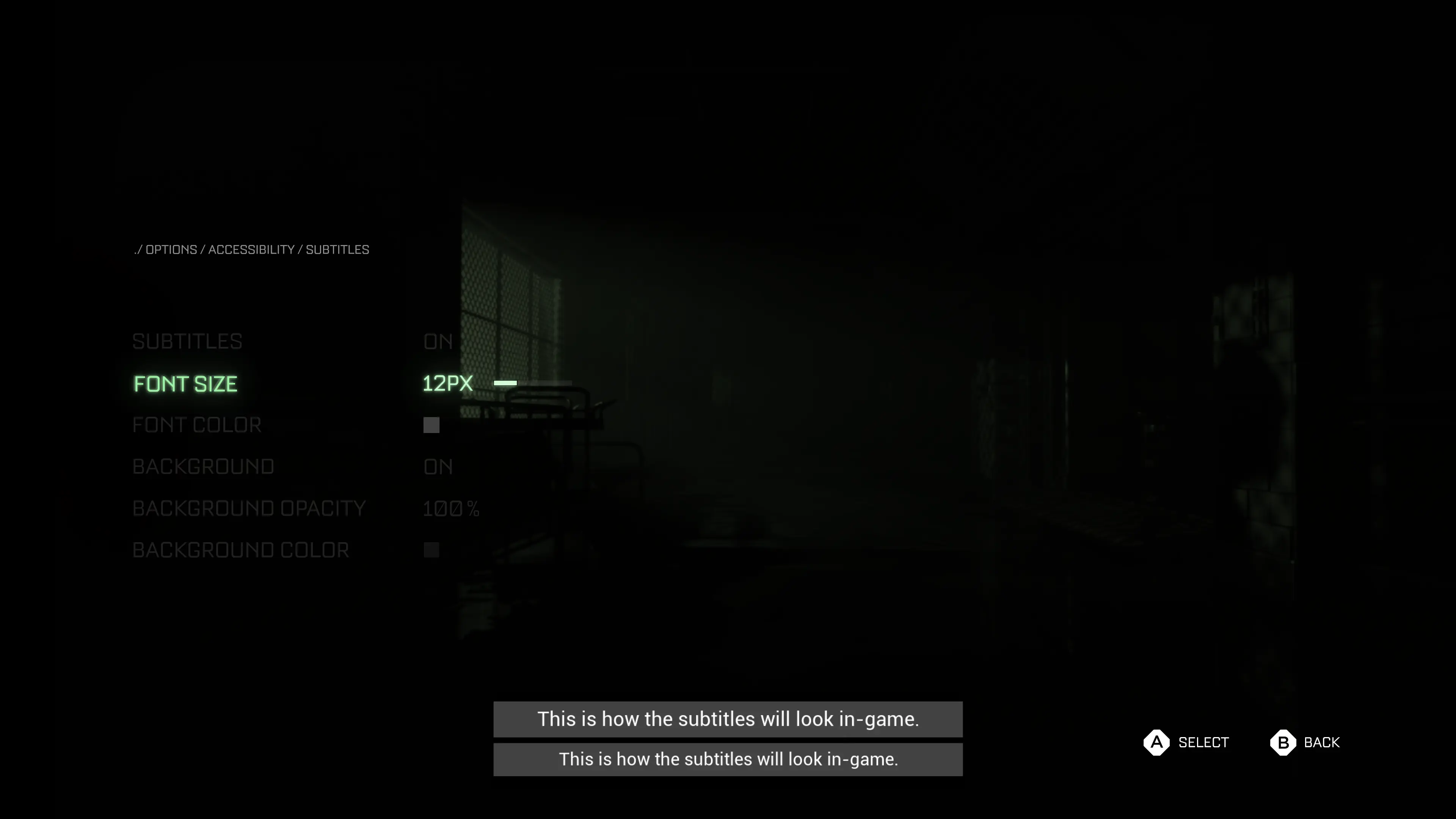
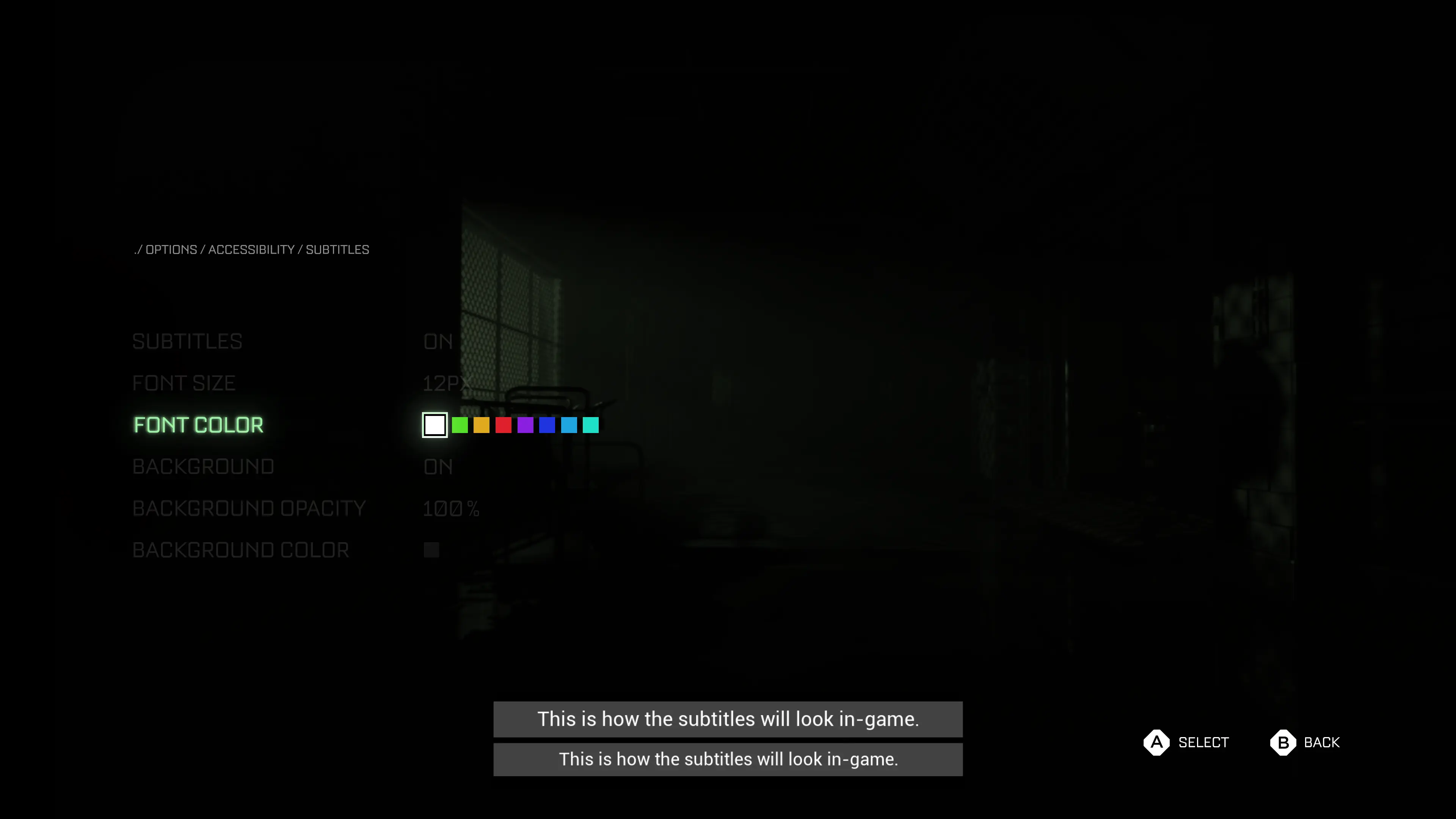
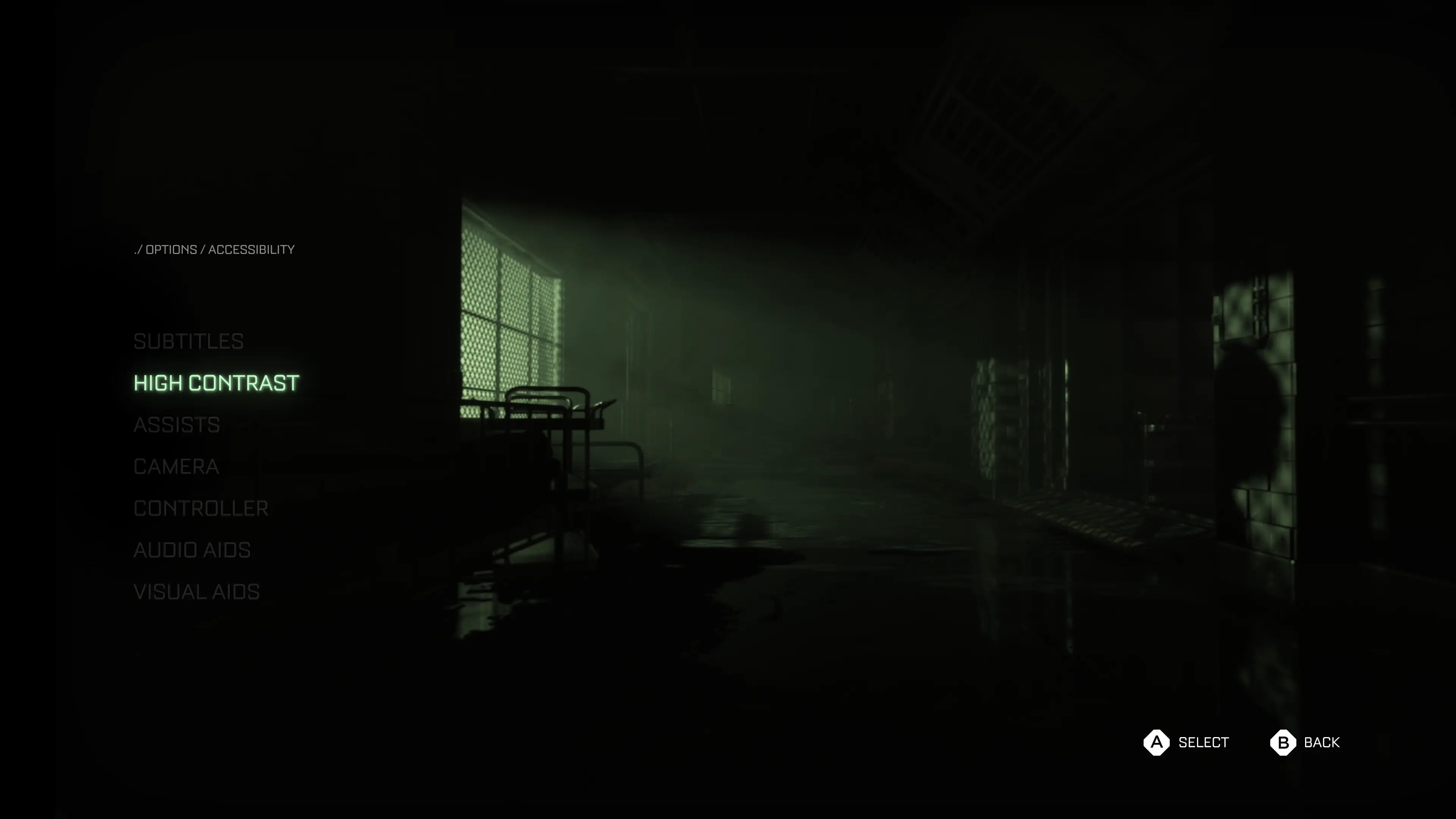
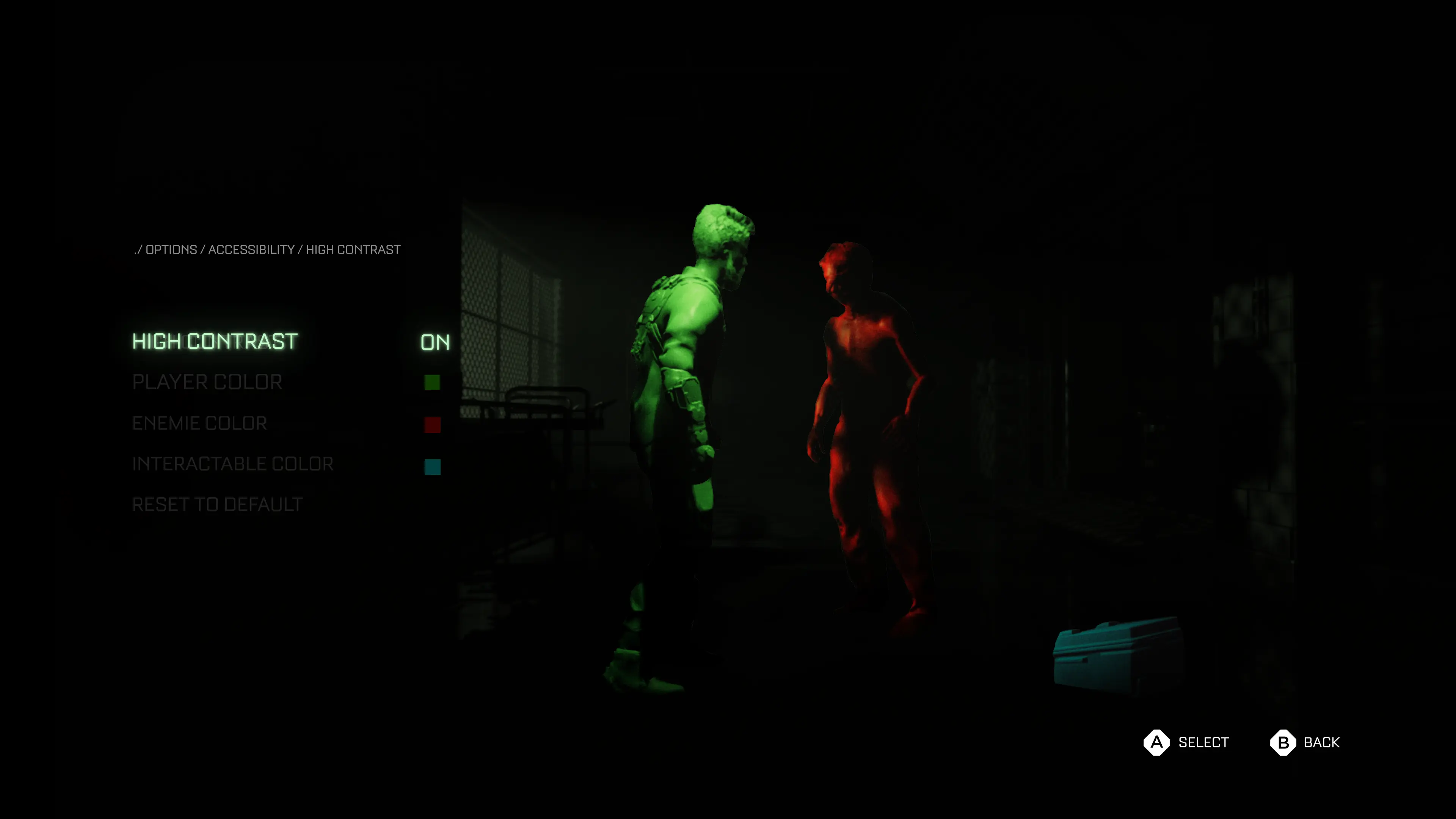
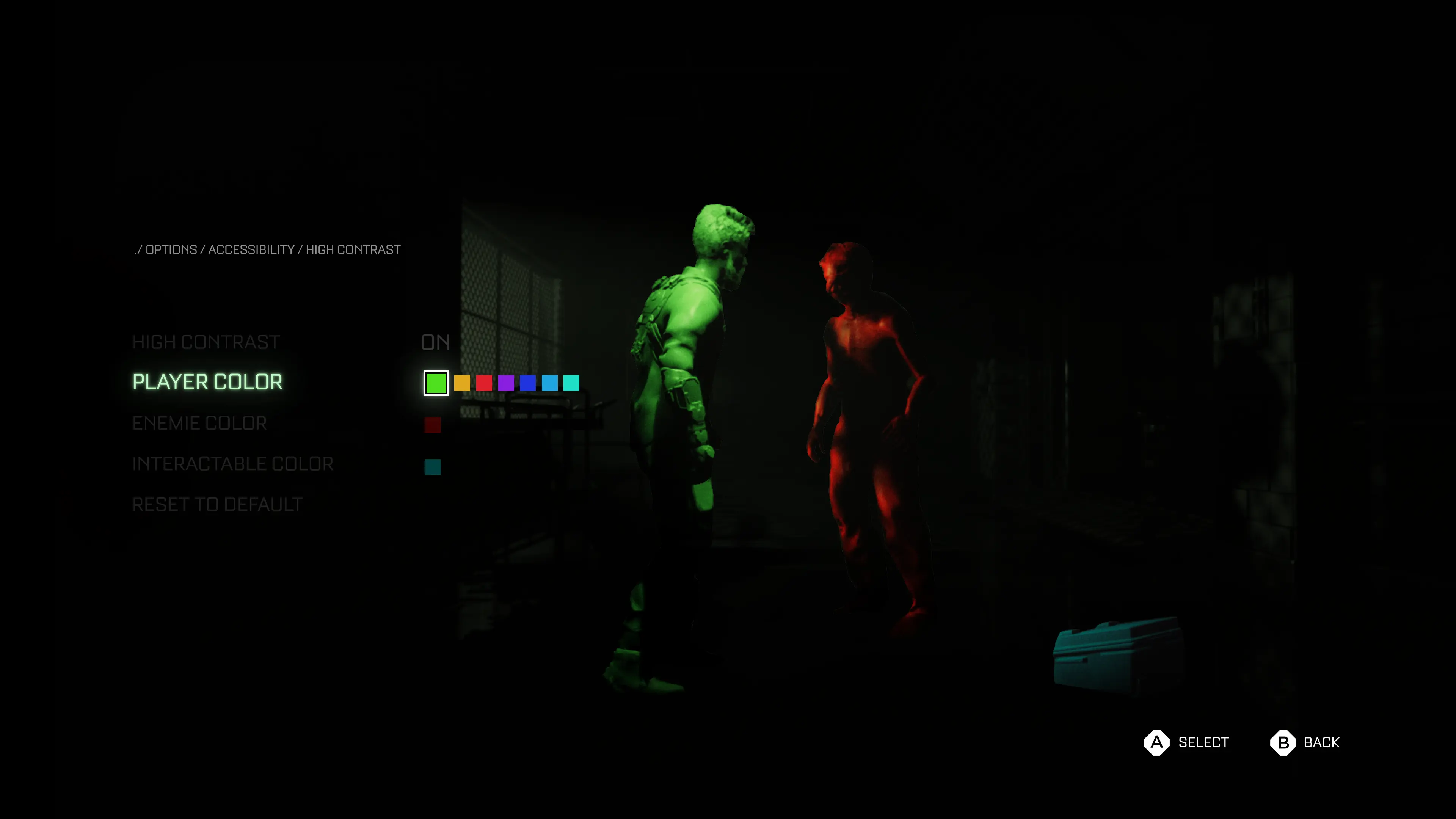
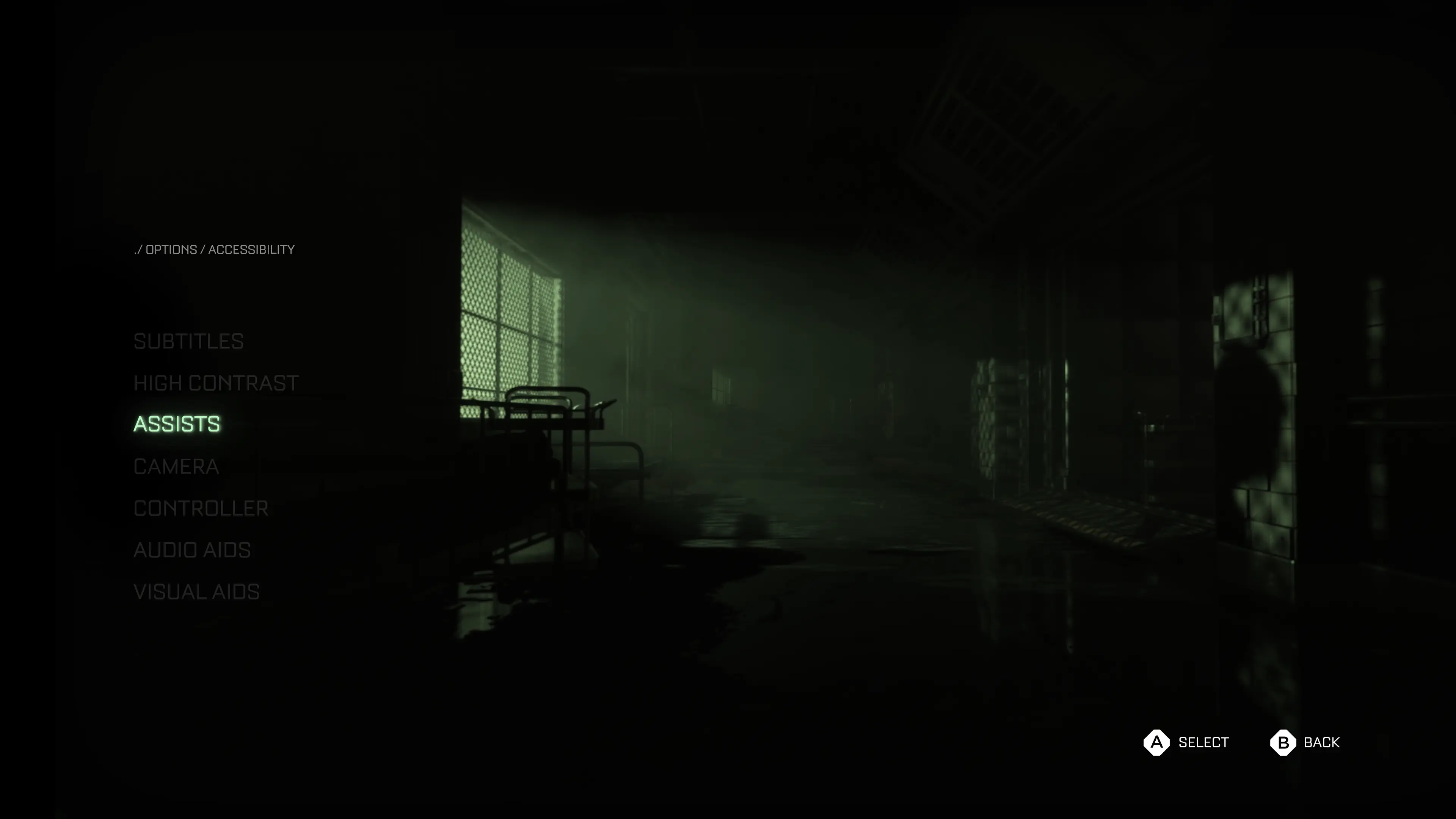
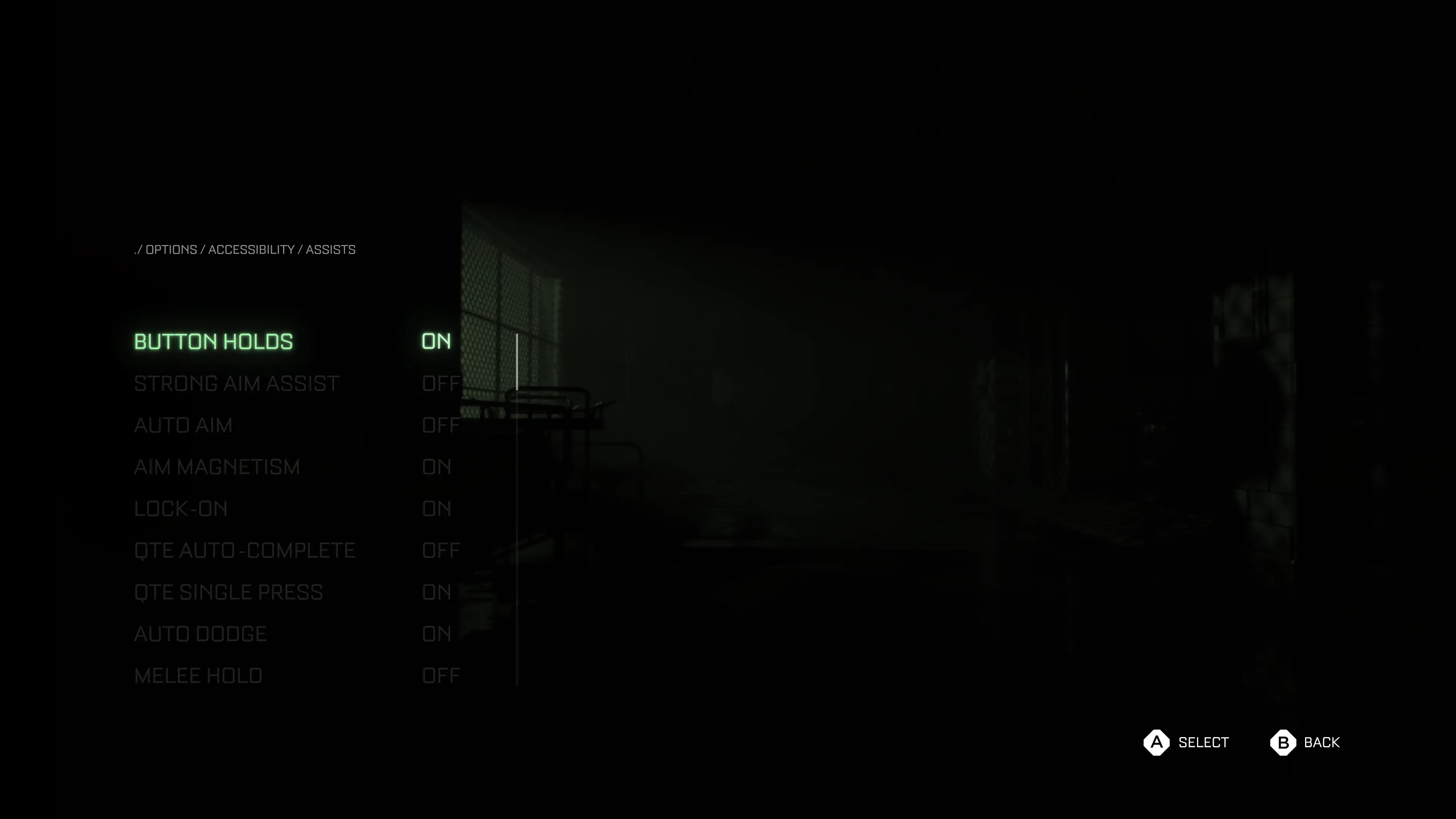
Menus and accessibility systems establish the player’s first interaction with the world. Wireframes defined structural hierarchy and interaction logic prior to visual integration. The goal was quiet clarity — layered configuration without visual noise. Accessibility states remained consistent with the overall tone while preserving usability.
Navigation needed to feel intentional and grounded, never detached from the experience. Systems were implemented in Unreal using modular widget structures to support scalability and future iteration.
Front End
-
/01
Navigation & Interaction Surfaces
-
Menus and accessibility systems establish the player’s first interaction with the world. Wireframes defined structural hierarchy and interaction logic prior to visual integration. The goal was quiet clarity — layered configuration without visual noise. Accessibility states remained consistent with the overall tone while preserving usability.
Navigation needed to feel intentional and grounded, never detached from the experience. Systems were implemented in Unreal using modular widget structures to support scalability and future iteration.
Front End
-
/01
Navigation & Interaction Surfaces
-
Menus and accessibility systems establish the player’s first interaction with the world. Wireframes defined structural hierarchy and interaction logic prior to visual integration. The goal was quiet clarity — layered configuration without visual noise. Accessibility states remained consistent with the overall tone while preserving usability.
Navigation needed to feel intentional and grounded, never detached from the experience. Systems were implemented in Unreal using modular widget structures to support scalability and future iteration.
(check CMS context / gallery slot)
Userl Interface & World Building
The main menu was conceived as an extension of the world rather than a detached overlay. I designed and assembled the 3D environment using production assets, shaping spatial composition and collaborating closely with lighting to achieve tonal consistency and readability.
In parallel, I developed the menu’s UX structure and implemented the interaction logic within Unreal, ensuring clarity without breaking immersion. The result was a grounded, atmospheric entry point that established tone before gameplay even began.
-
/01
Navigation & Interaction Surfaces
Userl Interface & World Building
The main menu was conceived as an extension of the world rather than a detached overlay. I designed and assembled the 3D environment using production assets, shaping spatial composition and collaborating closely with lighting to achieve tonal consistency and readability.
In parallel, I developed the menu’s UX structure and implemented the interaction logic within Unreal, ensuring clarity without breaking immersion. The result was a grounded, atmospheric entry point that established tone before gameplay even began.
-
/01
Navigation & Interaction Surfaces
Gameplay
-
/02
Health System : Diegetic Player State
-
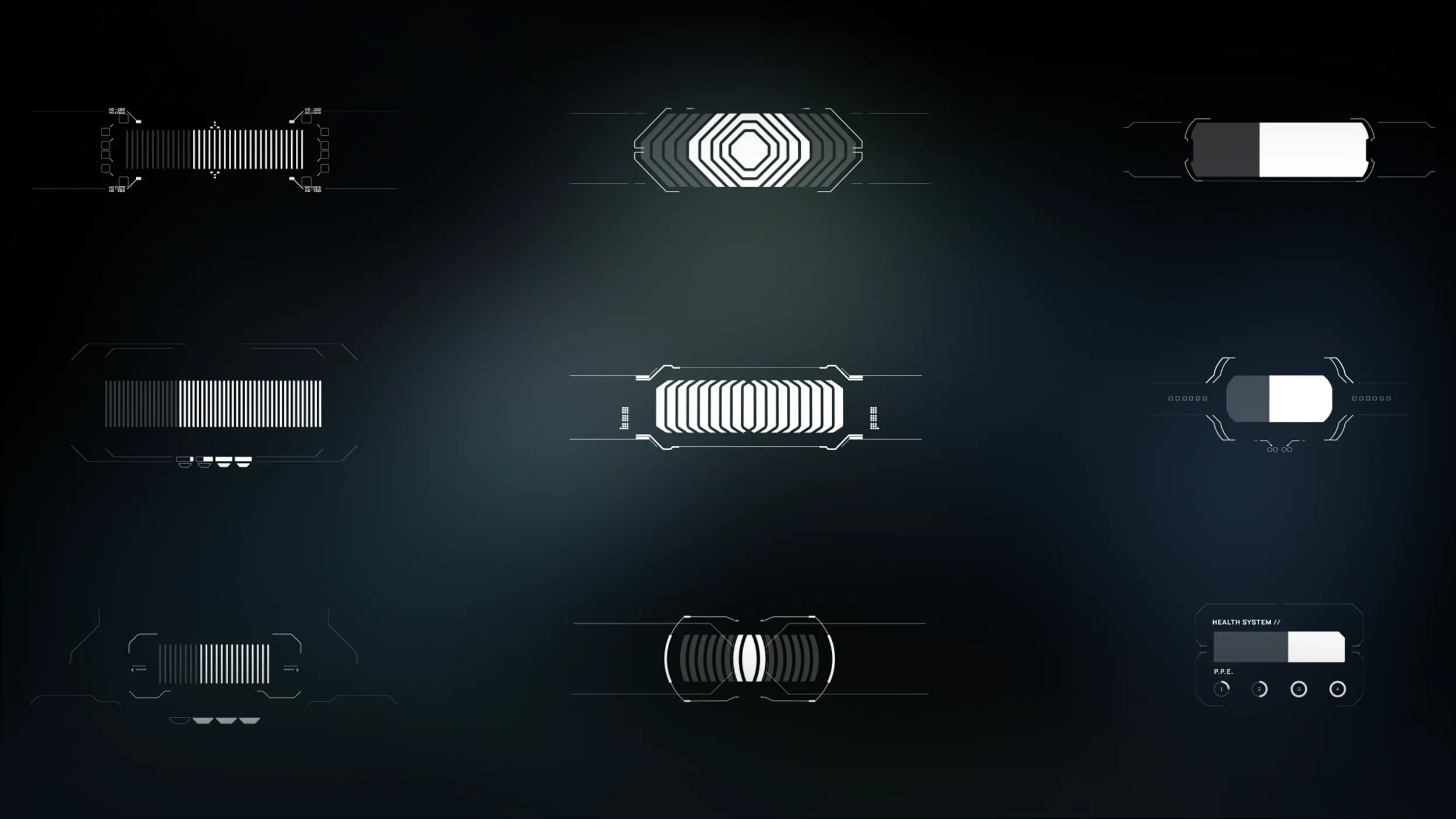
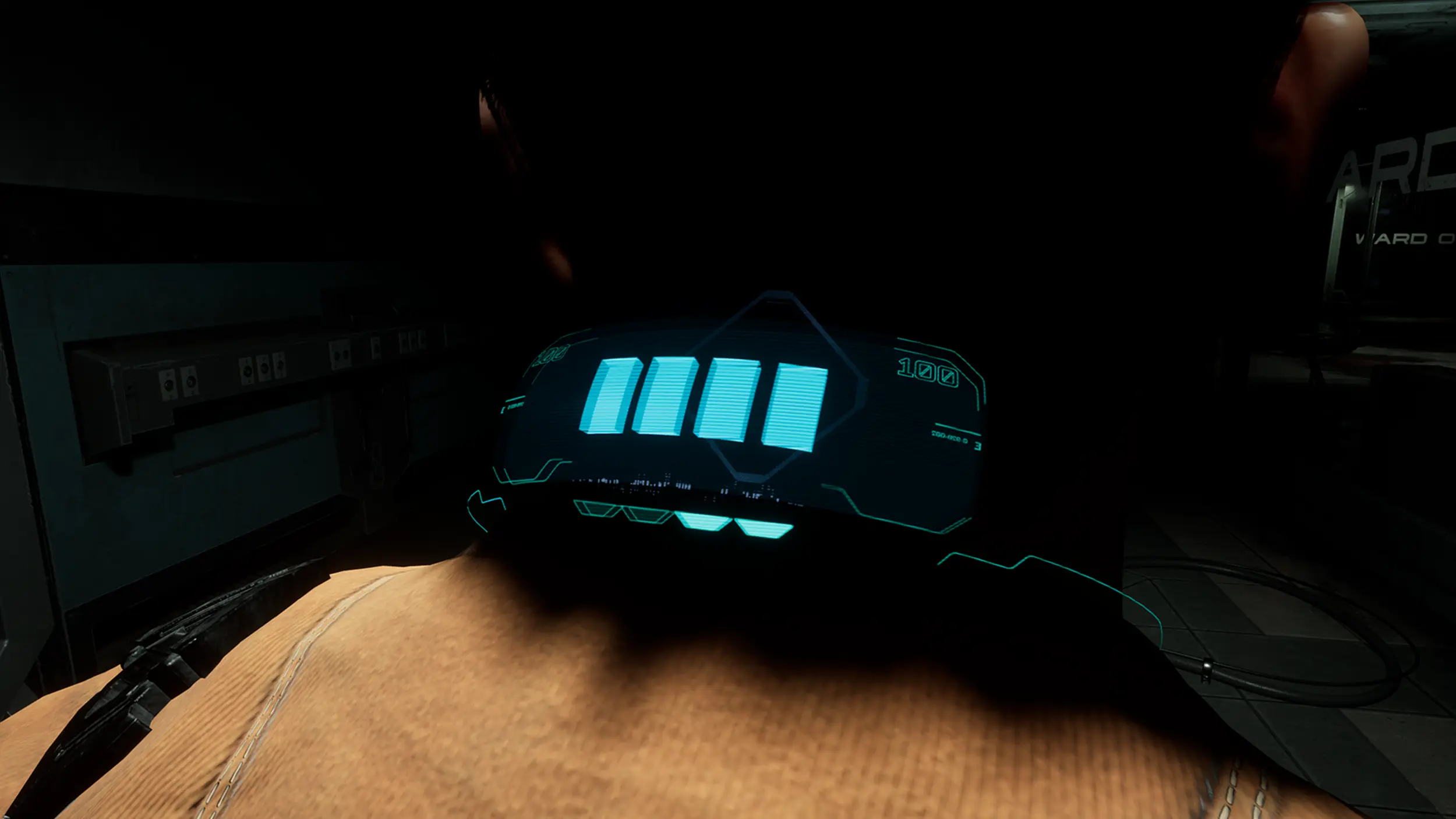
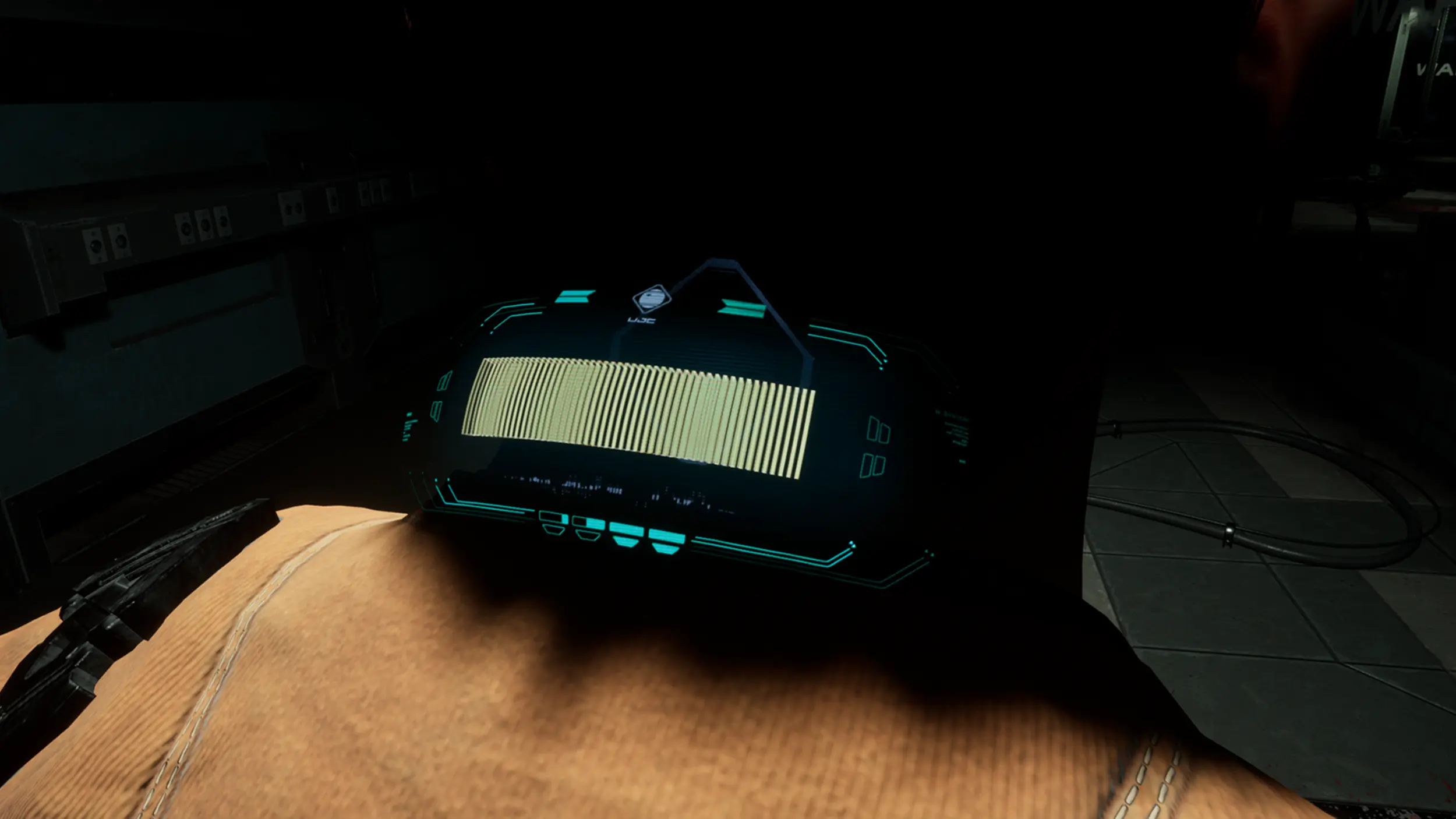
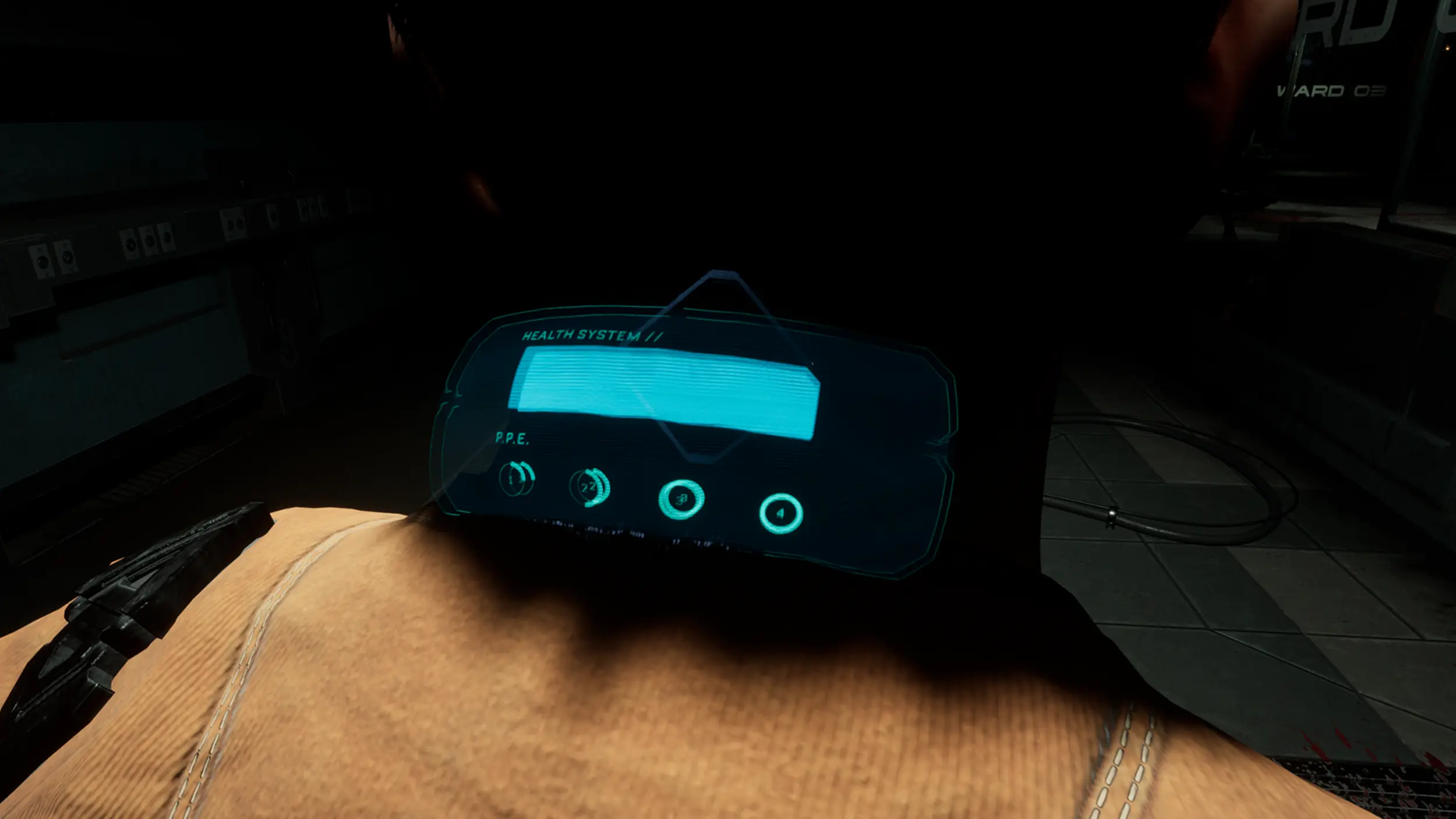
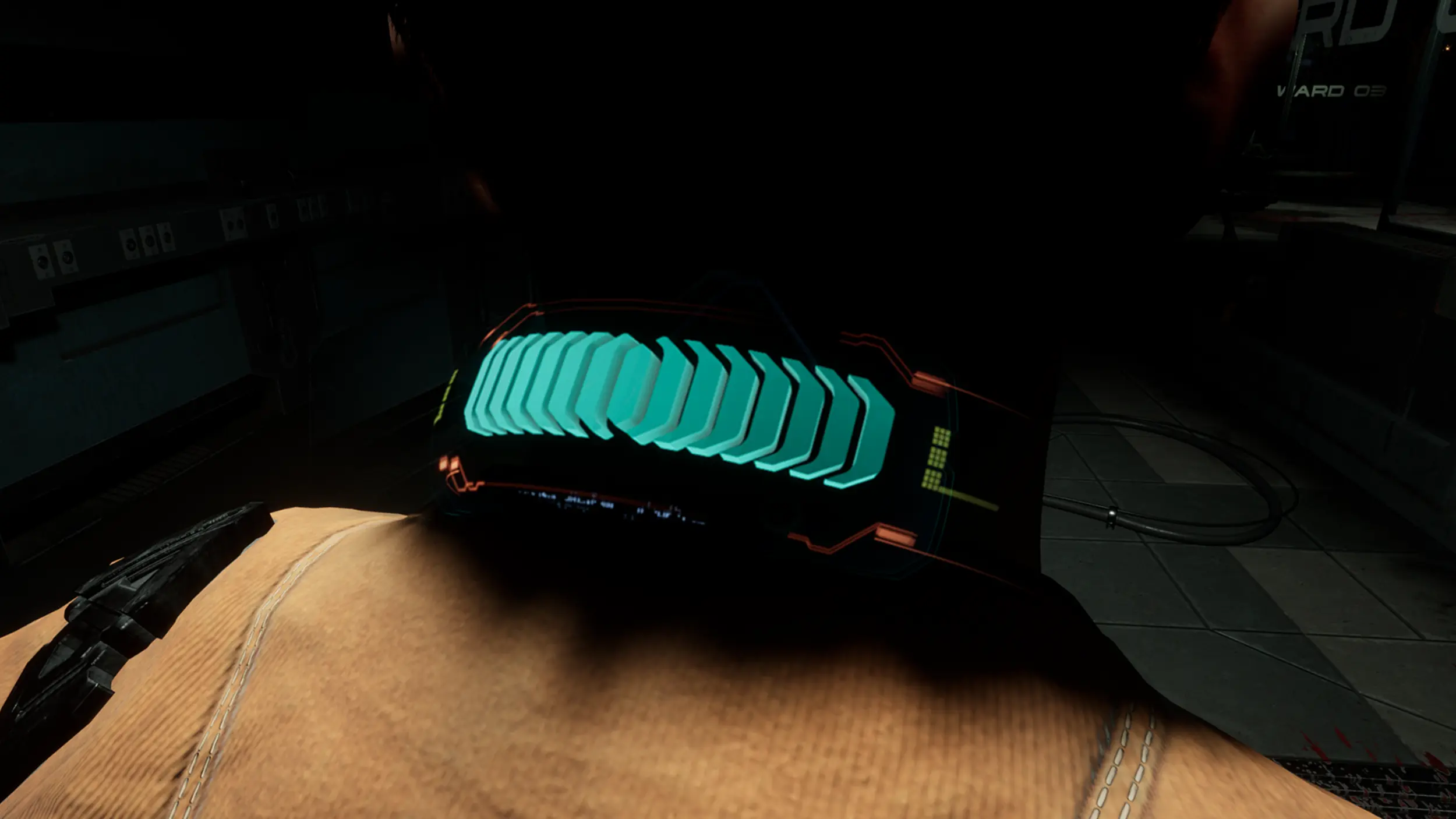
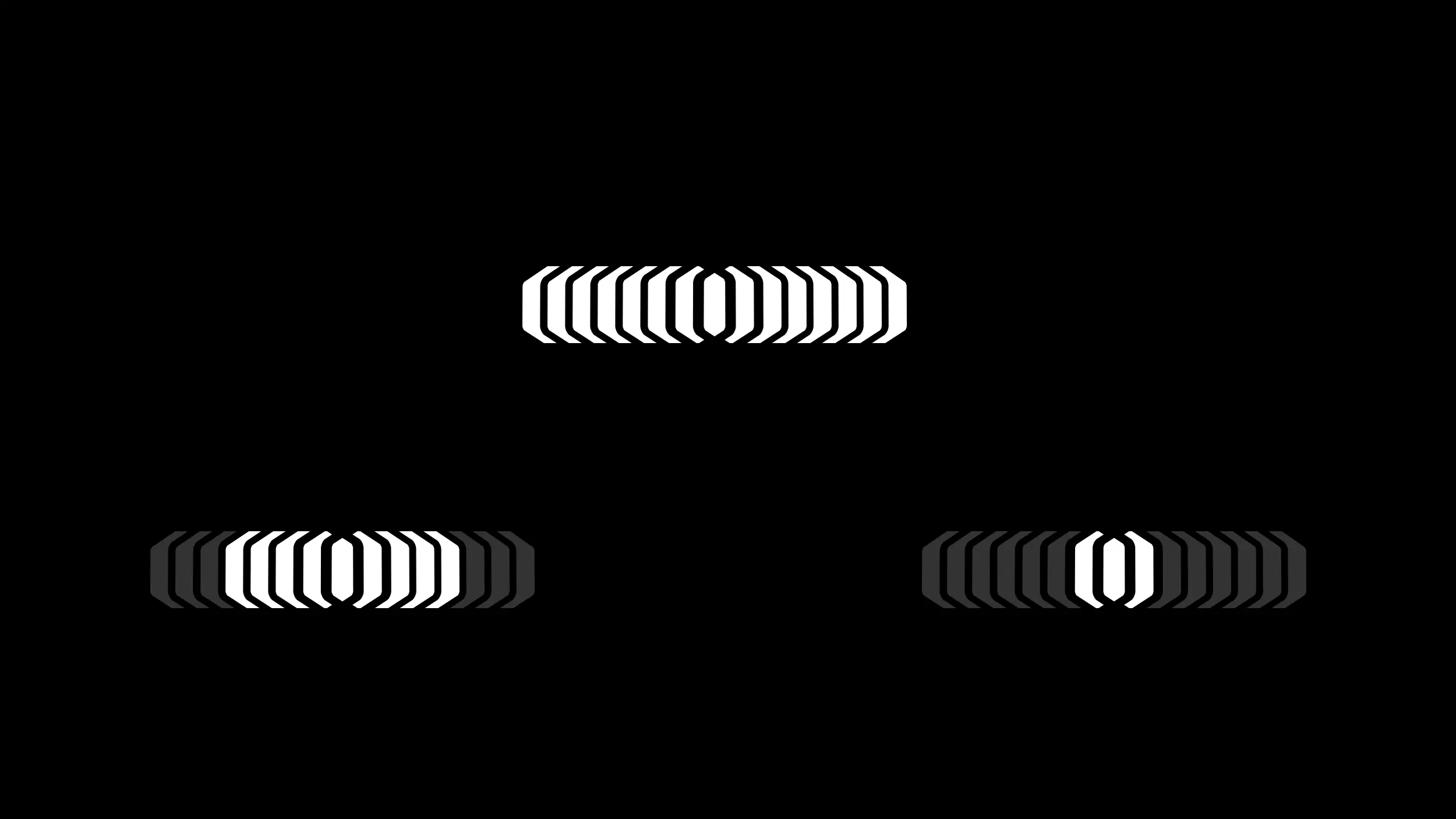
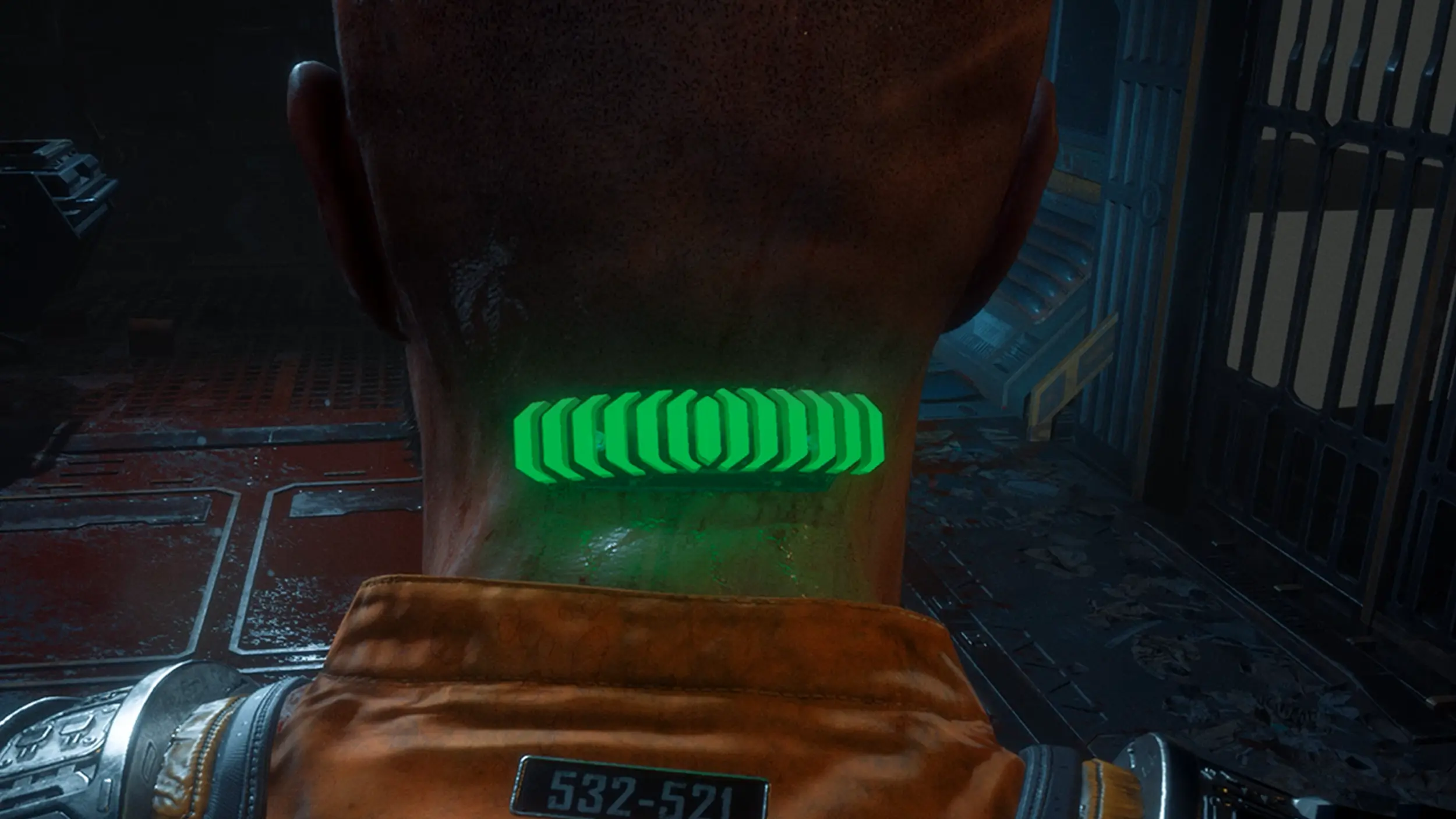
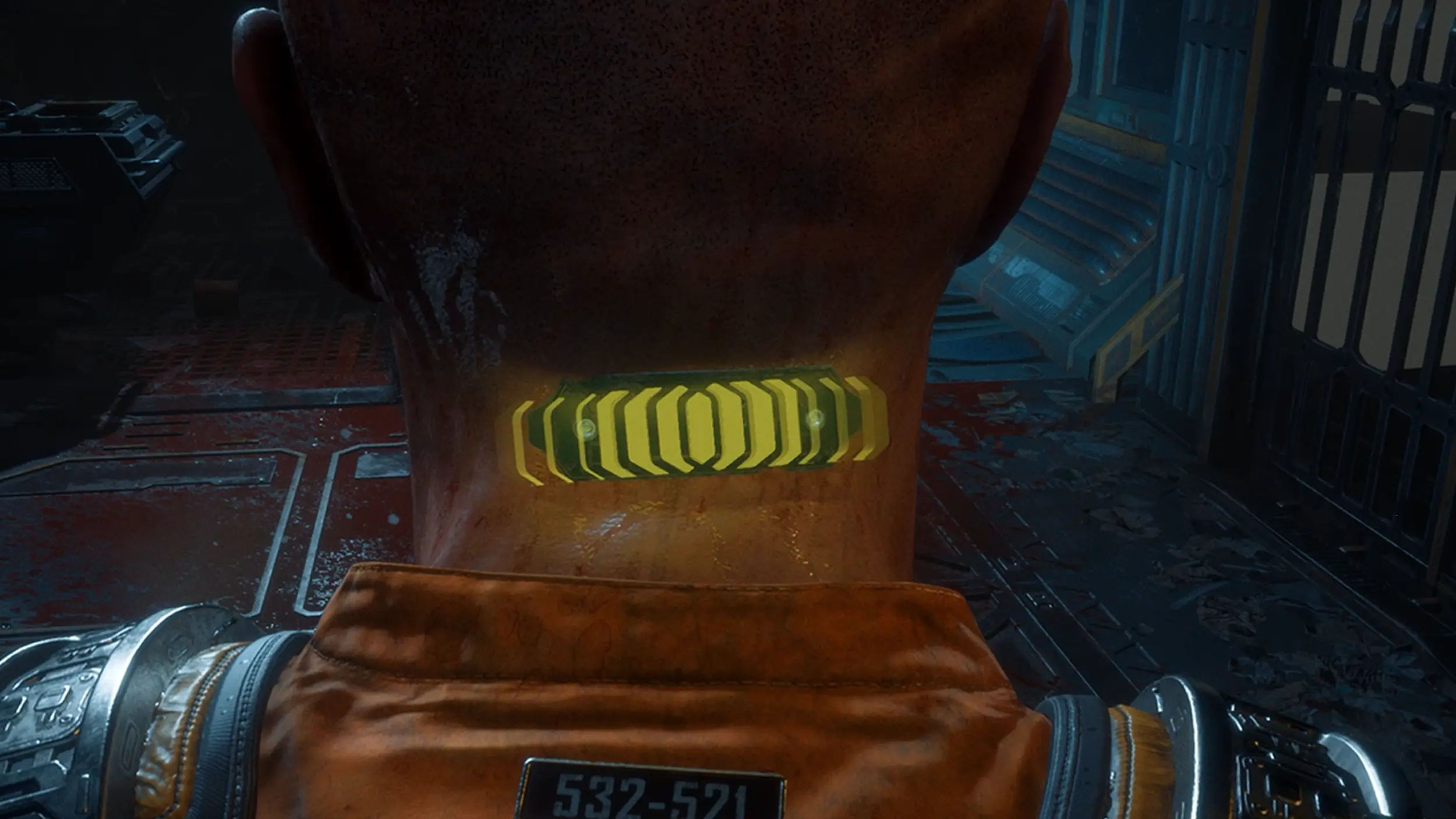
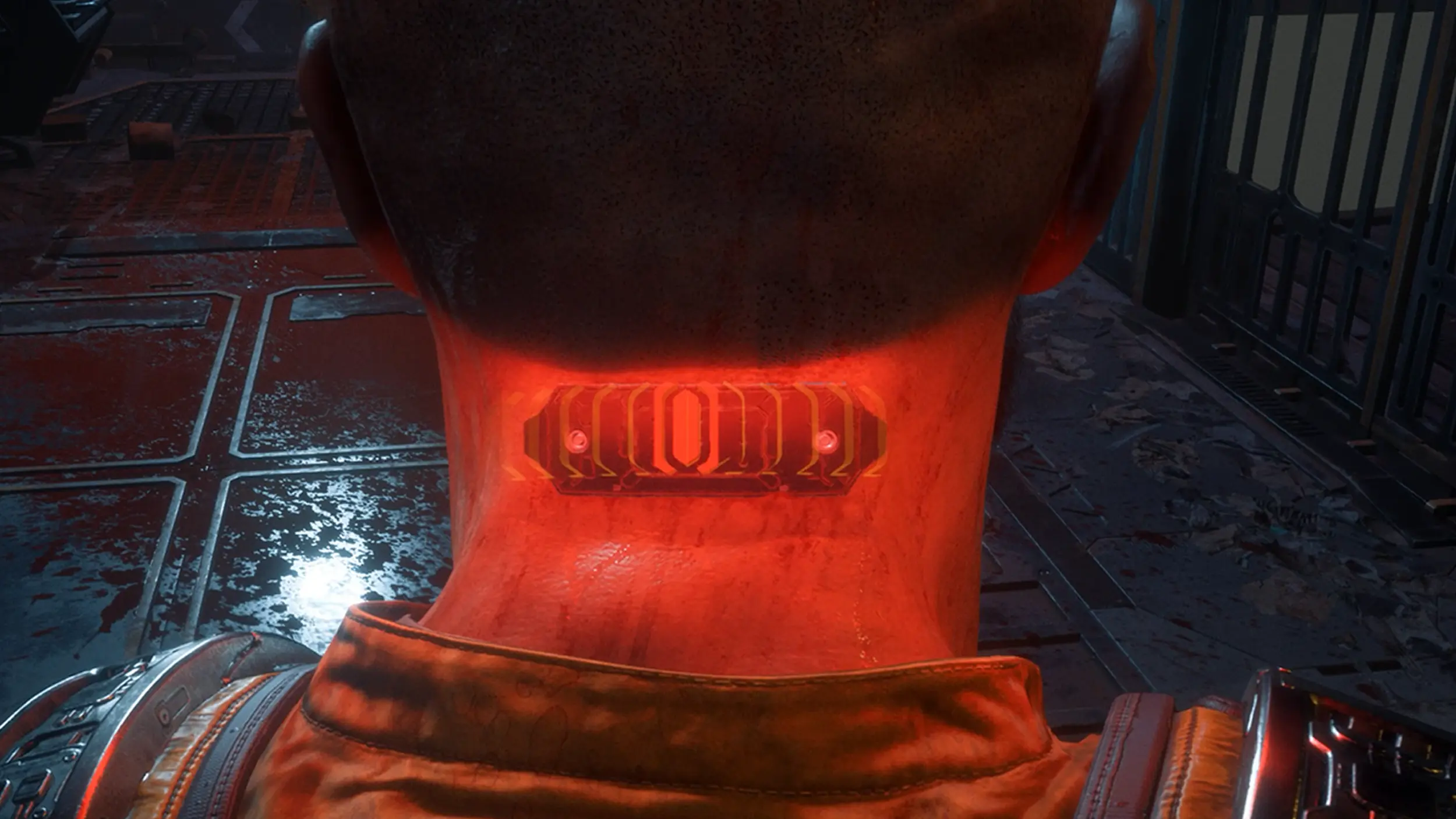
The player’s health is communicated through a spinal implant embedded at the base of the neck, a prison-issued device that tracks vital status in-world rather than through a traditional HUD. I contributed to concept development and prototyping before modeling the final 3D implant and implementing its material and gameplay-driven logic within Unreal. Health bars expand from the center outward, reinforcing stability and symmetry, while critical states trigger animated color shifts and synchronized audio feedback.
The system remains readable under stress while preserving immersion, functioning as both narrative artifact and gameplay-critical interface.
Gameplay
-
/02
Health System : Diegetic Player State
-
The player’s health is communicated through a spinal implant embedded at the base of the neck, a prison-issued device that tracks vital status in-world rather than through a traditional HUD. I contributed to concept development and prototyping before modeling the final 3D implant and implementing its material and gameplay-driven logic within Unreal. Health bars expand from the center outward, reinforcing stability and symmetry, while critical states trigger animated color shifts and synchronized audio feedback.
The system remains readable under stress while preserving immersion, functioning as both narrative artifact and gameplay-critical interface.
Gameplay
-
/02
Health System : Diegetic Player State
-
The player’s health is communicated through a spinal implant embedded at the base of the neck, a prison-issued device that tracks vital status in-world rather than through a traditional HUD. I contributed to concept development and prototyping before modeling the final 3D implant and implementing its material and gameplay-driven logic within Unreal. Health bars expand from the center outward, reinforcing stability and symmetry, while critical states trigger animated color shifts and synchronized audio feedback.
The system remains readable under stress while preserving immersion, functioning as both narrative artifact and gameplay-critical interface.
(check CMS context / gallery slot)
(check CMS context / gallery slot)
(check CMS context / gallery slot)
(check CMS context / gallery slot)
In moments of stress, clarity becomes critical.
Core HUD components were designed to reveal only essential information.
Built for consistency and restraint, the interface supports gameplay without competing with it.
-
/02
Health System : Diegetic Player State
In moments of stress, clarity becomes critical.
Core HUD components were designed to reveal only essential information.
Built for consistency and restraint, the interface supports gameplay without competing with it.
-
/02
Health System : Diegetic Player State
Gameplay
-
/03
Feature Systems
-
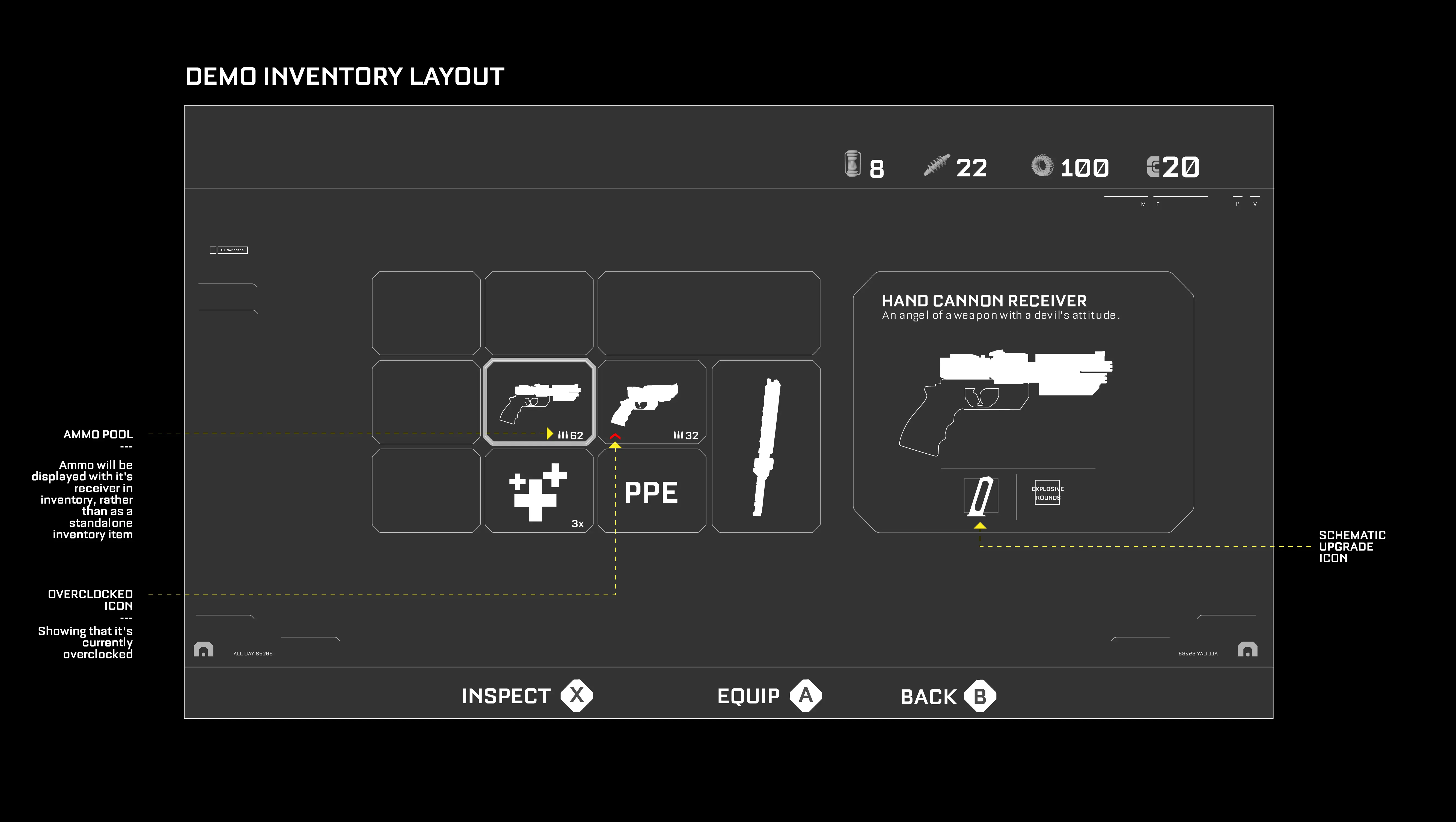
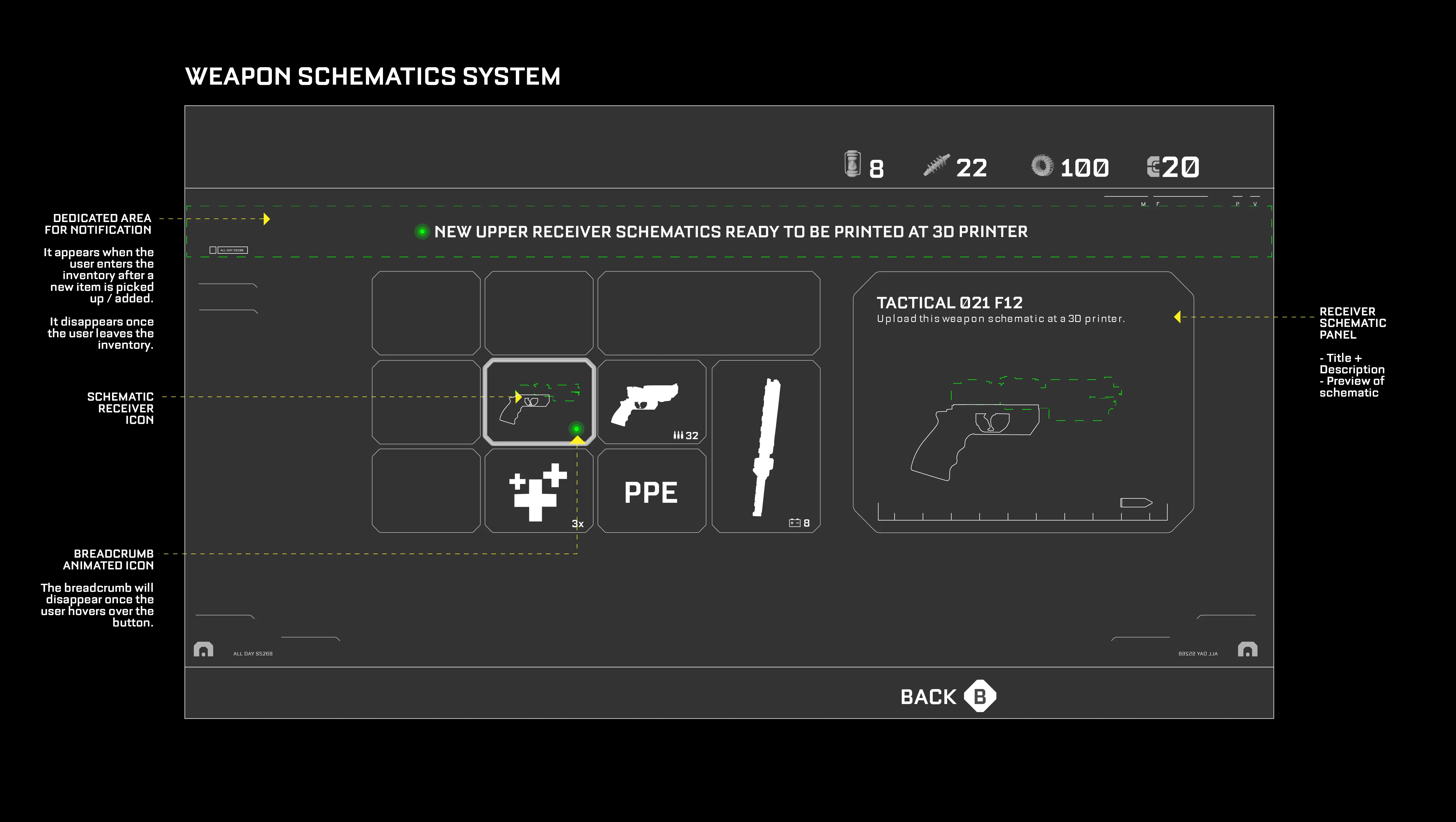
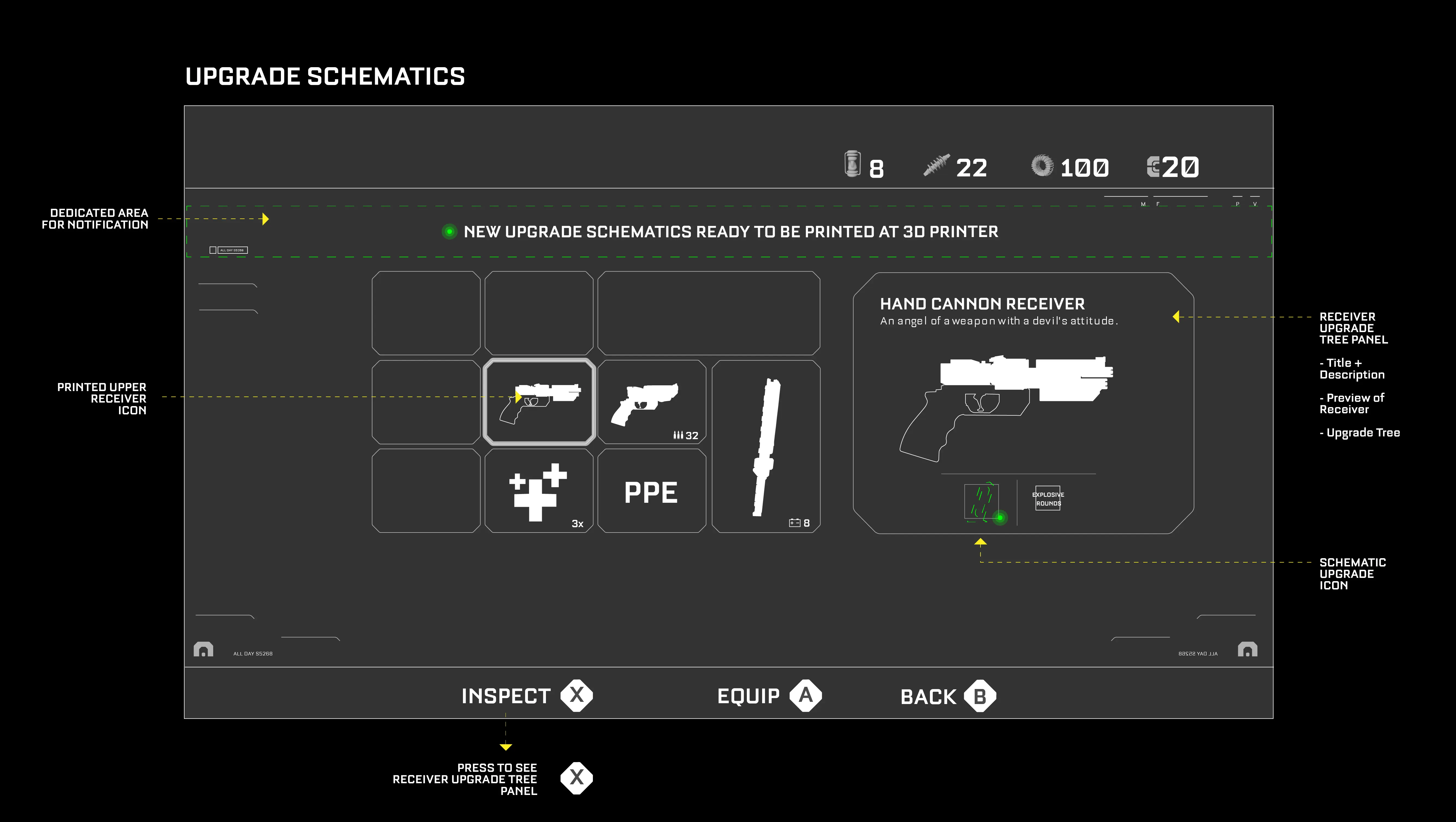
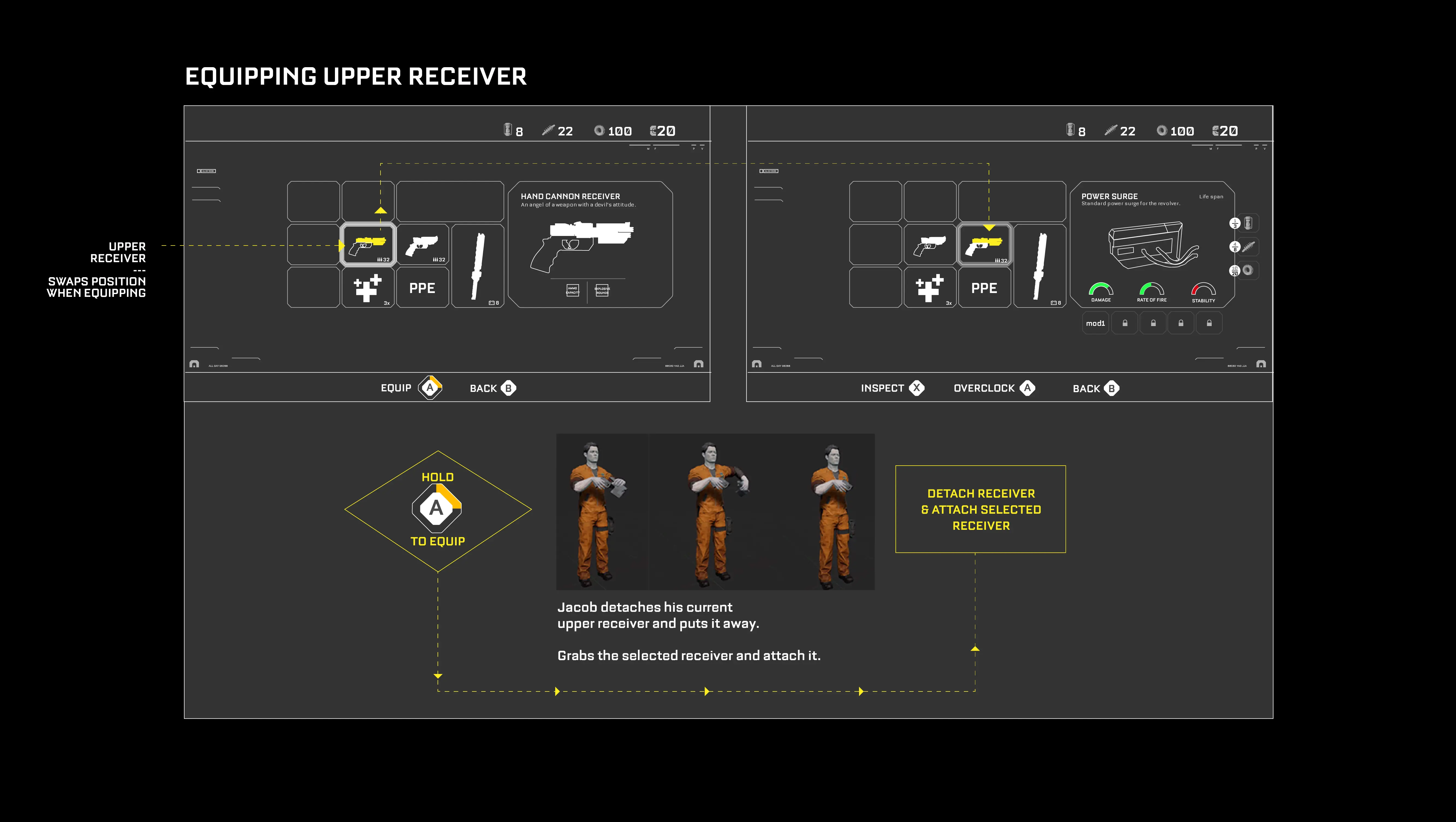
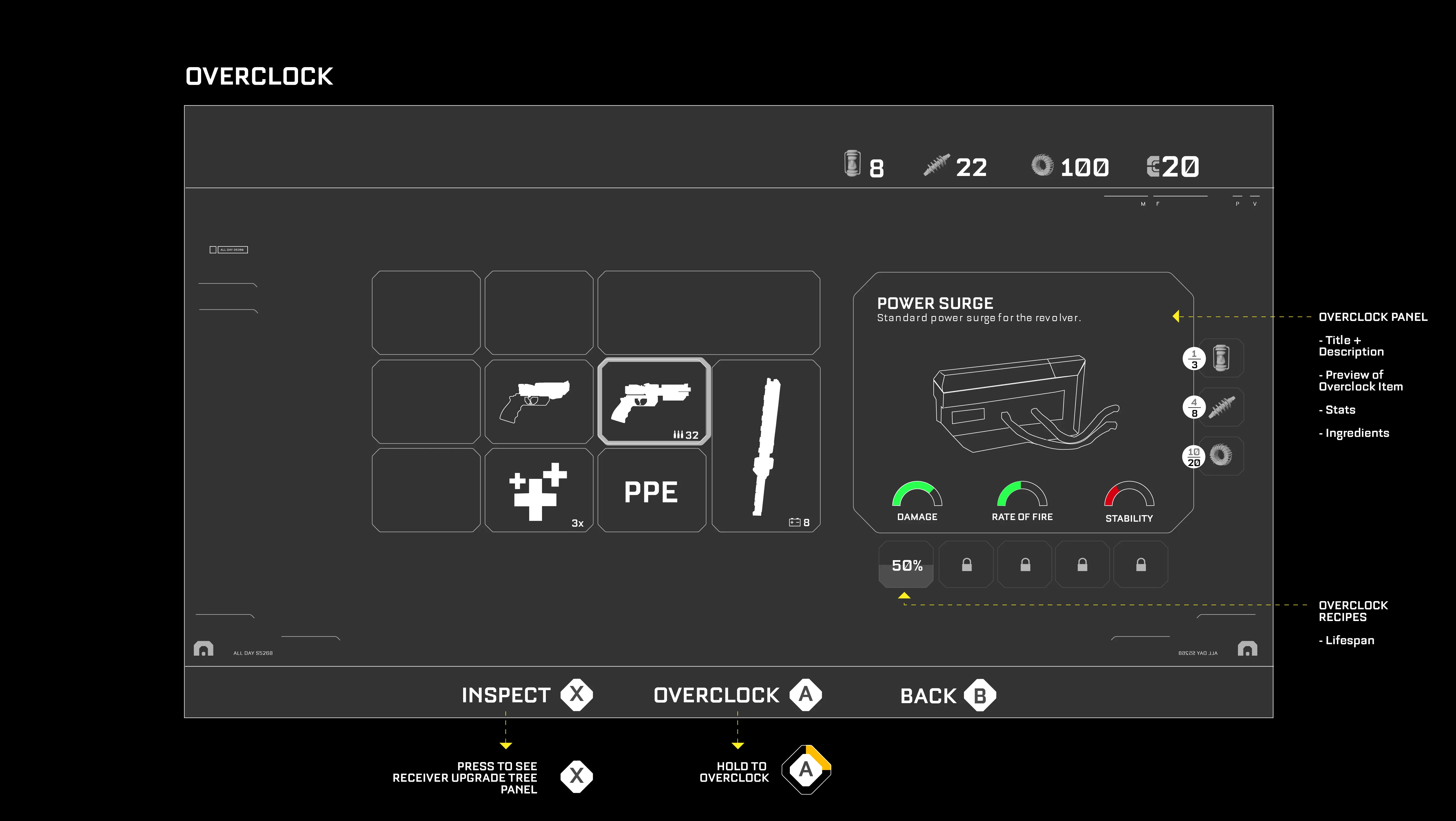
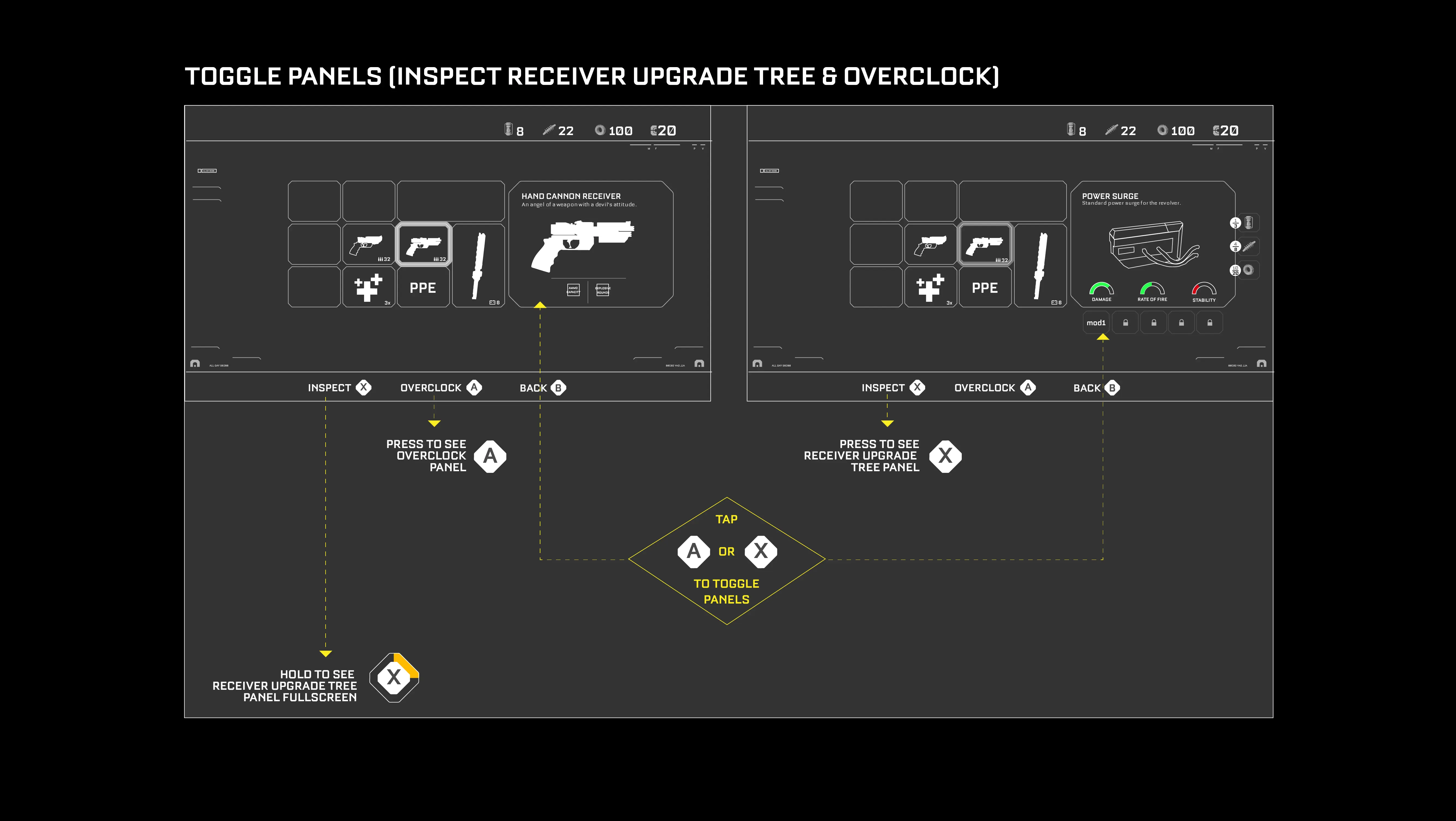
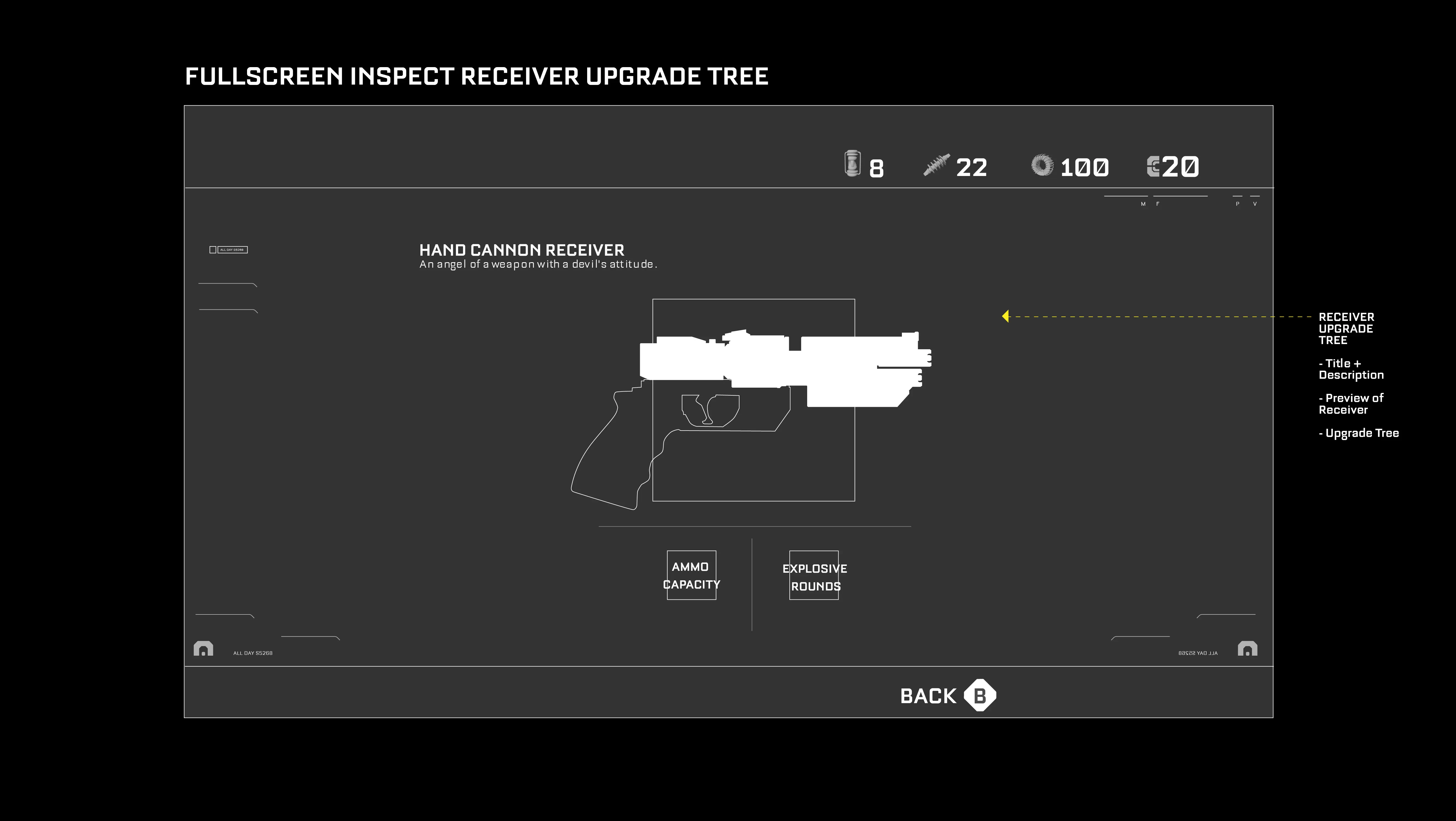
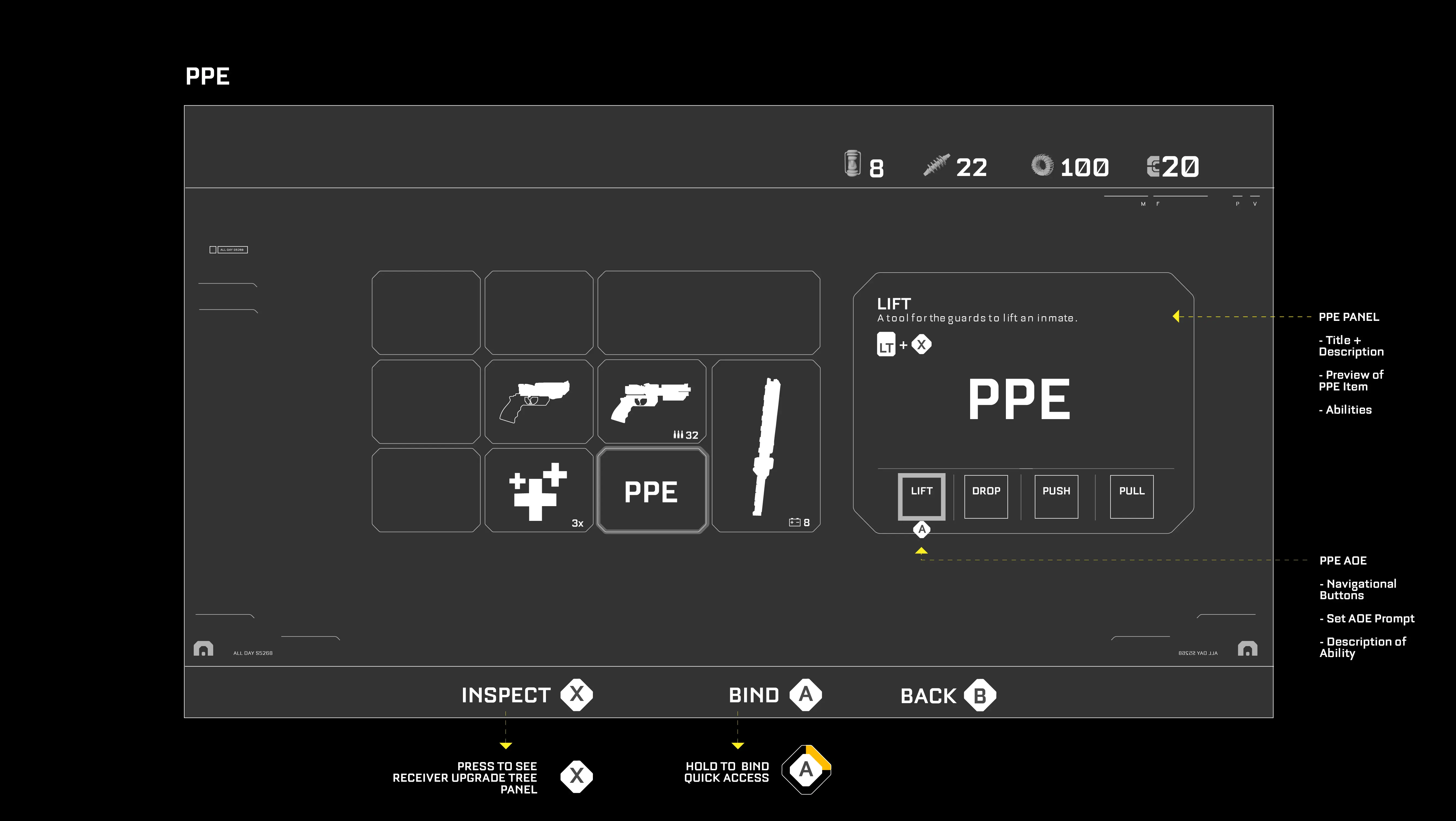
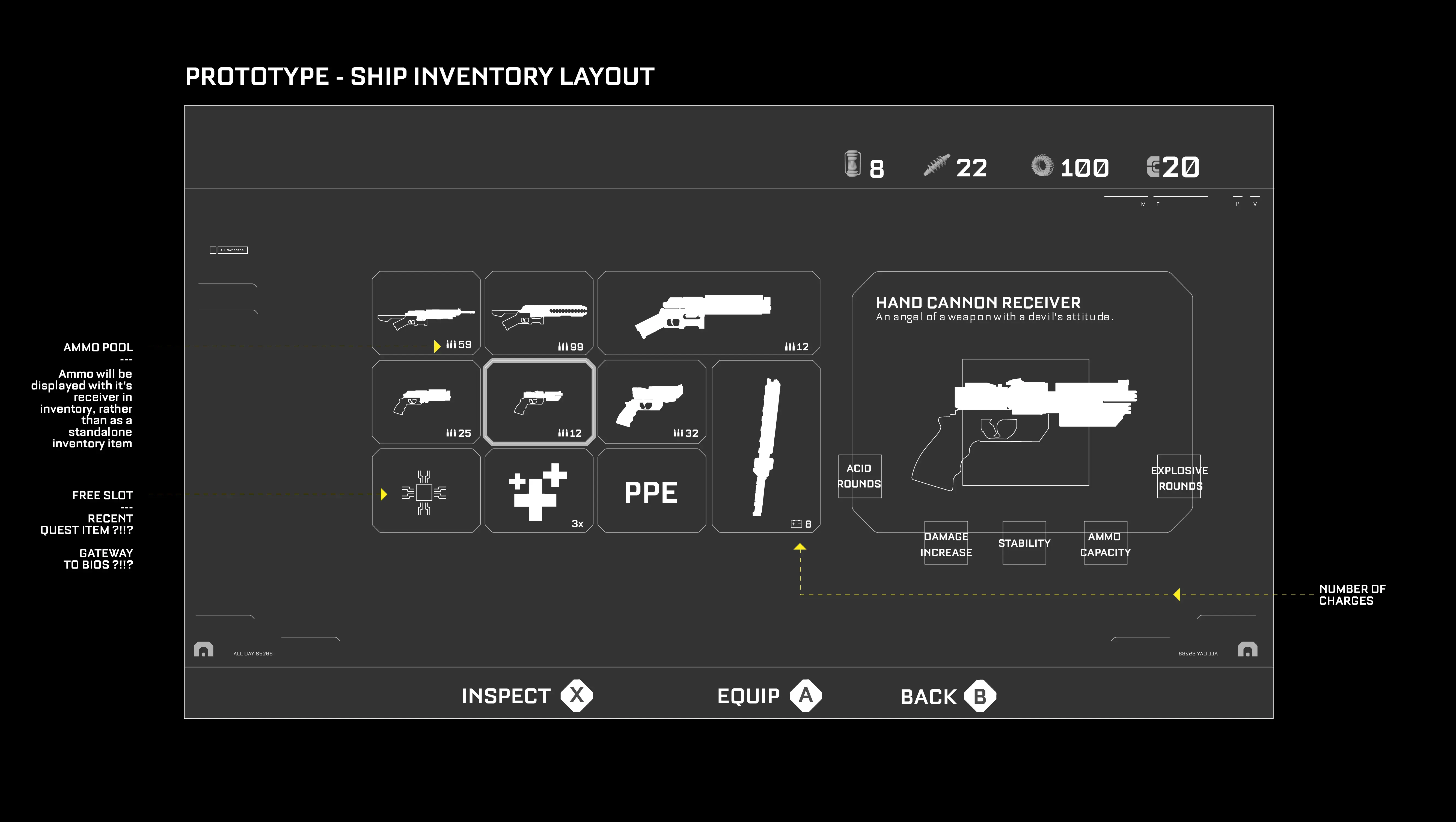
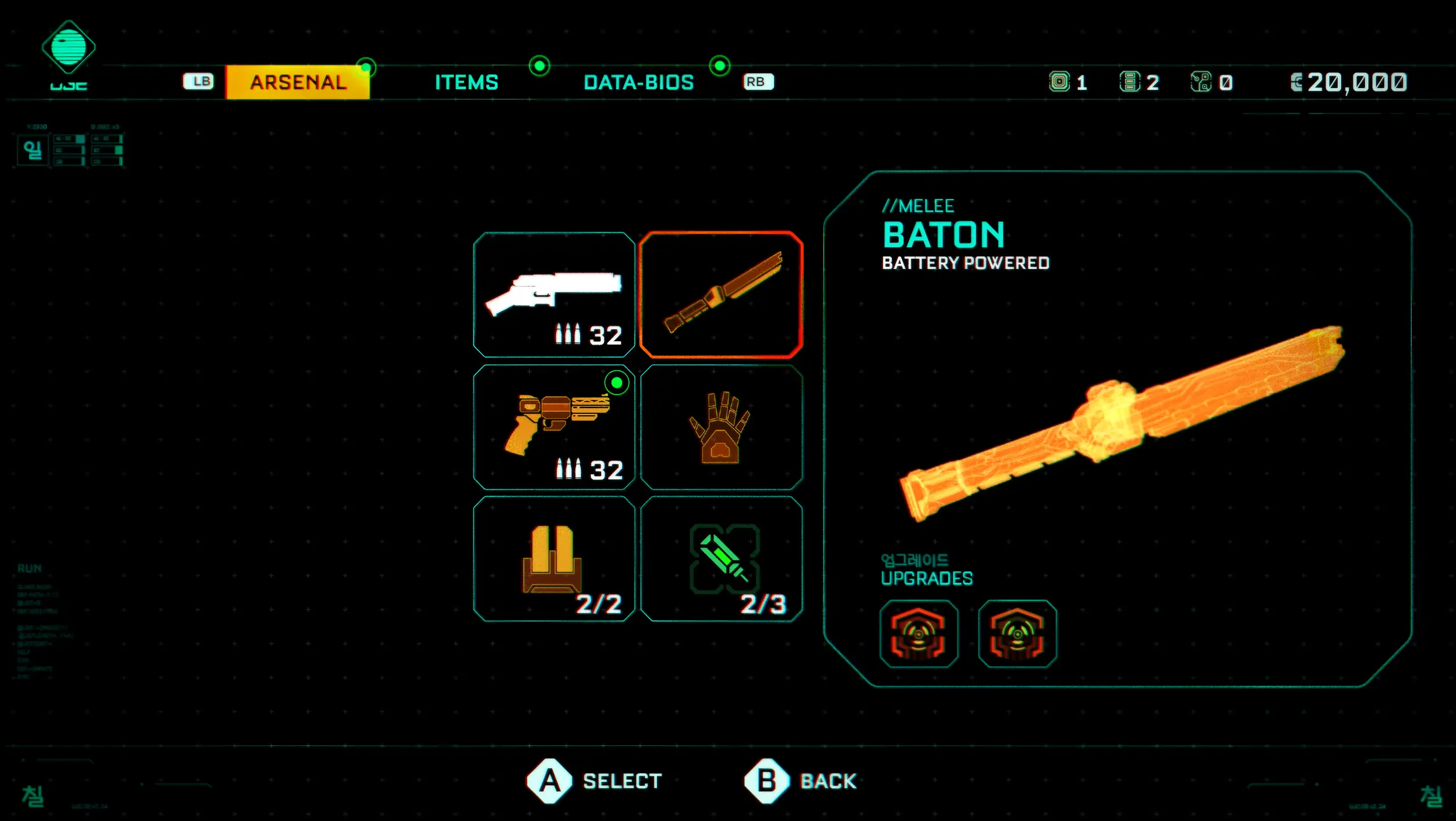
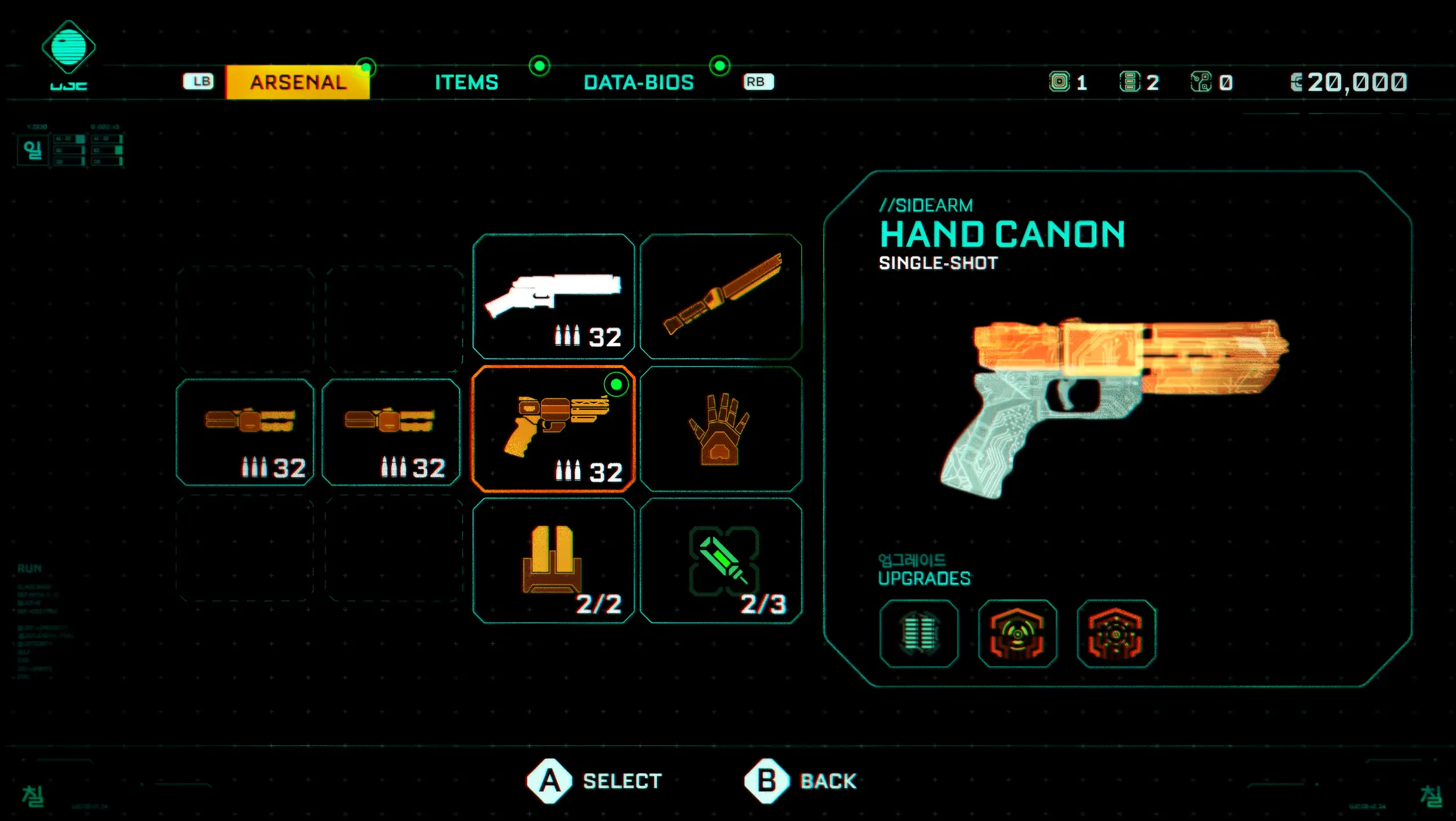
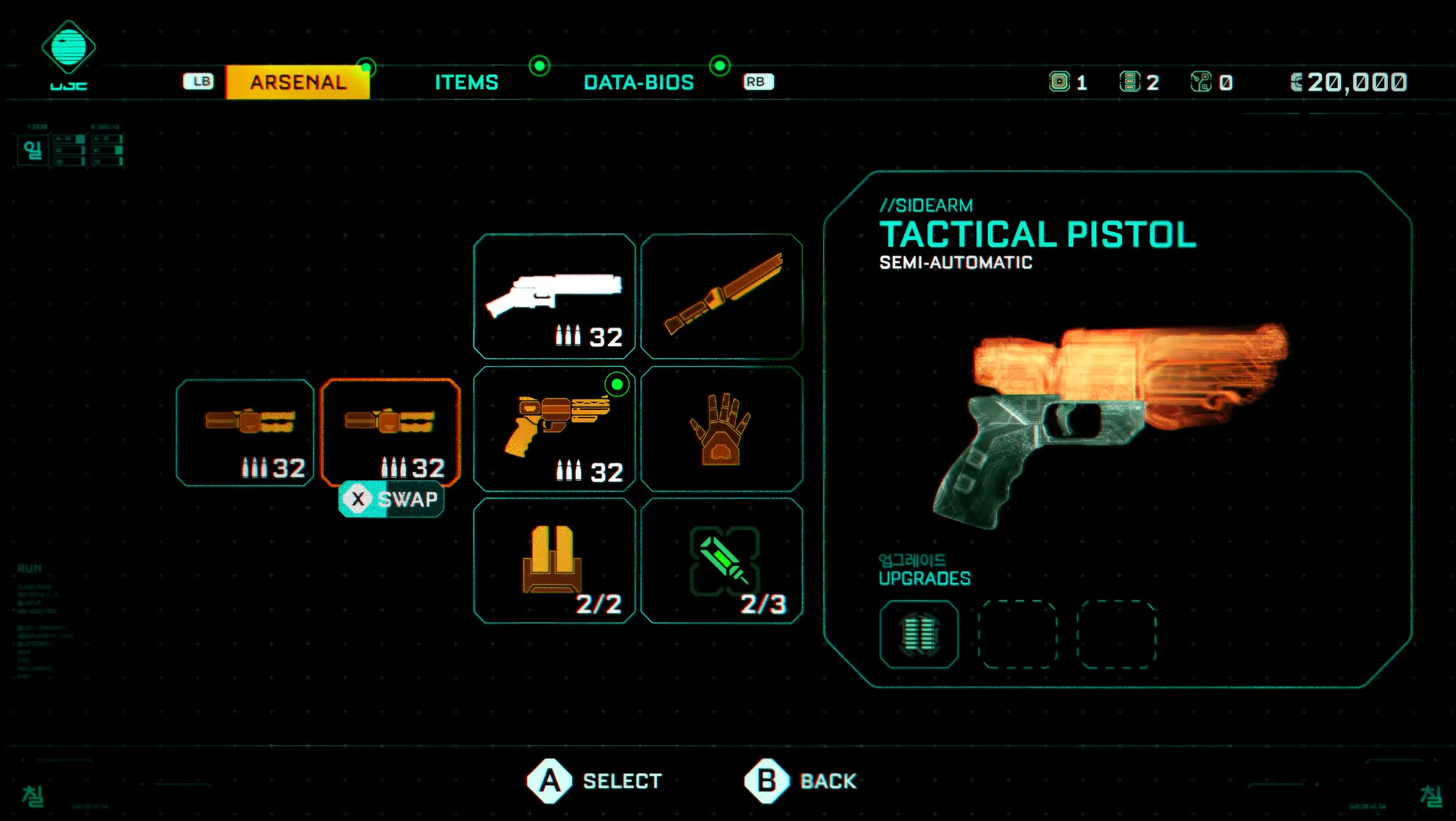
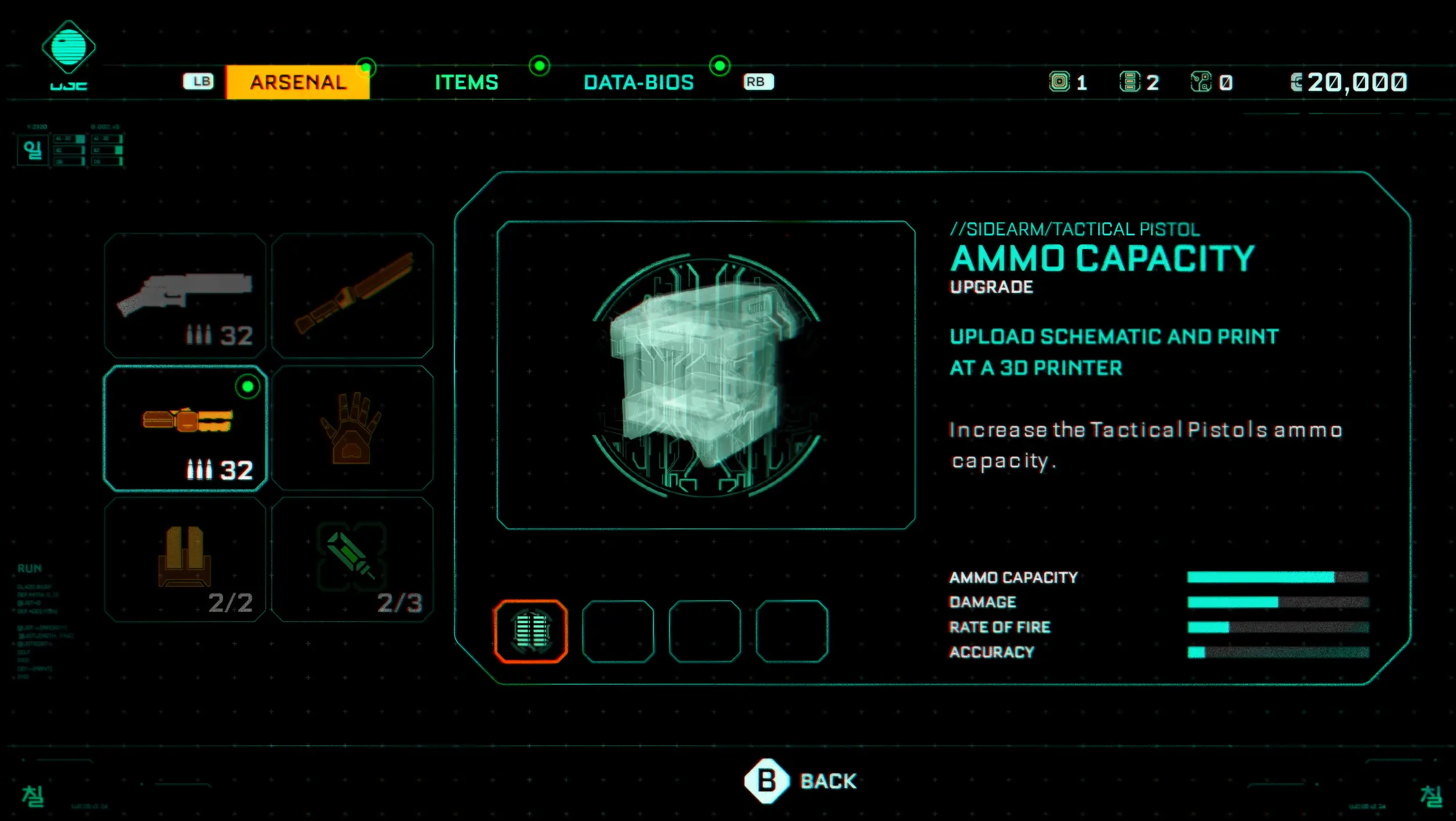
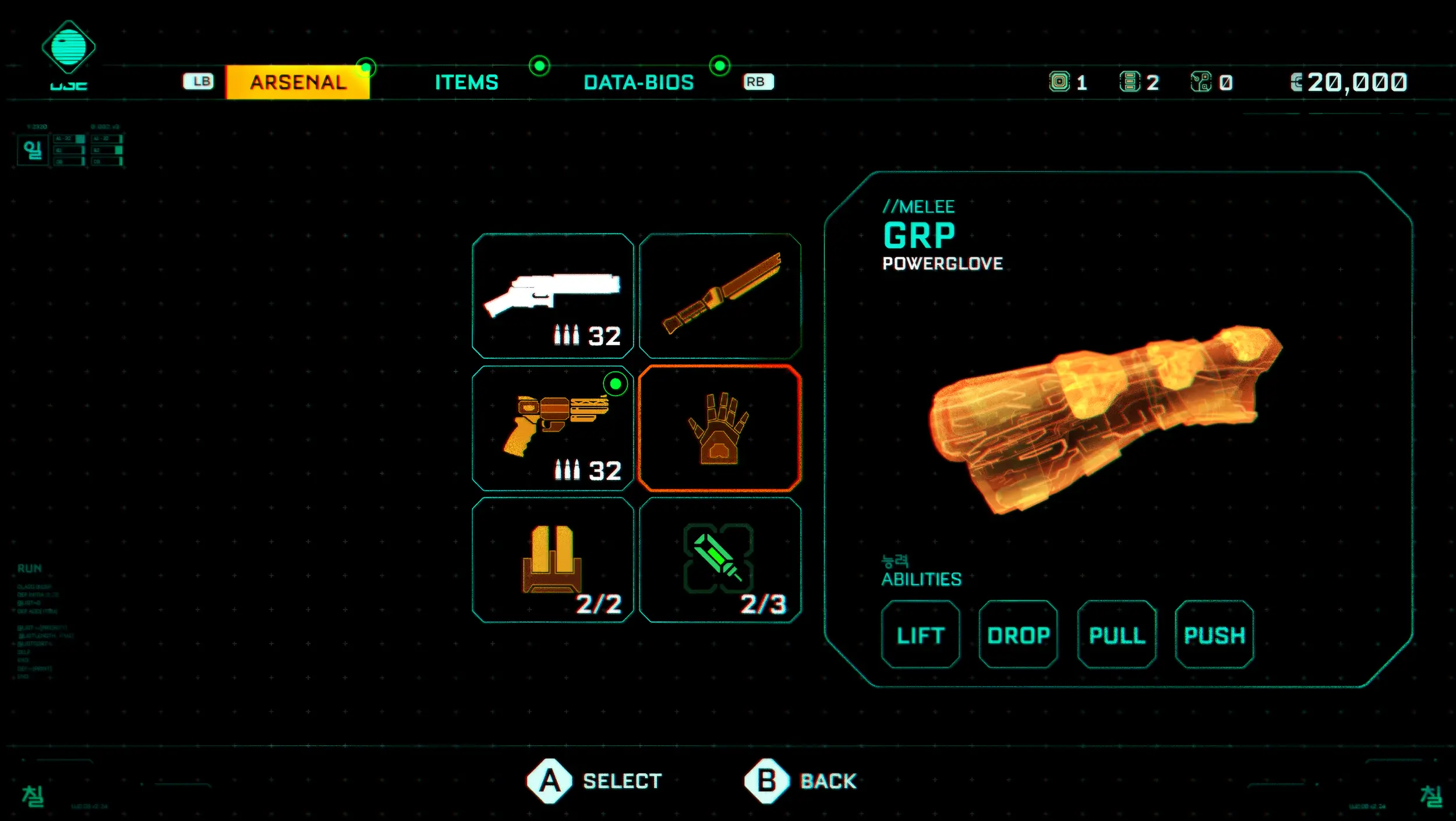
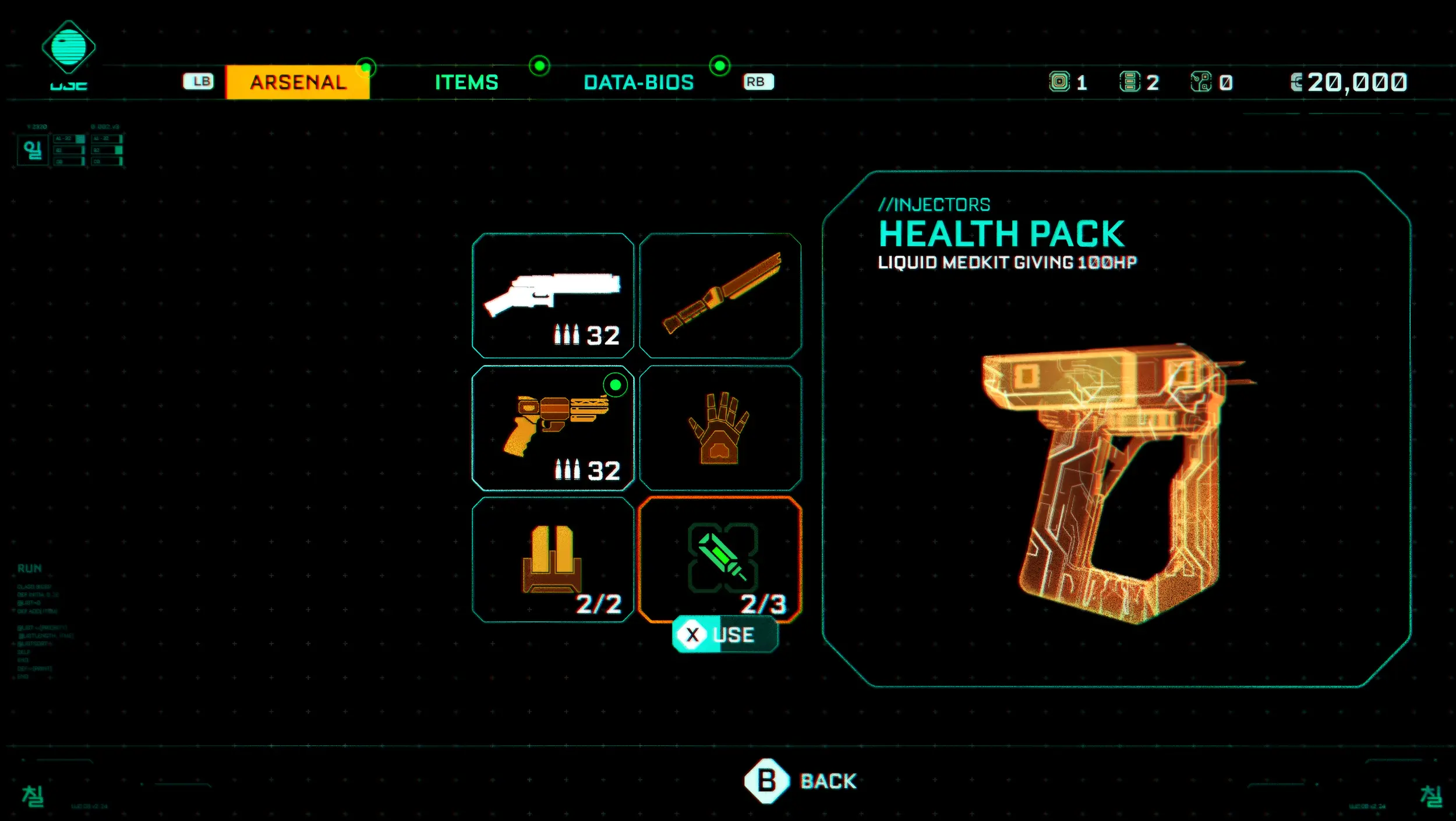
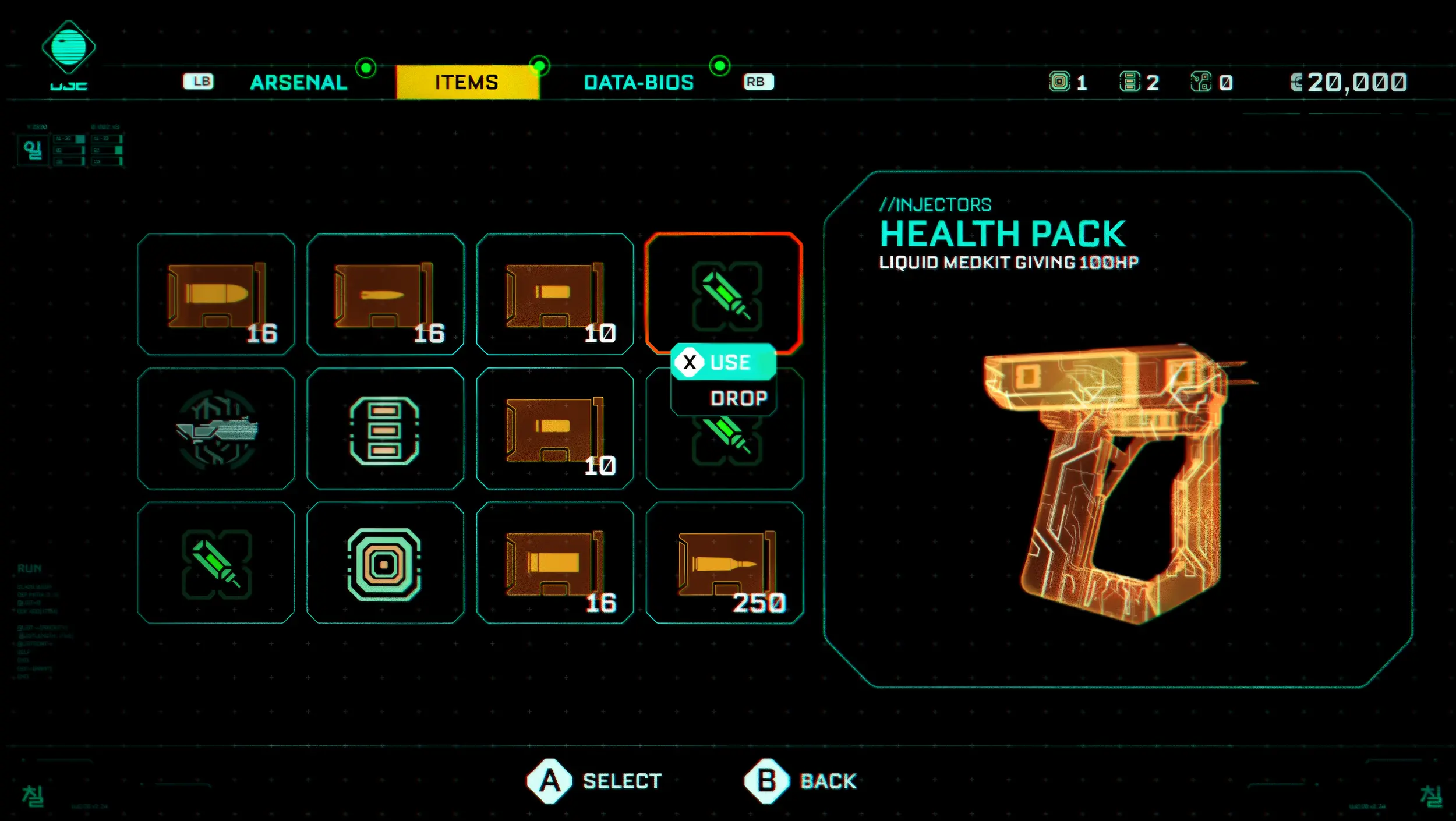
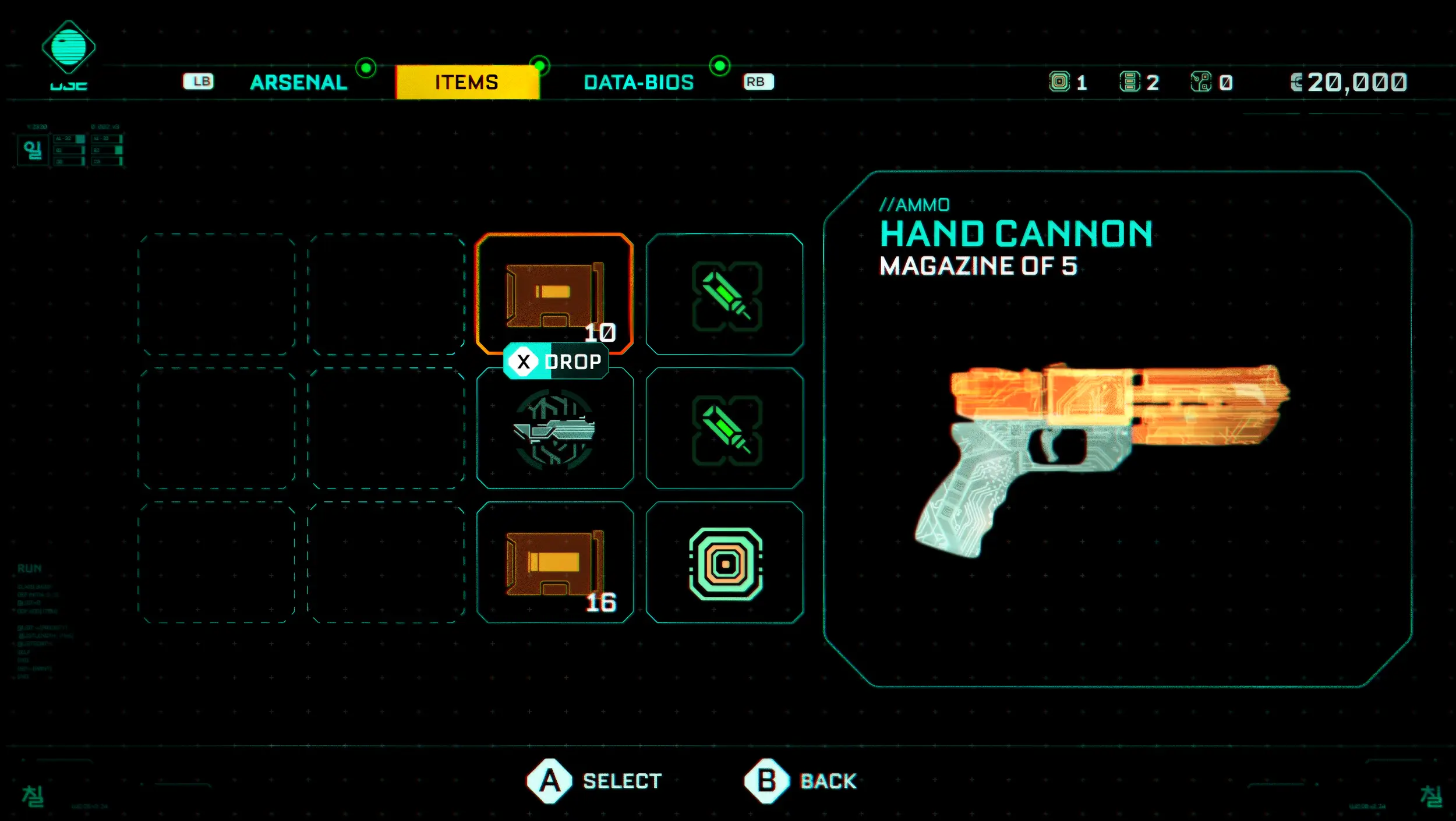
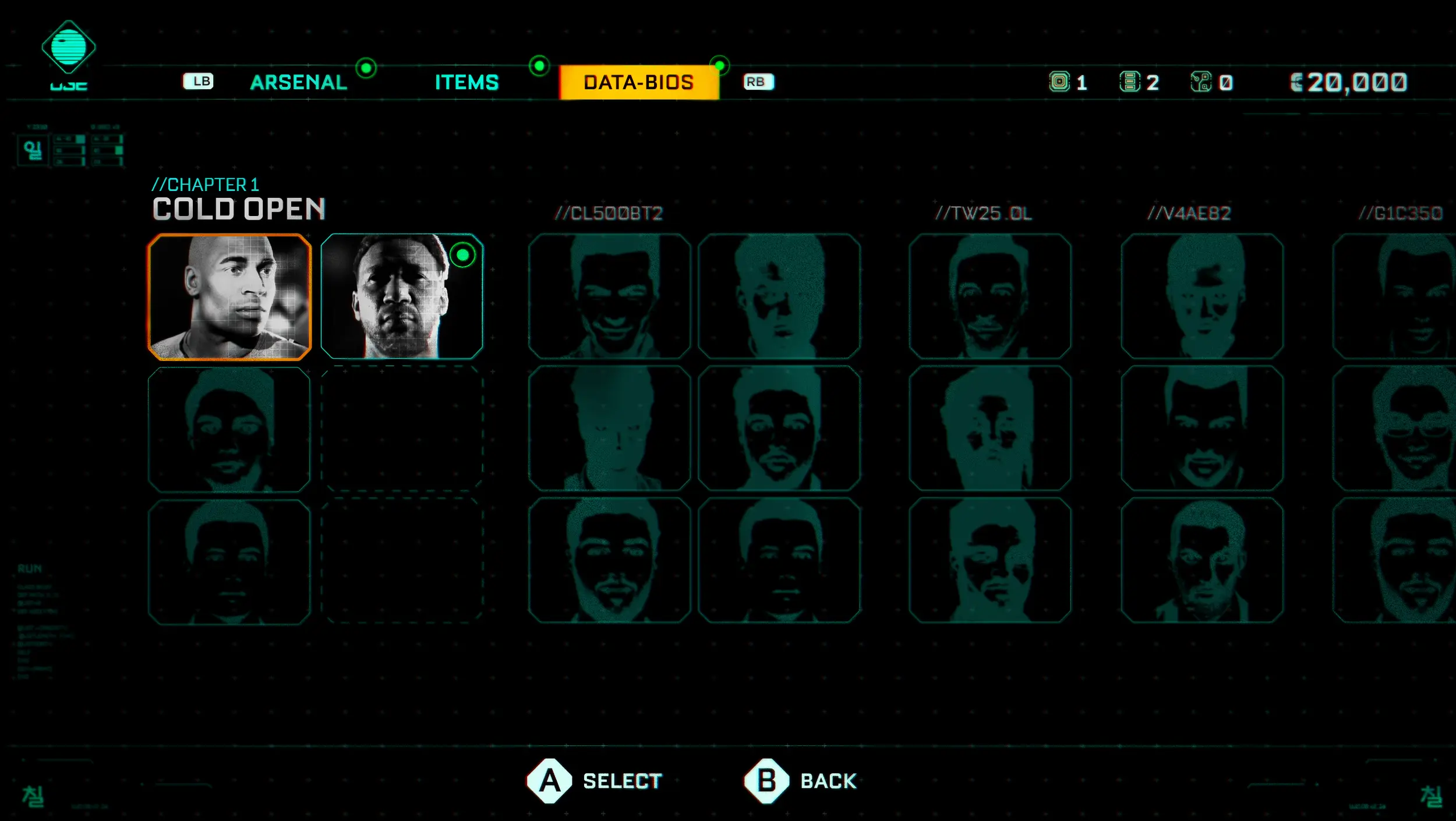
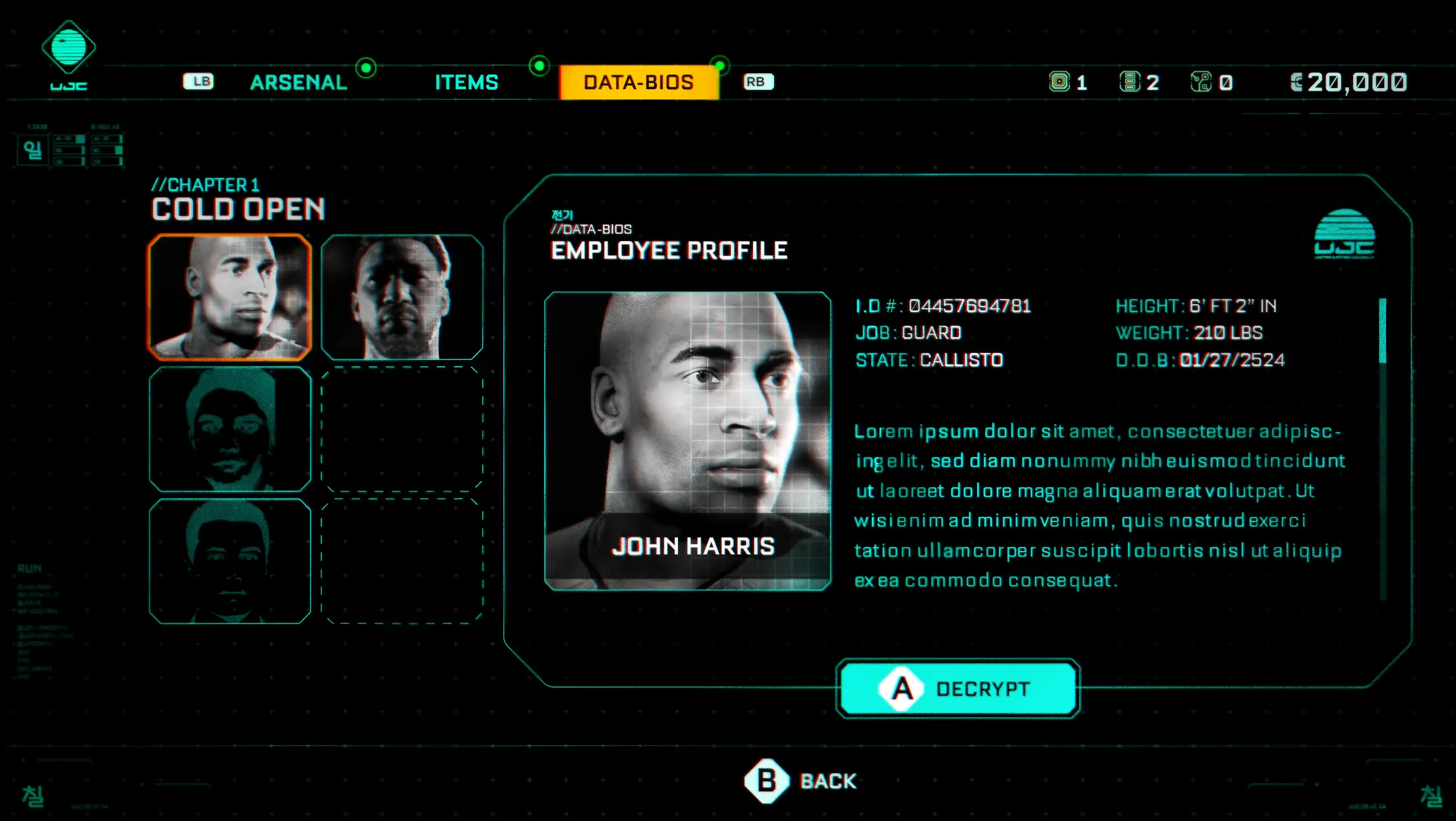
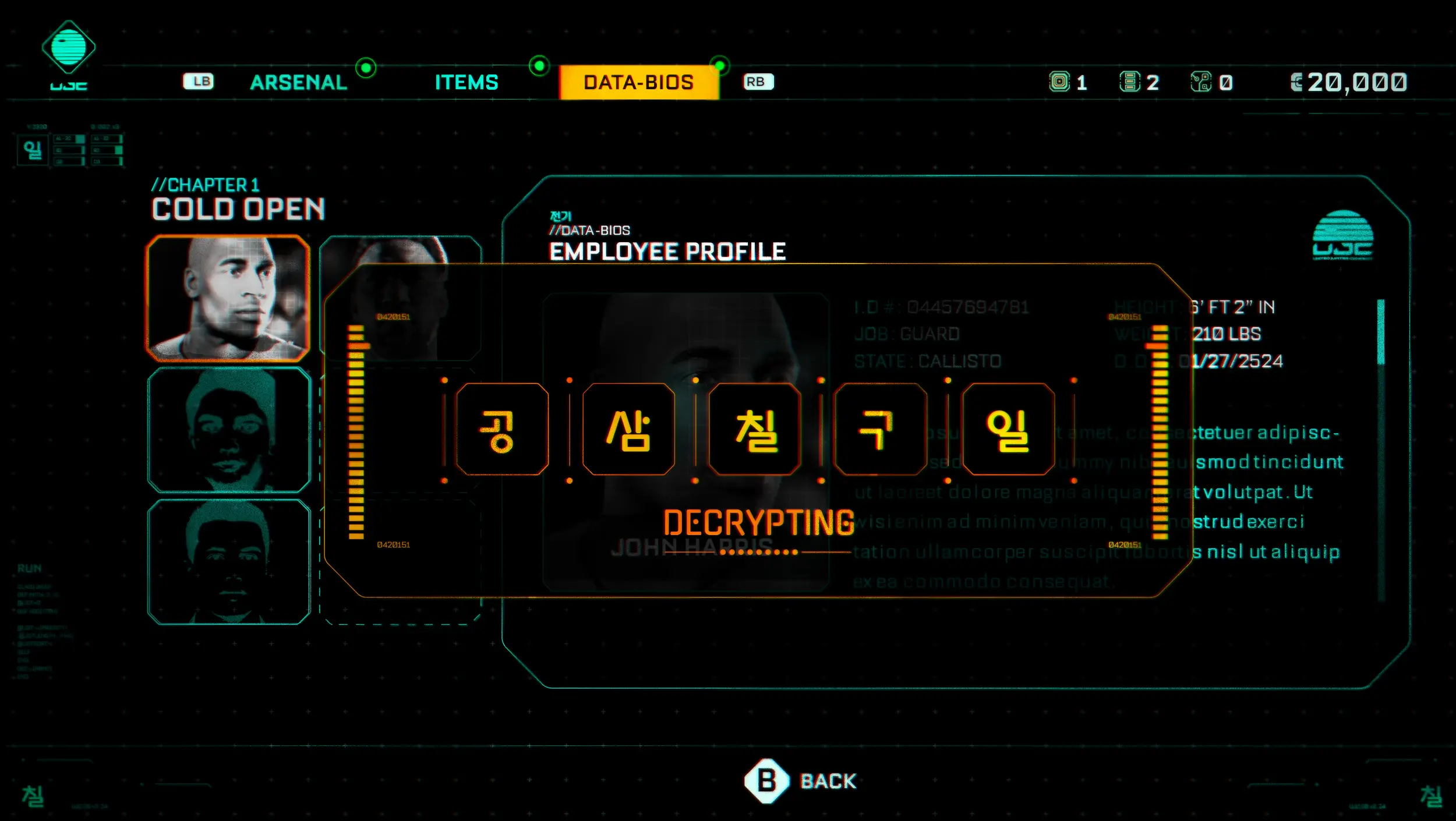
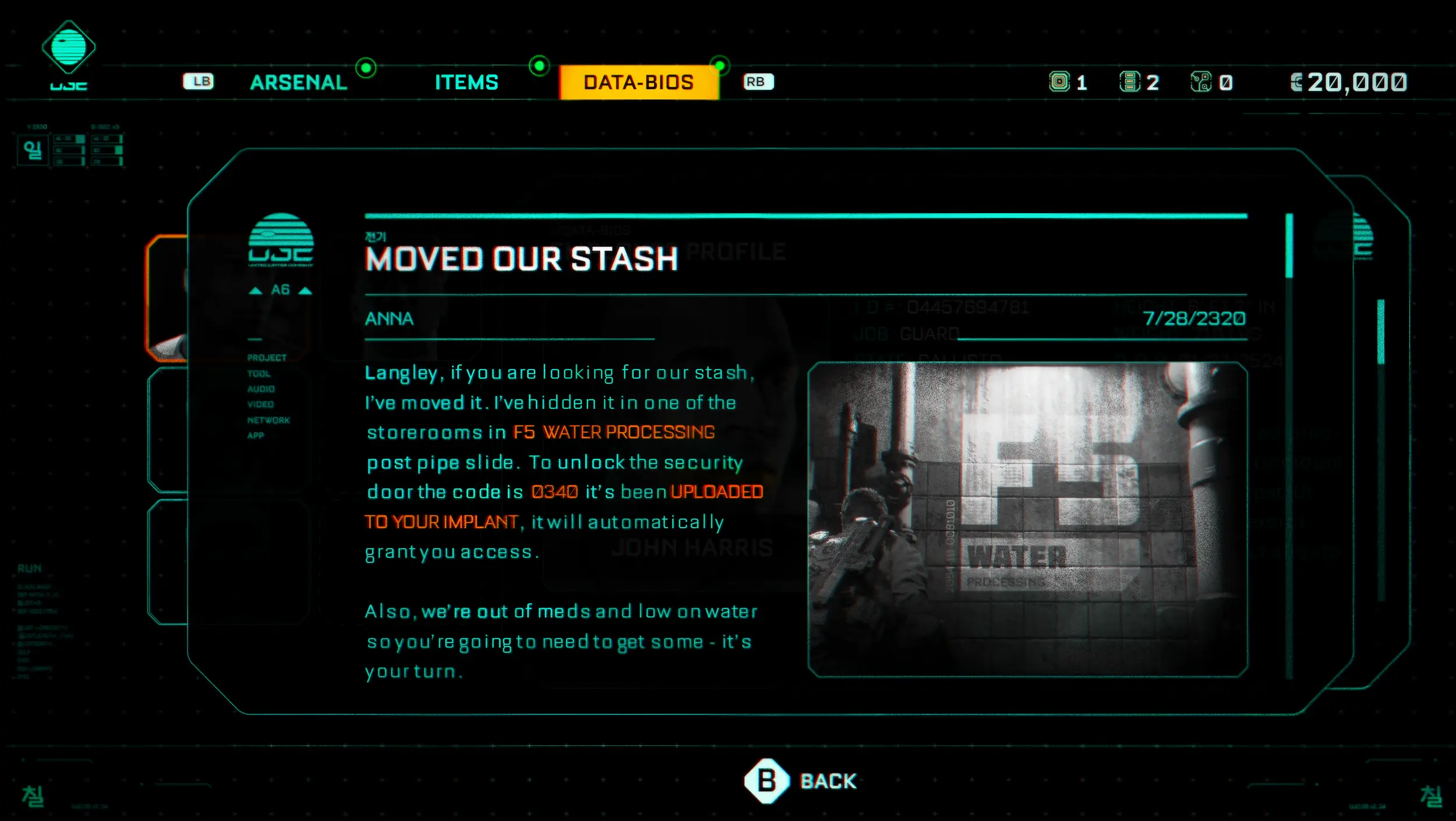
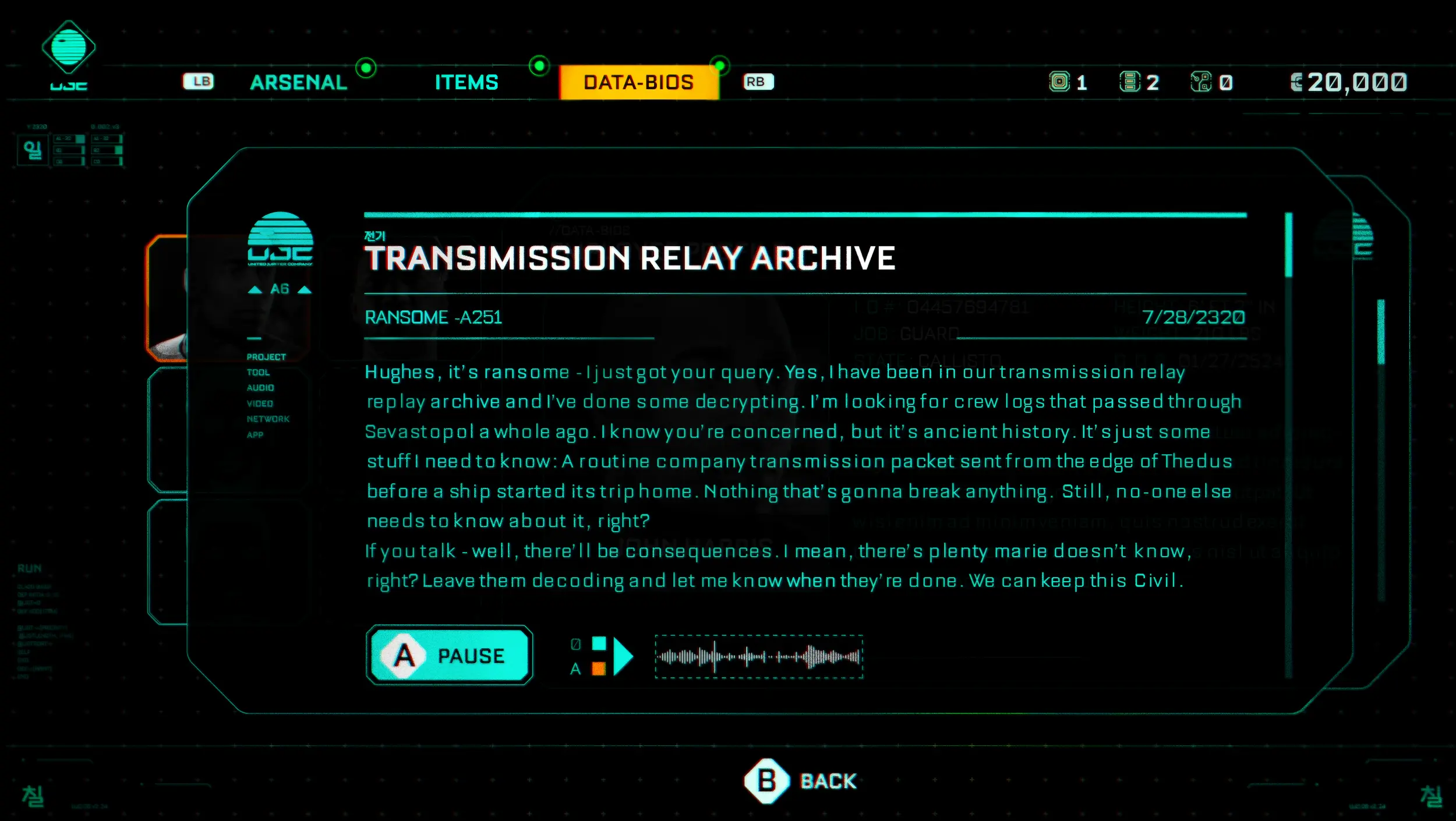
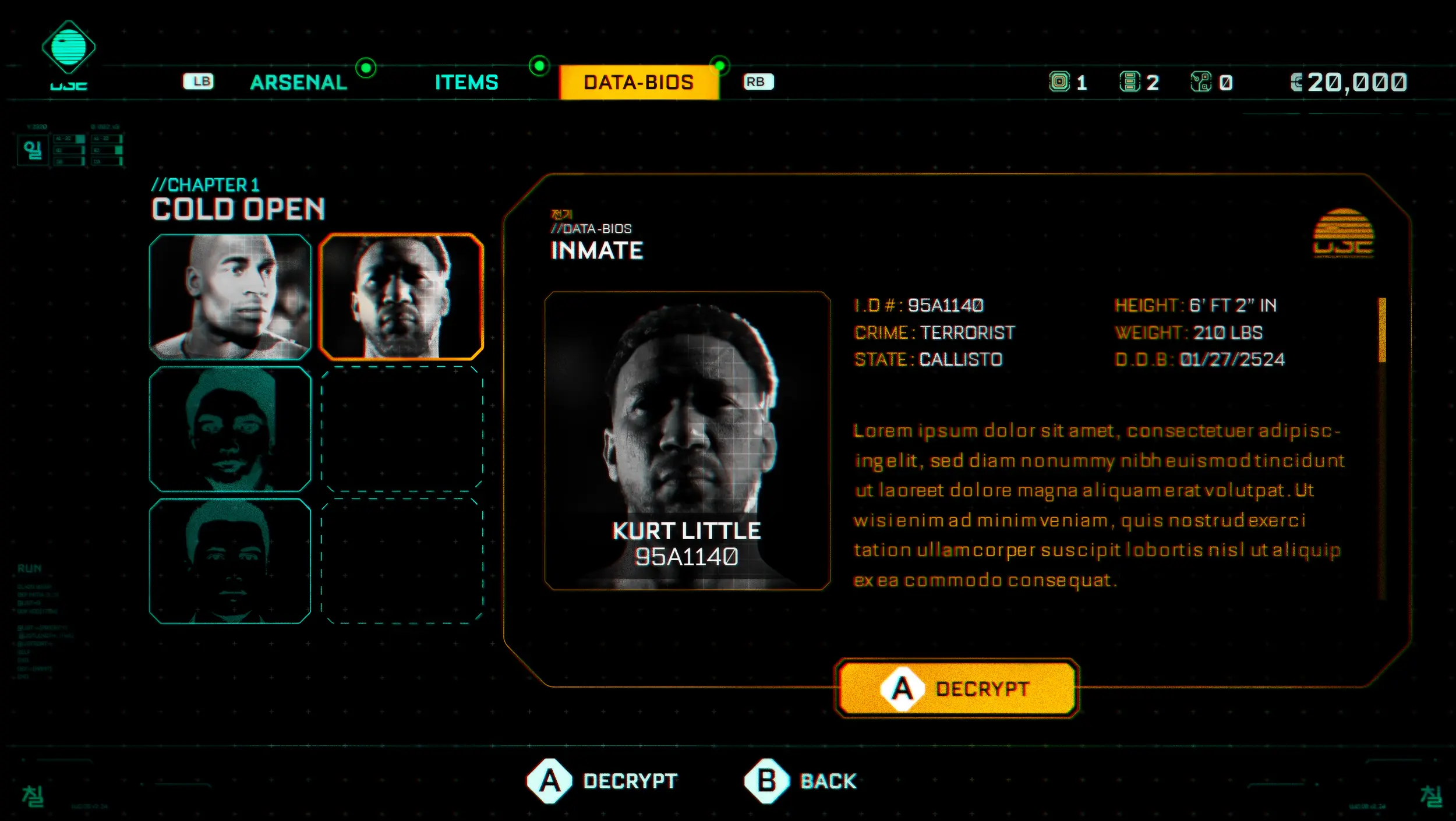
Complex systems such as inventory, arsenal, and progression demanded clarity without breaking immersion. Interaction surfaces were built to support deliberate decision-making while remaining cohesive with the game’s industrial tone.
Spatial layouts and modular stat groupings were implemented in Unreal to ensure scalability and performance.
Gameplay
-
/03
Feature Systems
-
Complex systems such as inventory, arsenal, and progression demanded clarity without breaking immersion. Interaction surfaces were built to support deliberate decision-making while remaining cohesive with the game’s industrial tone.
Spatial layouts and modular stat groupings were implemented in Unreal to ensure scalability and performance.
Gameplay
-
/03
Feature Systems
-
Complex systems such as inventory, arsenal, and progression demanded clarity without breaking immersion. Interaction surfaces were built to support deliberate decision-making while remaining cohesive with the game’s industrial tone.
Spatial layouts and modular stat groupings were implemented in Unreal to ensure scalability and performance.
(check CMS context / gallery slot)
(check CMS context / gallery slot)
(check CMS context / gallery slot)
(check CMS context / gallery slot)
(check CMS context / gallery slot)
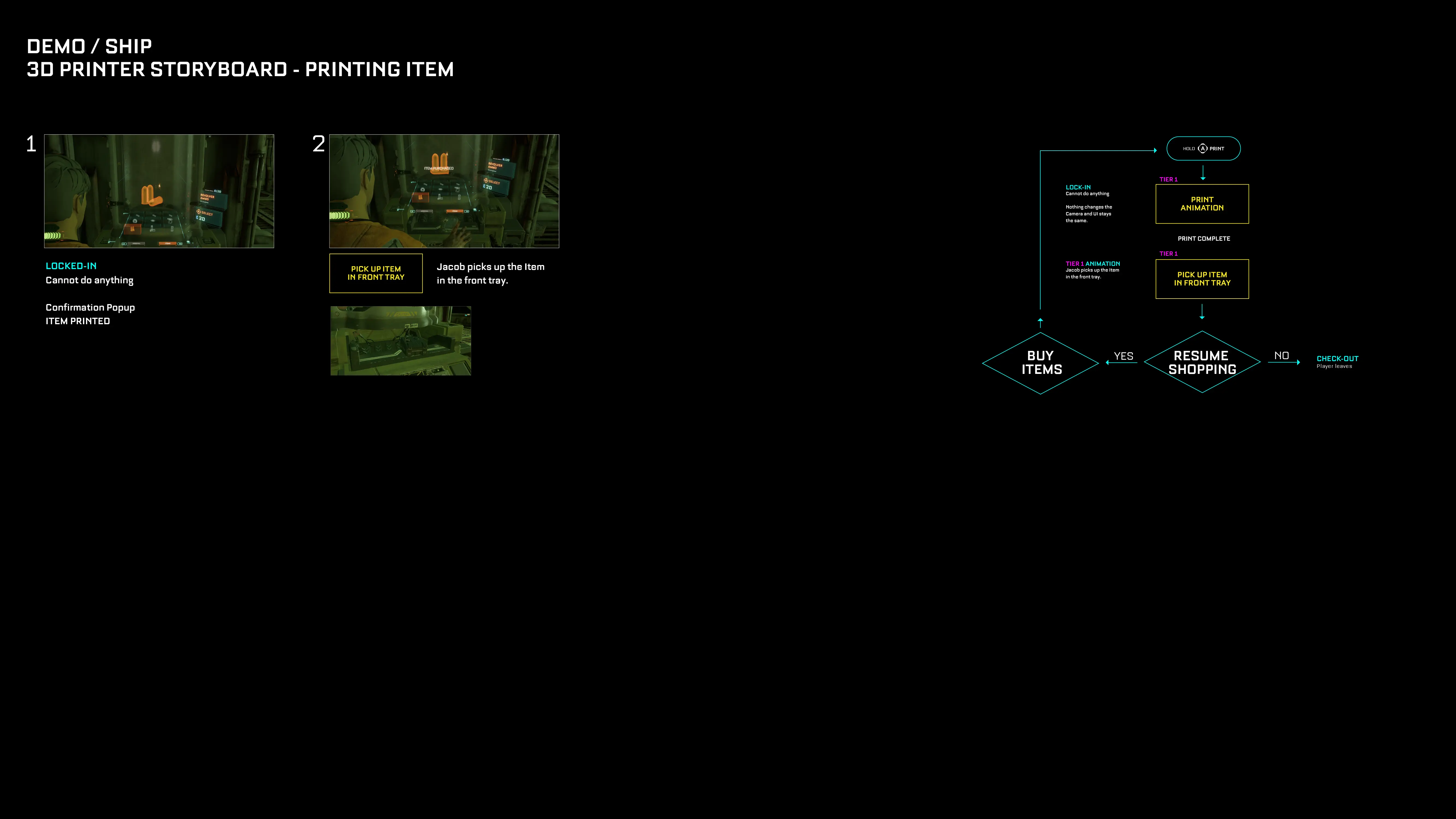
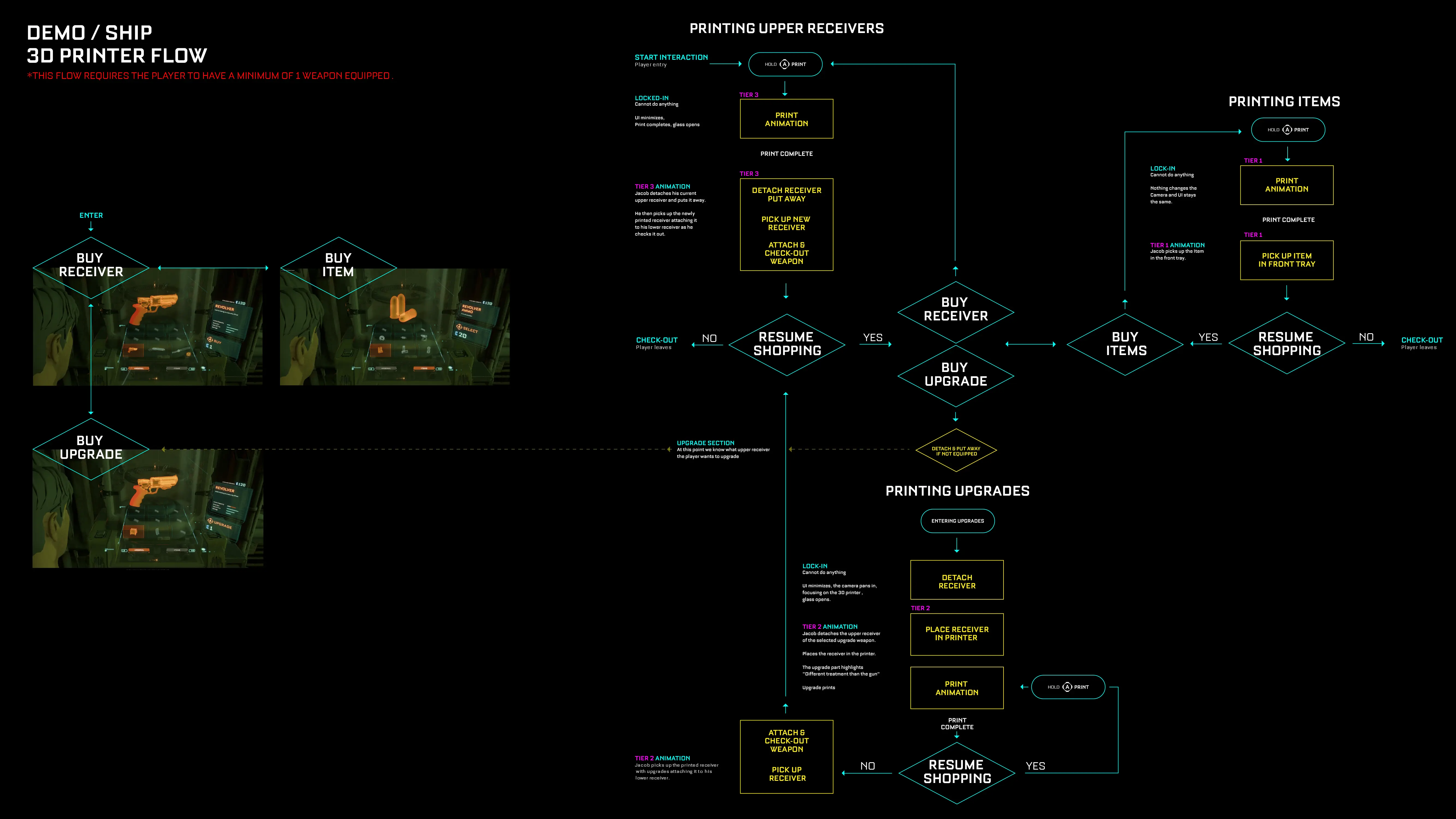
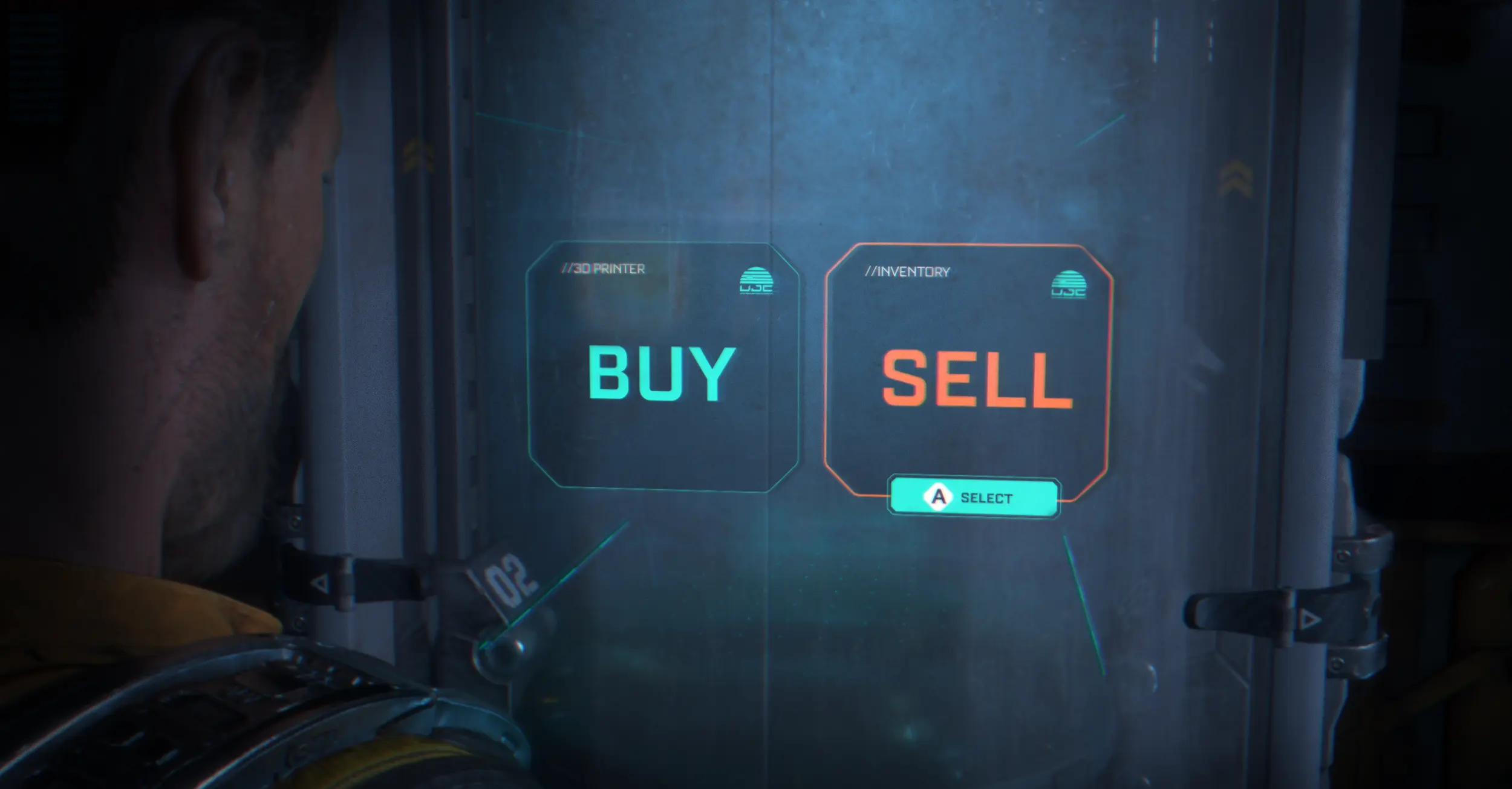
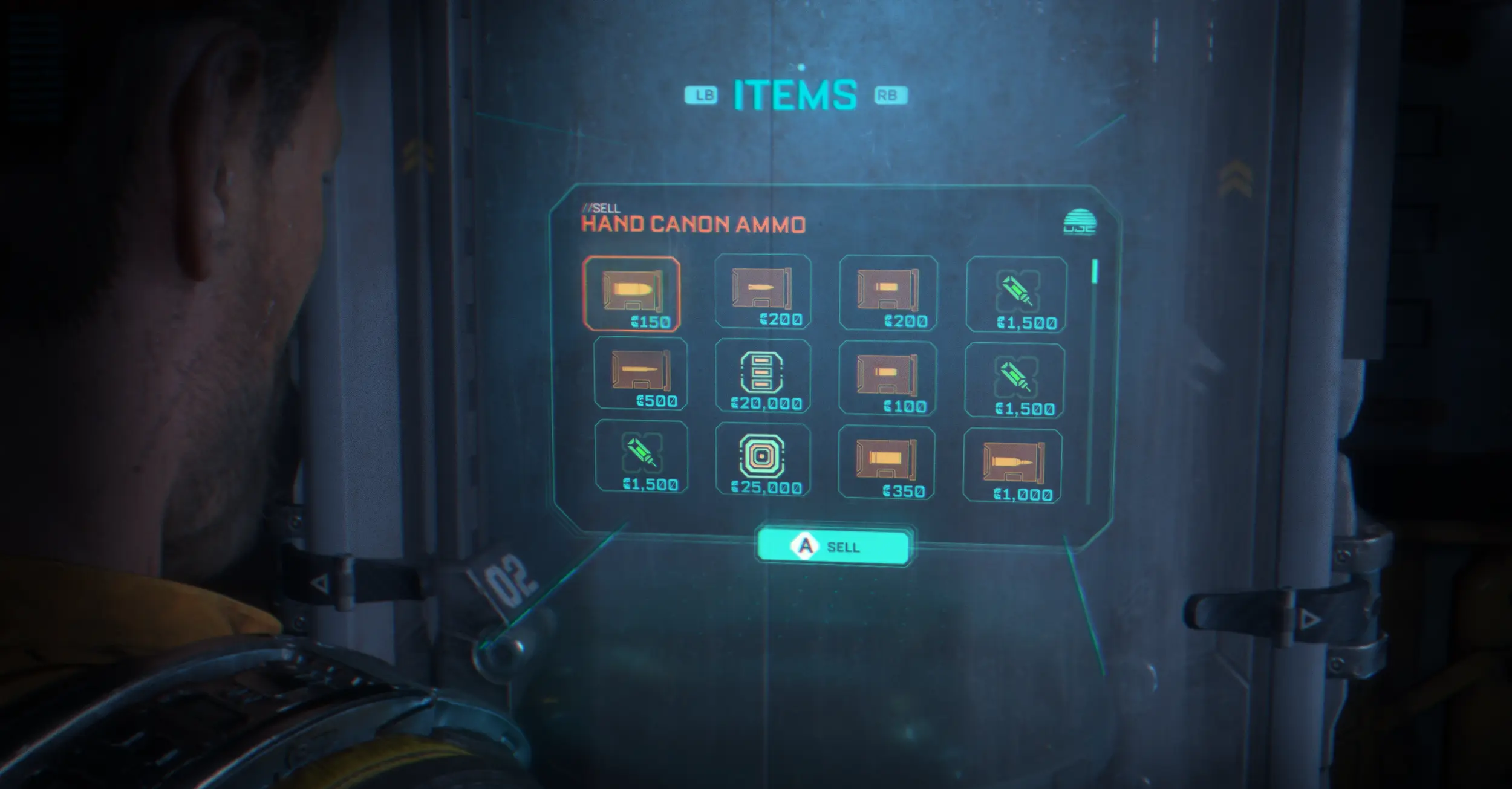
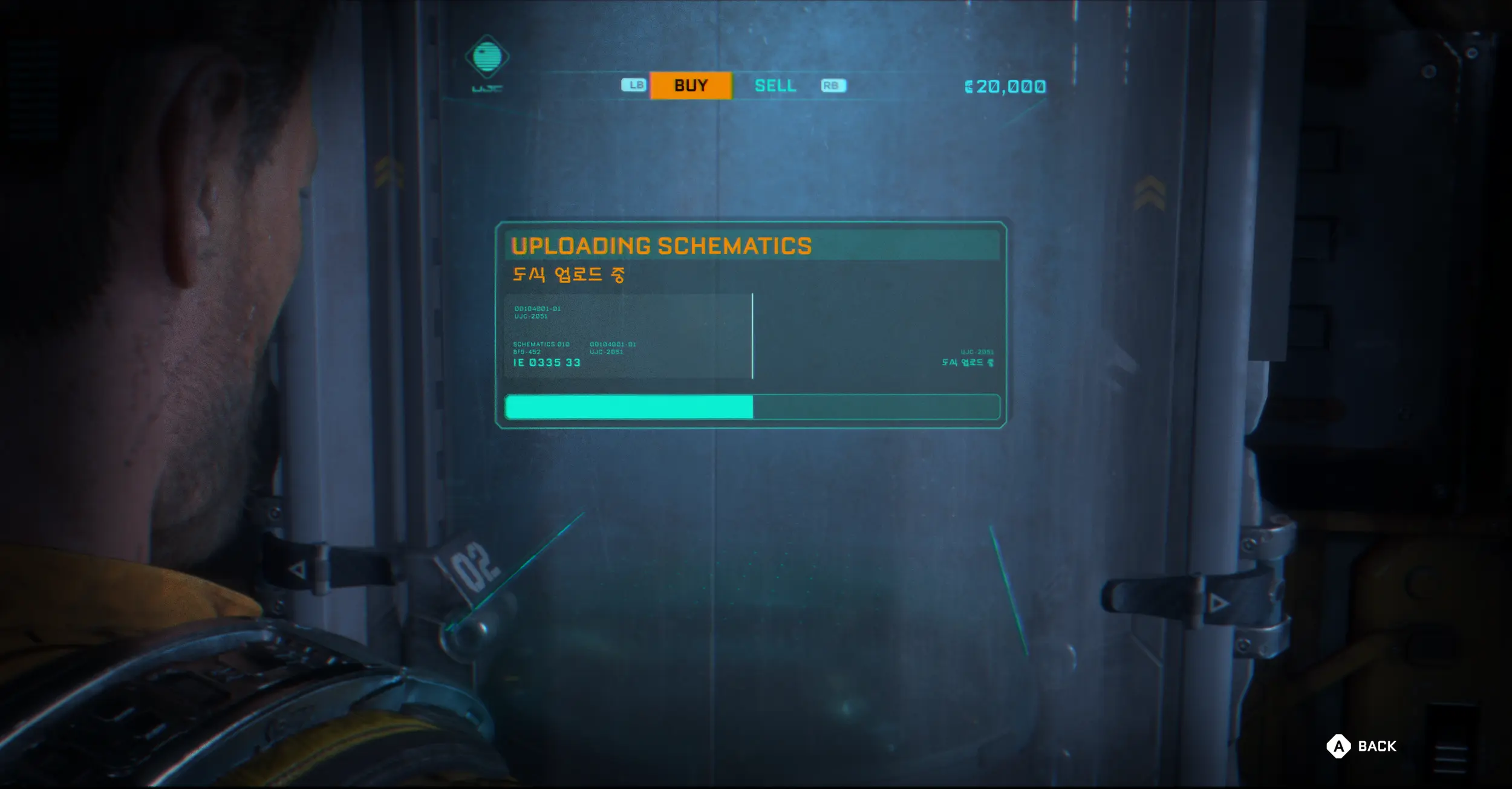
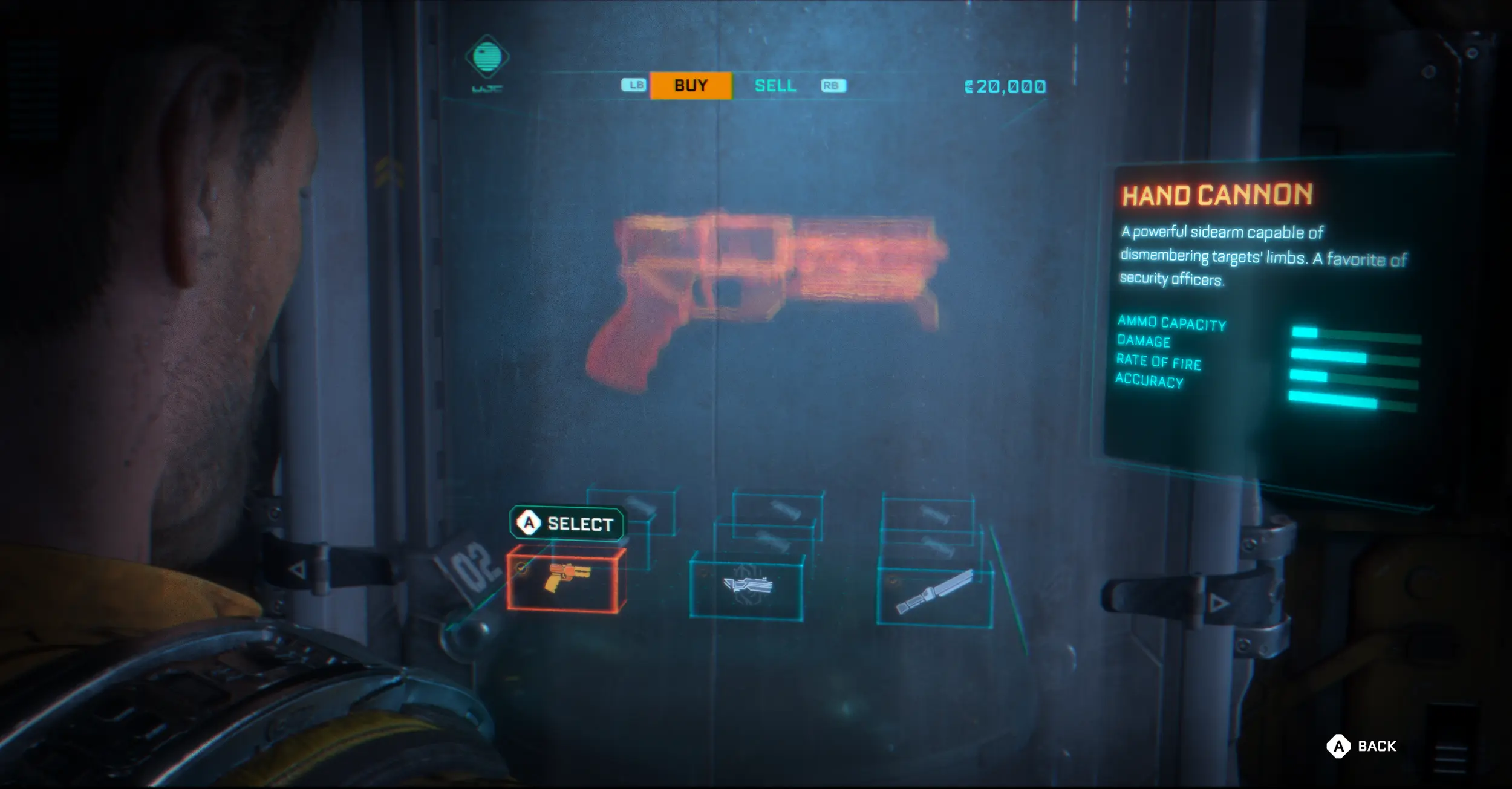
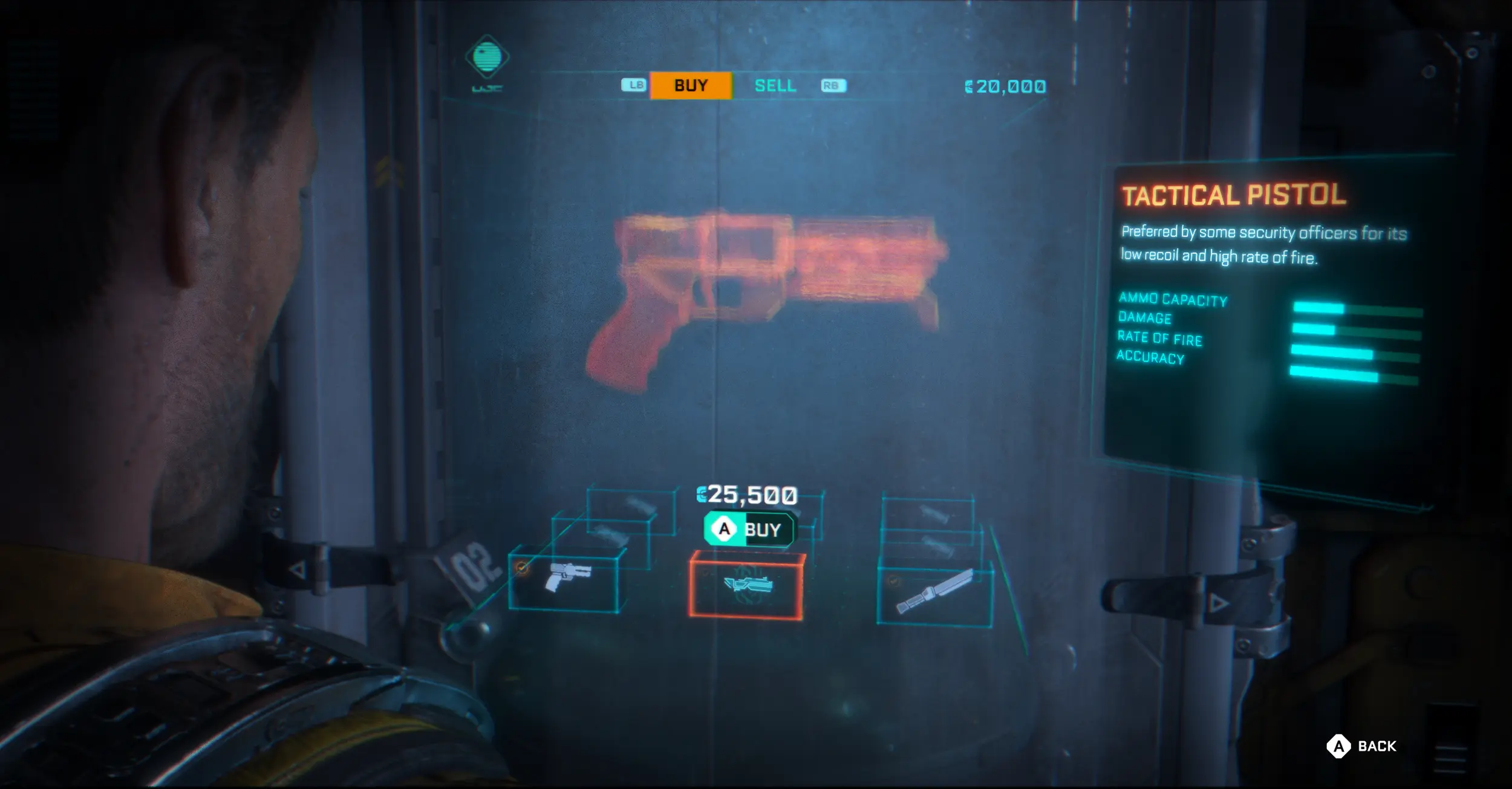
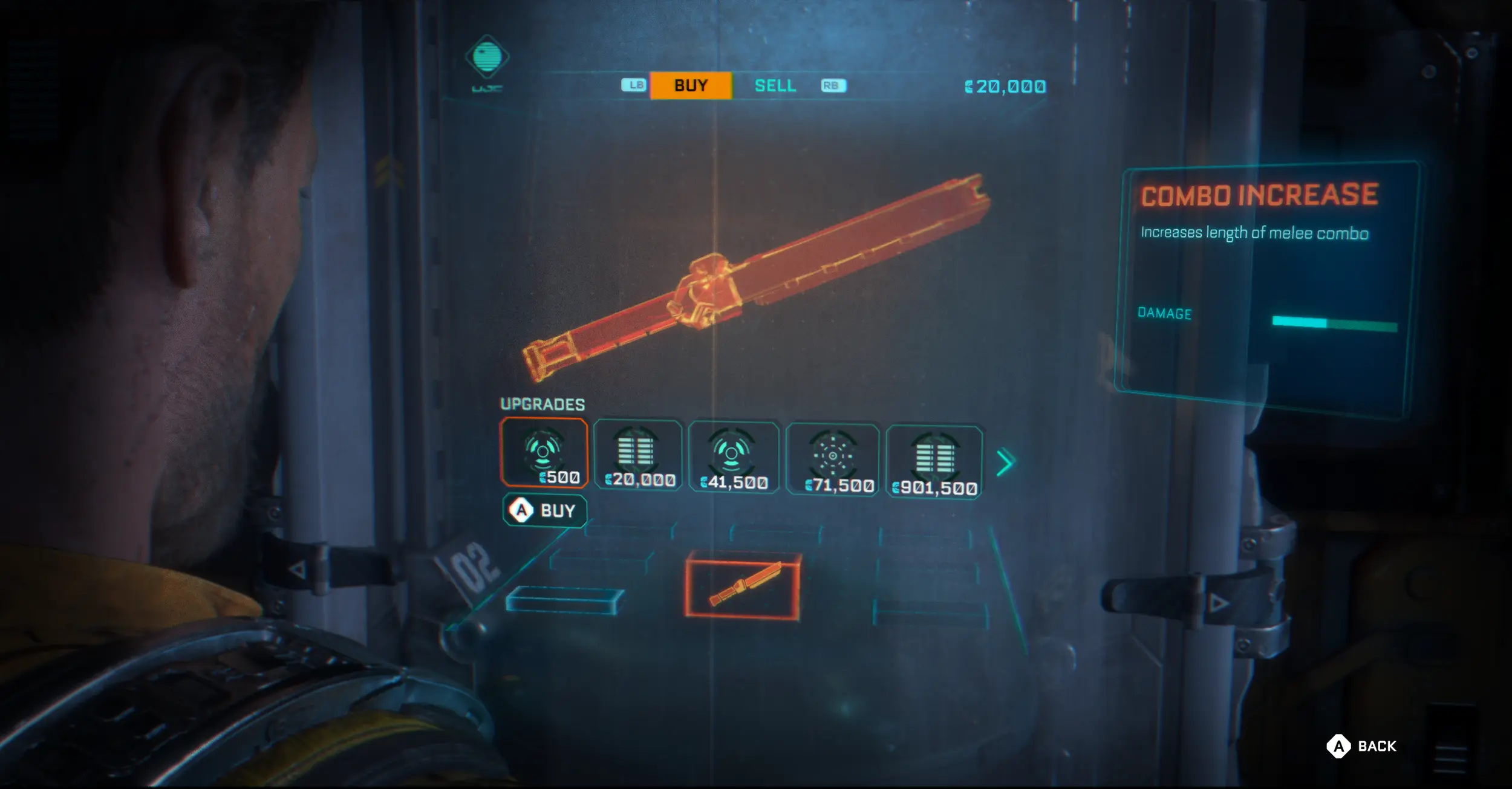
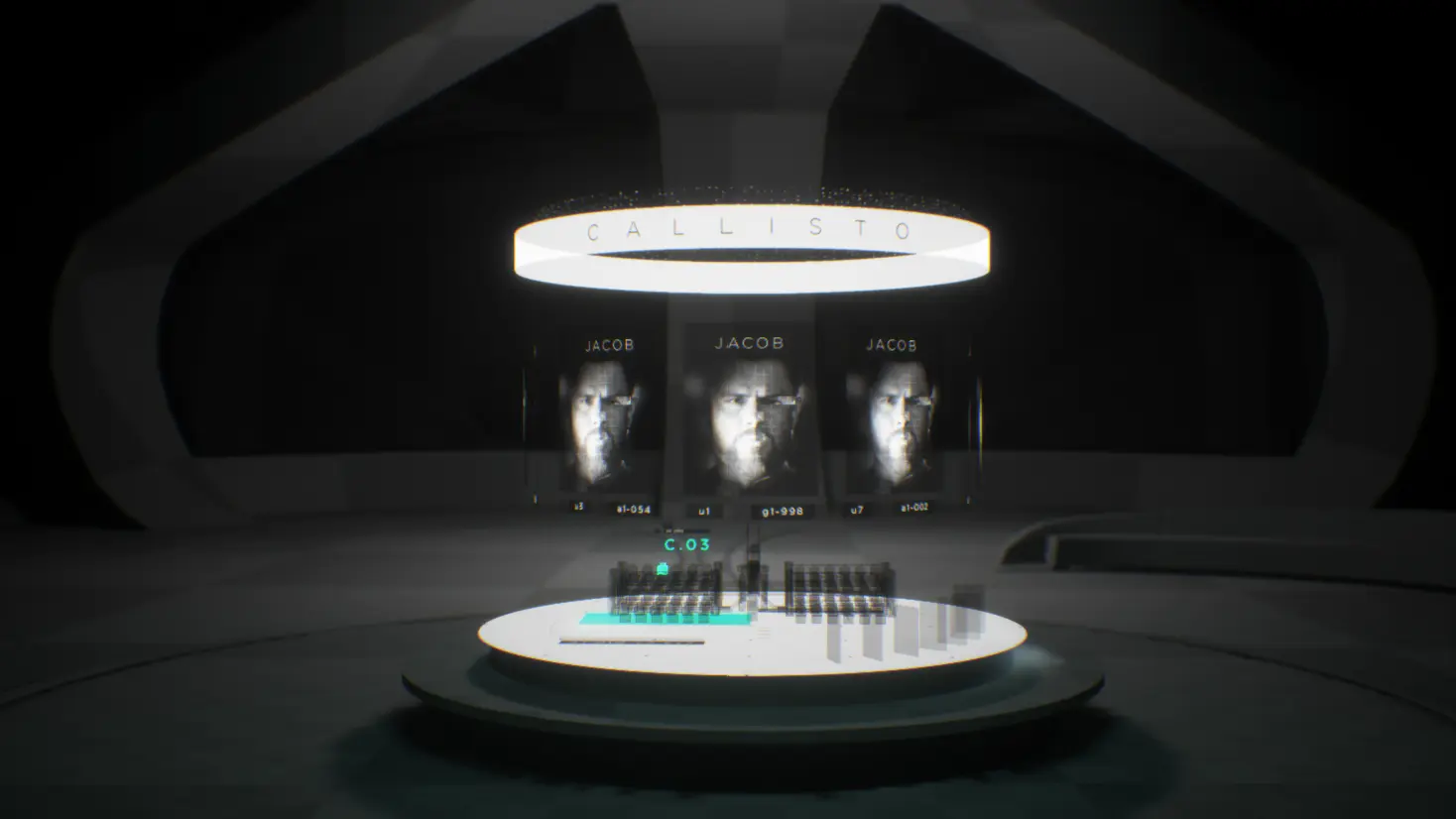
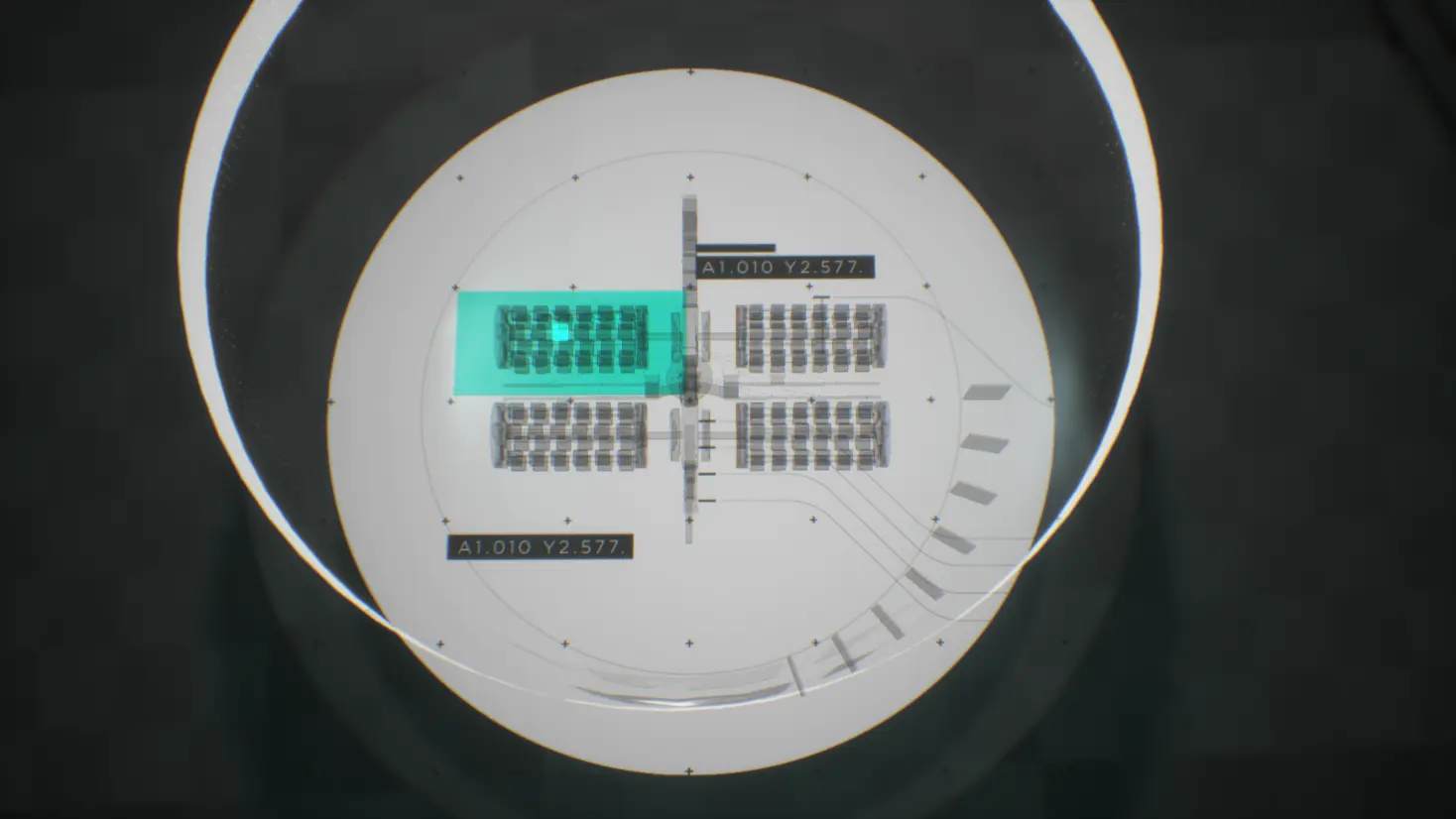
Spatial Inventory & 3D Printer; Prototype Exploration
A projected, dome-like interface presented inventory items as navigable 3D tiles directly in front of the player; replacing traditional flat menus with spatial interaction. Interaction flows were built to support decision-making in world space, with 2.5D UI layers providing contextual detail while preserving immersion.
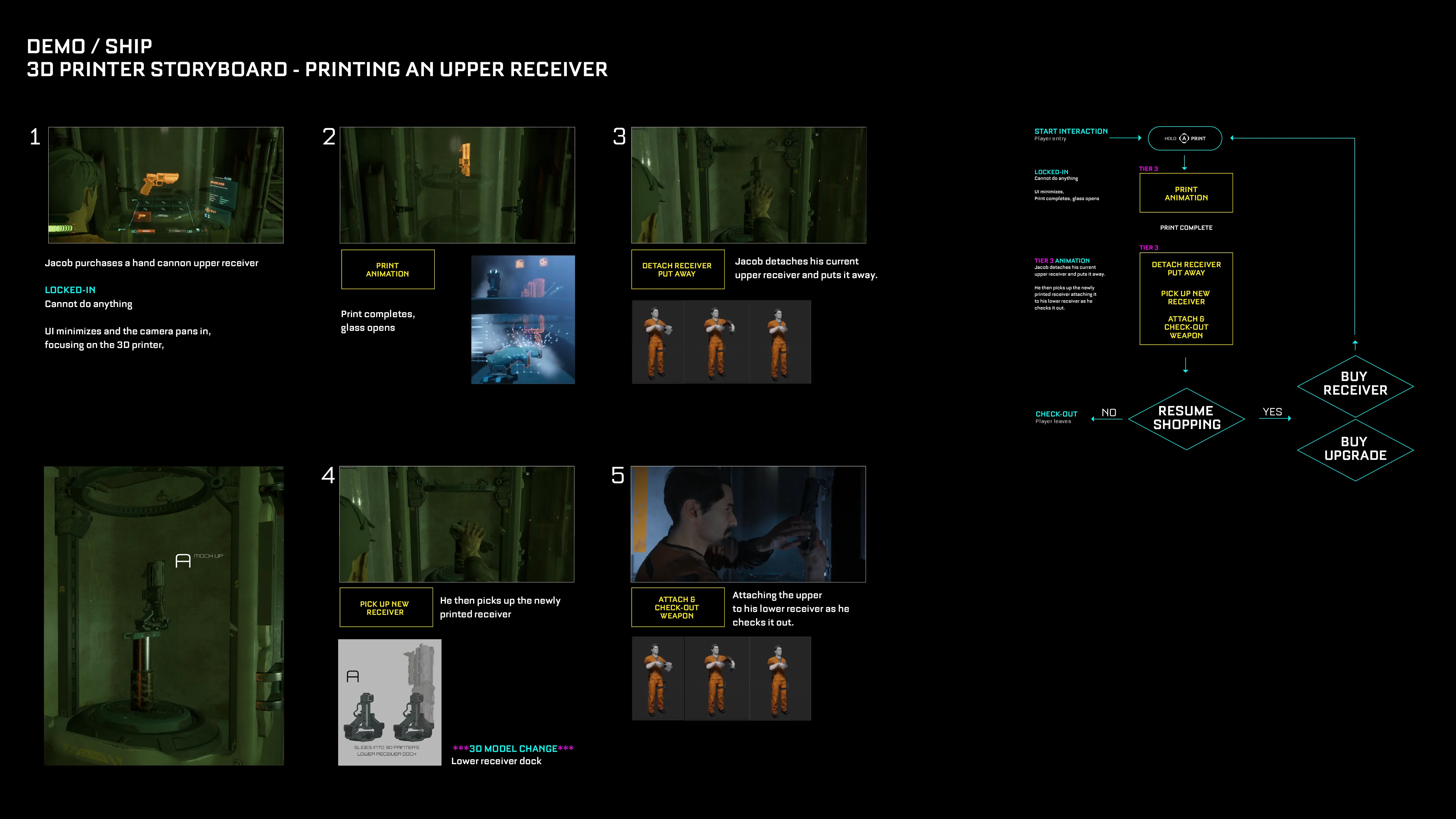
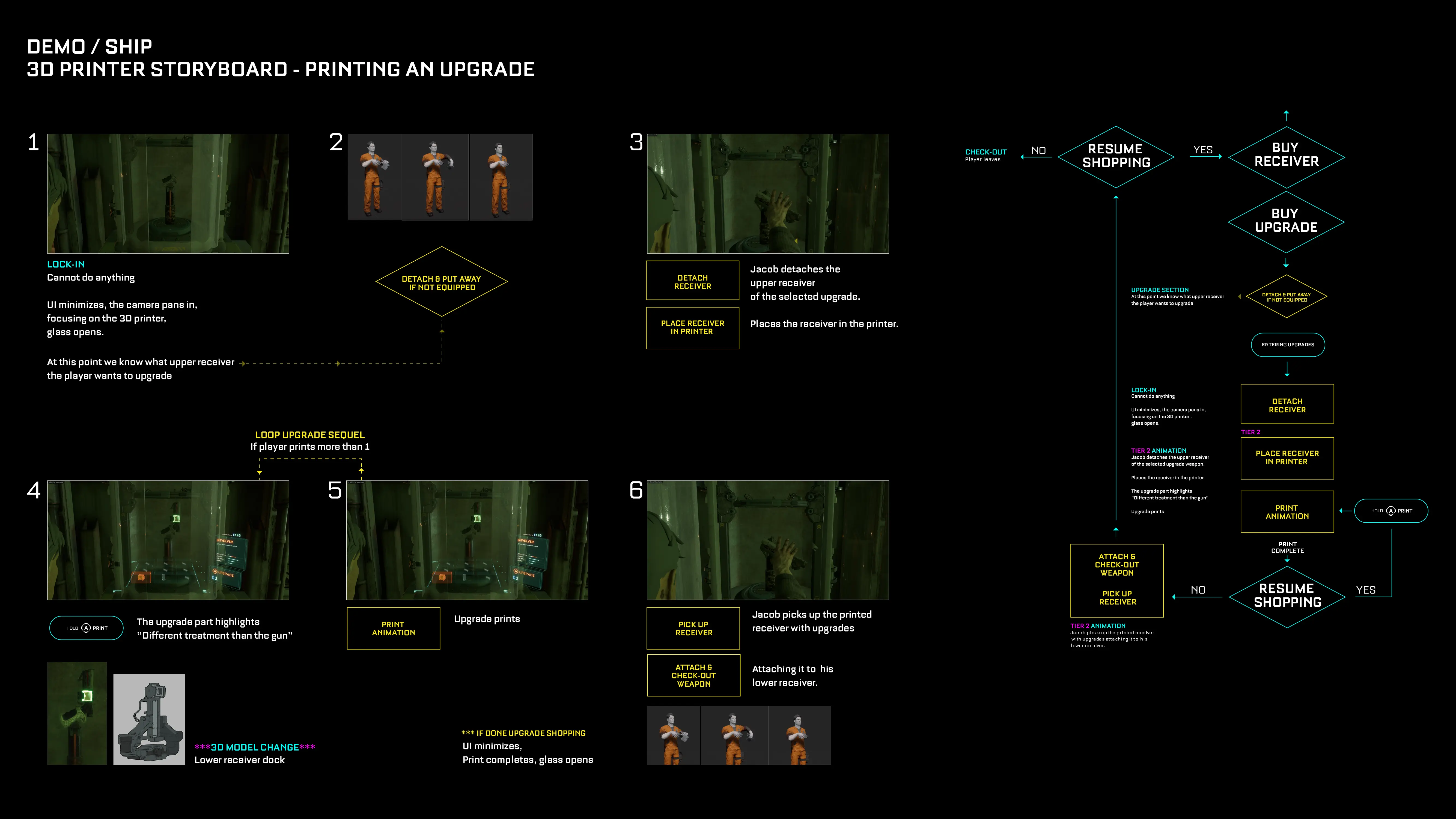
The printer functioned as a physical, in-world purchase and upgrade terminal. Weapons and equipment were previewed and fabricated directly within the environment, anchoring progression to a tangible location in the world. Together, these systems explored how far diegetic interaction could be pushed while maintaining clarity and scalability.
-
/03
Feature Systems
Spatial Inventory & 3D Printer; Prototype Exploration
A projected, dome-like interface presented inventory items as navigable 3D tiles directly in front of the player; replacing traditional flat menus with spatial interaction. Interaction flows were built to support decision-making in world space, with 2.5D UI layers providing contextual detail while preserving immersion.
The printer functioned as a physical, in-world purchase and upgrade terminal. Weapons and equipment were previewed and fabricated directly within the environment, anchoring progression to a tangible location in the world. Together, these systems explored how far diegetic interaction could be pushed while maintaining clarity and scalability.
-
/03
Feature Systems
FUI
-
/04
Contextual Experience UI
-
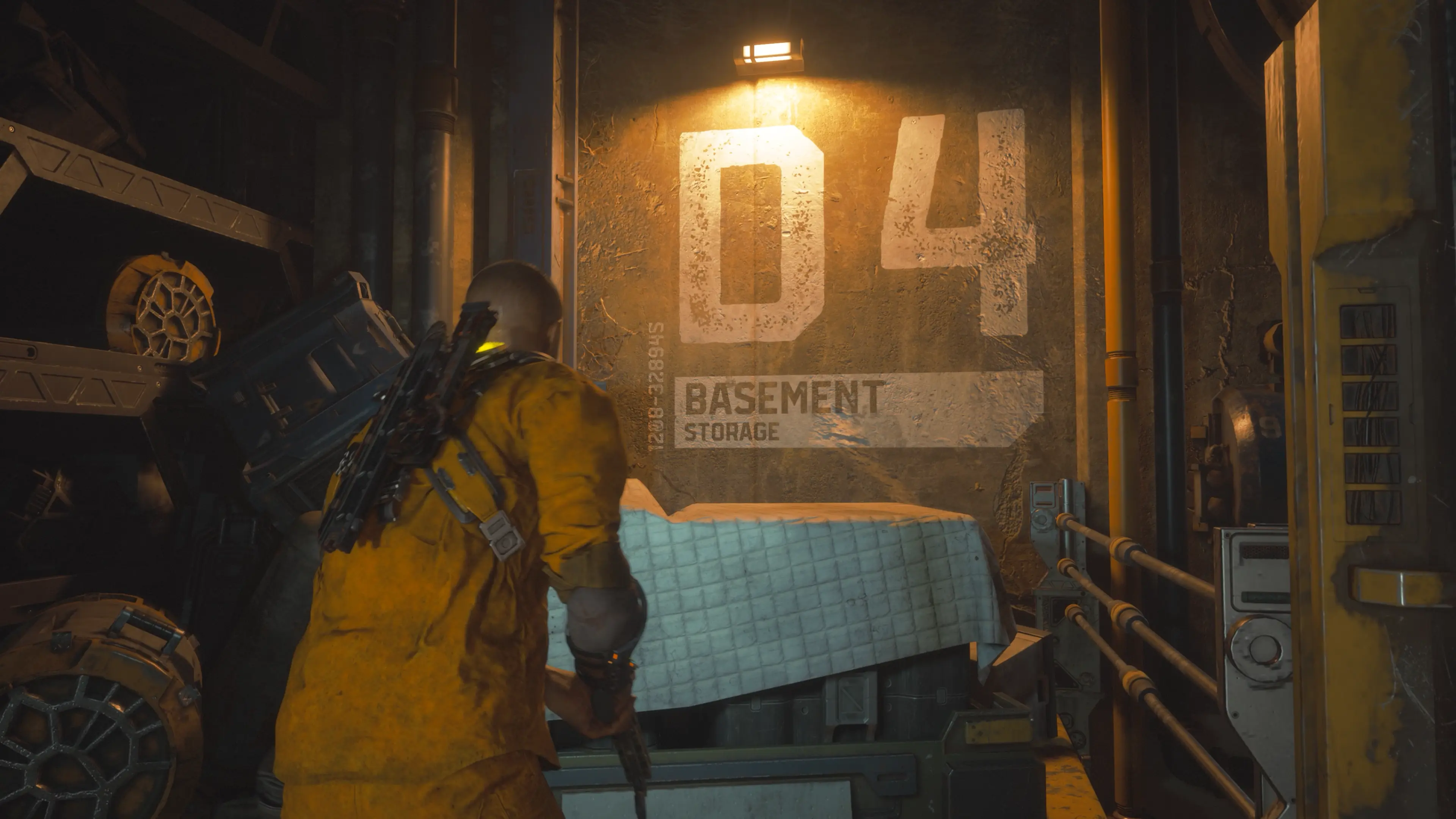
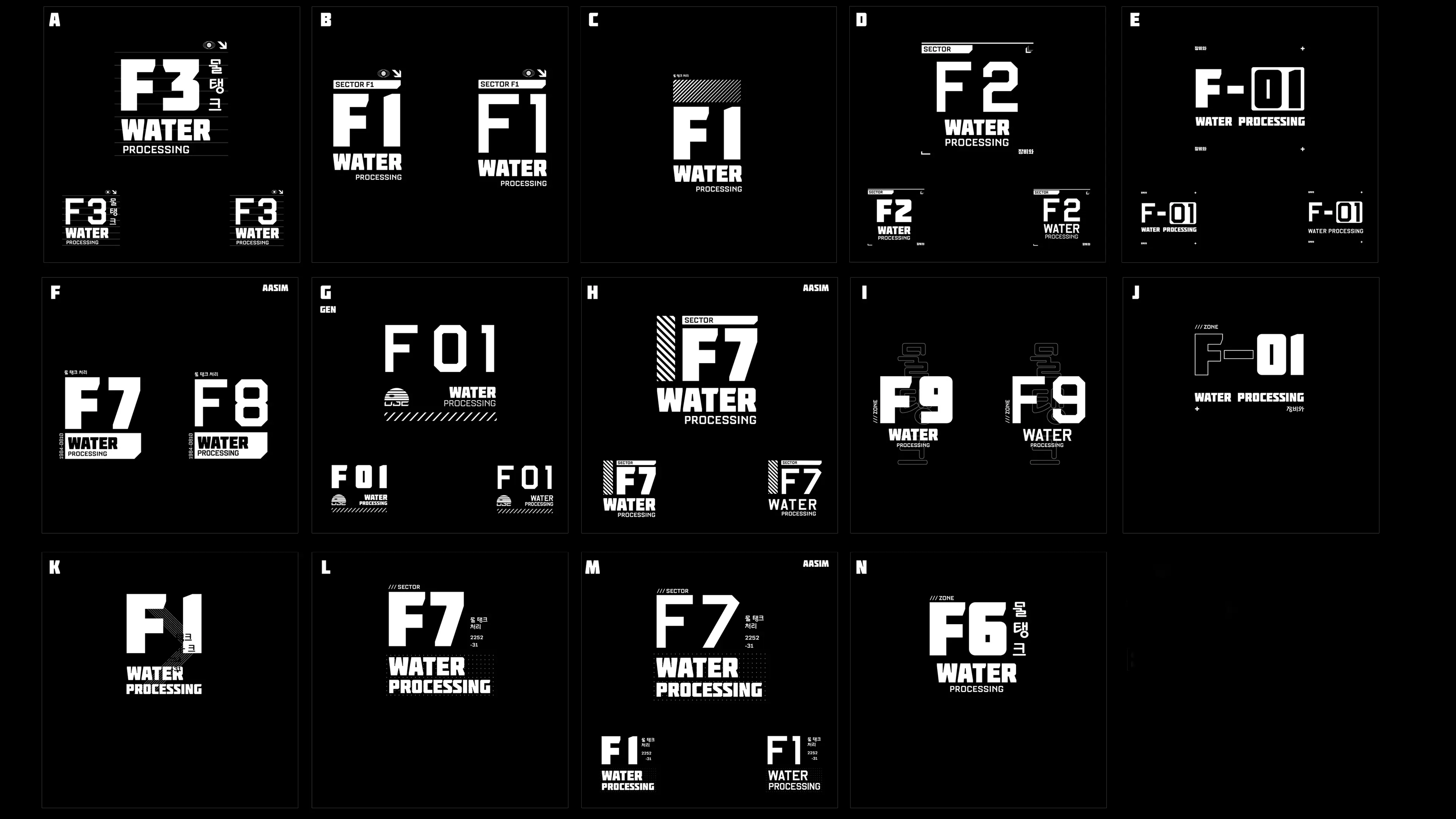
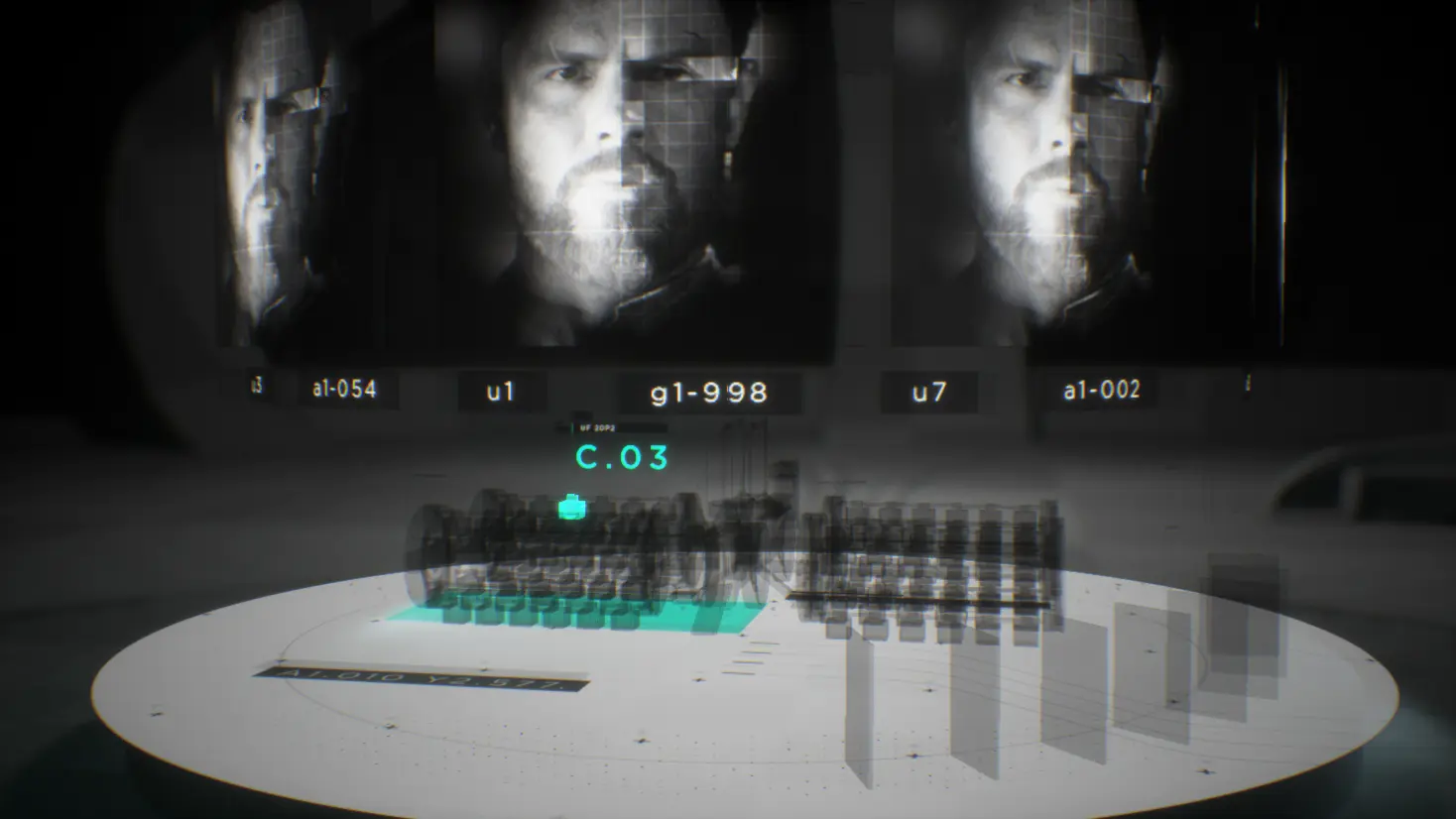
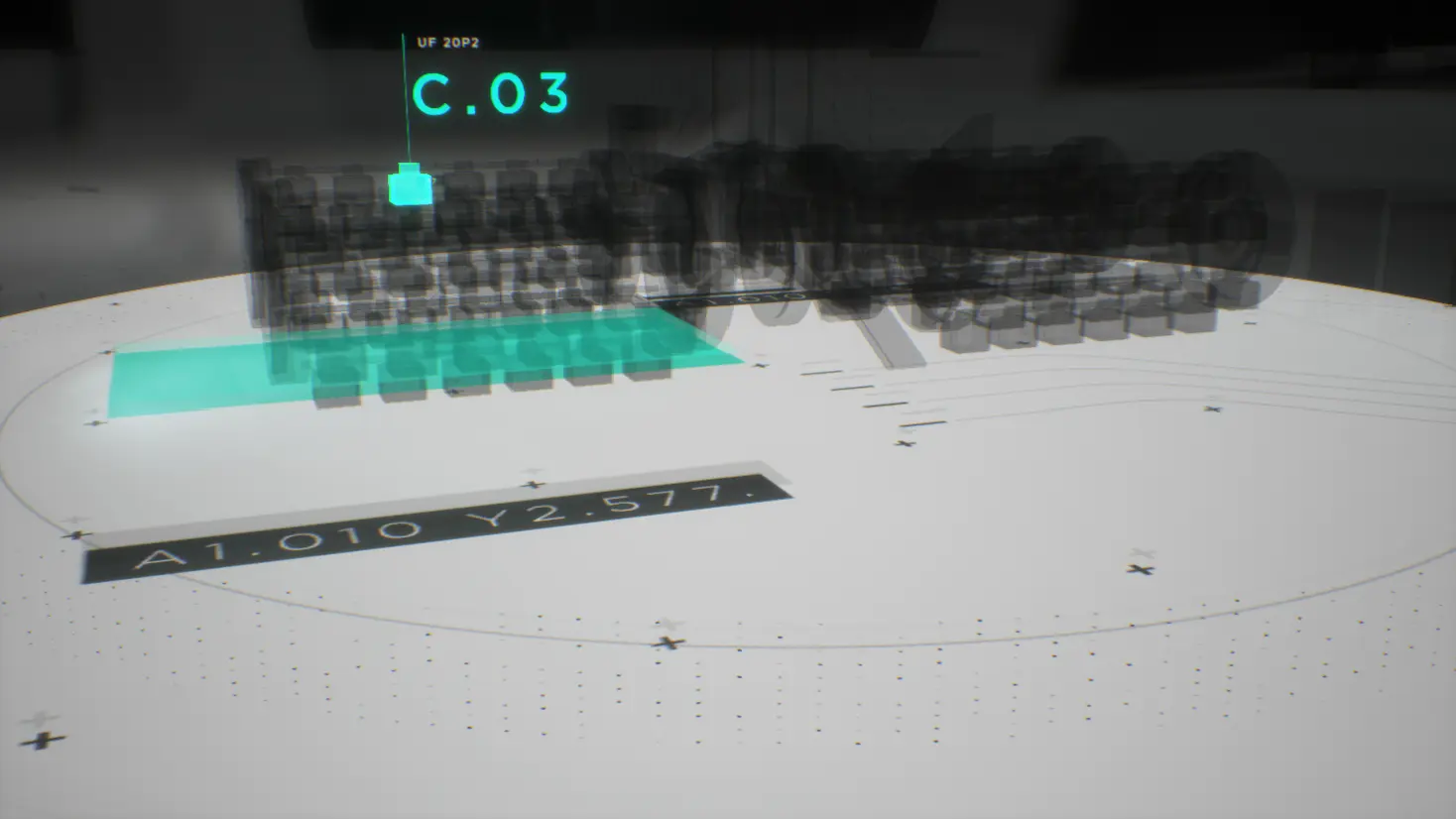
Environmental consoles, vehicle interfaces, and in-world signage extended the interface into the physical space of the game.
Each system required adaptation to its context, from low-visibility vehicle navigation to embedded environmental guidance and high-tech control spaces. Interaction affordances were designed to feel integrated within the world rather than layered on top of it. Clarity remained present, but never louder than the scene.
FUI
-
/04
Contextual Experience UI
-
Environmental consoles, vehicle interfaces, and in-world signage extended the interface into the physical space of the game.
Each system required adaptation to its context, from low-visibility vehicle navigation to embedded environmental guidance and high-tech control spaces. Interaction affordances were designed to feel integrated within the world rather than layered on top of it. Clarity remained present, but never louder than the scene.
FUI
-
/04
Contextual Experience UI
-
Environmental consoles, vehicle interfaces, and in-world signage extended the interface into the physical space of the game.
Each system required adaptation to its context, from low-visibility vehicle navigation to embedded environmental guidance and high-tech control spaces. Interaction affordances were designed to feel integrated within the world rather than layered on top of it. Clarity remained present, but never louder than the scene.
(check CMS context / gallery slot)
(check CMS context / gallery slot)
(check CMS context / gallery slot)
Across these contextual systems, I led creative exploration and technical execution, from vehicle HUD development to dynamic signage materials and high-tech display concepts for the tower sequence.
World-space UI elements were built to respond to environment lighting and surface normals, blending into their surroundings while remaining localization-ready and structurally resilient within Unreal.
The goal remained consistent: interfaces embedded in the world, adaptive to context, and always in service of atmosphere.
-
/04
Contextual Experience UI
Across these contextual systems, I led creative exploration and technical execution, from vehicle HUD development to dynamic signage materials and high-tech display concepts for the tower sequence.
World-space UI elements were built to respond to environment lighting and surface normals, blending into their surroundings while remaining localization-ready and structurally resilient within Unreal.
The goal remained consistent: interfaces embedded in the world, adaptive to context, and always in service of atmosphere.
-
/04
Contextual Experience UI
Final Thoughts
-
The Callisto Protocol demanded restraint, interfaces that support tension rather than distract from it.
Introduction
-
My work translated visual intent into production-ready systems that preserved mood, immersion, and gameplay clarity.
Credits
+